Hunting Georgia Swamp and River Bottom Deer
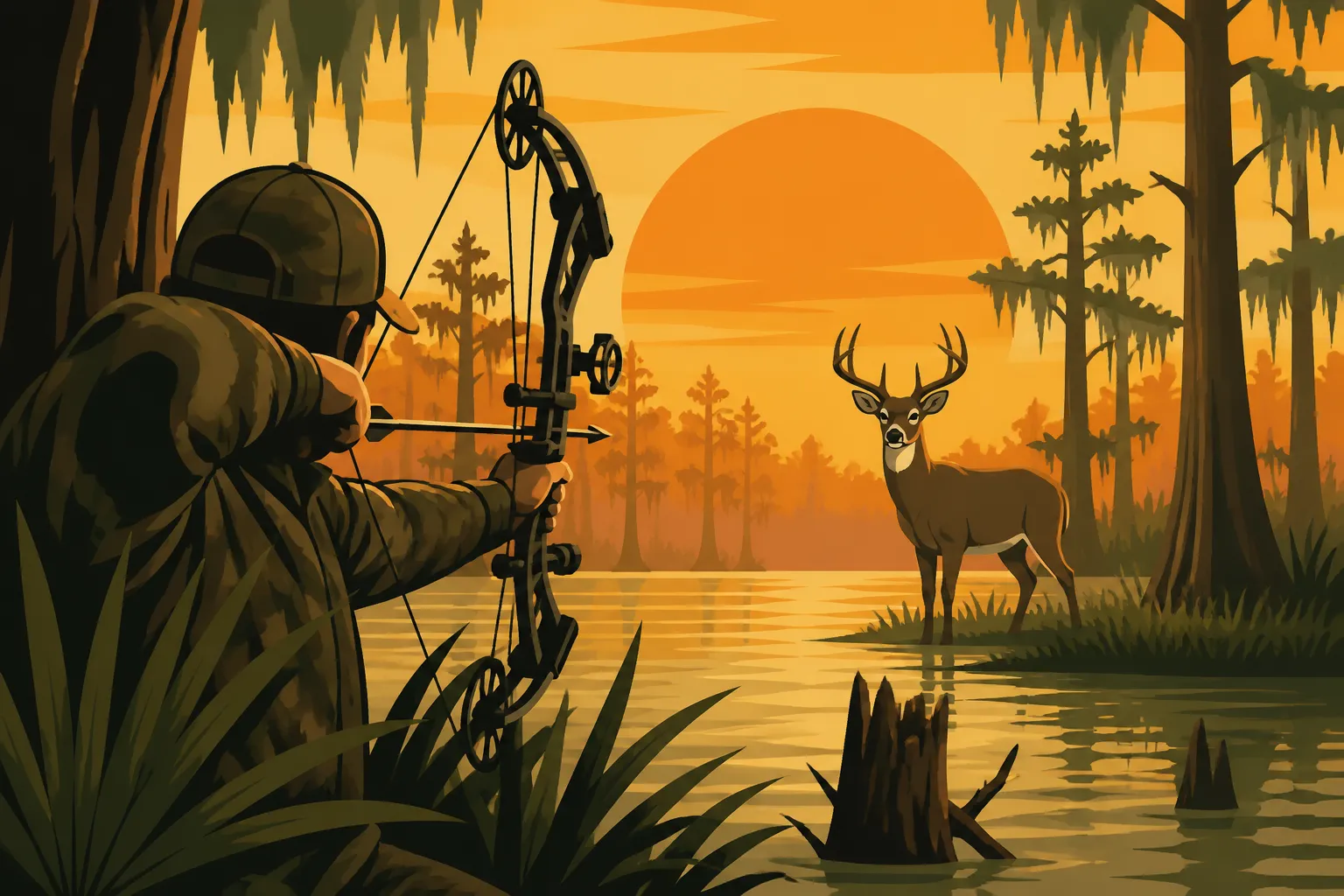
Hunting Georgia's vast river bottoms and cypress swamps for deer can feel like entering another world entirely – a world that seems to actively work against you. The thick muck, the constant battle with water, the impenetrable vegetation, and the relentless humidity and biting insects can make even the most seasoned hunter question their sanity. But don't despair! This guide is all about navigating those challenging environments, understanding the unique behavior of swamp and river bottom deer, and equipping you with the strategies and gear you need to turn those frustrating outings into successful hunts.
Understanding the Unique Challenges of Swamp and River Bottom Hunting
Let's face it, swamp and river bottom hunting isn't for the faint of heart. It's a completely different ballgame than hunting dry ridges or open fields. These are dynamic, often unpredictable environments that demand a specific skillset, a lot of patience, and the right mindset. Ignoring these challenges will only lead to a miserable experience and empty hands.
Water Levels and Accessibility
One of the biggest hurdles in Georgia's river bottoms and swamps is the ever-fluctuating water level. Heavy rains can turn a trickle into a raging river, flooding vast tracts of timber and cutting off traditional access points. What was dry ground yesterday might be chest-deep water today. This isn't just an inconvenience; it can completely alter deer movement patterns and make your carefully scouted spots unreachable. Trying to push through rising water can be dangerous, not to mention incredibly noisy and disruptive to any deer in the area. You've got to be constantly aware of the current conditions and adapt your plans accordingly, which often means having multiple entry and exit strategies or even changing your hunting area entirely.
Deer are incredibly adept at navigating these changes, and they'll quickly adjust their routes to the highest available ground. Knowing when and where to find accessible islands or ridges during high water is key, as these become natural funnels for deer movement. Conversely, during periods of drought or low water, areas that are normally inundated might become accessible, opening up new opportunities but also potentially spreading deer out over a larger area. For instance, in the Altamaha River corridor, a drop in water levels can reveal vast stretches of dried-out sloughs that become deer highways, while a flood might push them onto the higher bluffs bordering the river.
Vegetation Density and Visibility
Georgia's swamps and river bottoms are notoriously thick. We're talking about dense tangles of briars, cane thickets, cypress knees, and water oak hammocks that can make seeing more than 20 yards a pipe dream. This isn't your open pine forest or hardwood ridge where you can glass for hundreds of yards. The limited visibility makes spotting deer incredibly difficult, and it also means that a deer can be within spitting distance without you ever knowing it. The dense cover also amplifies sound, making every misplaced footstep or rustle of clothing feel like a gunshot.
This thick vegetation, while challenging, is also precisely why deer love these areas. It provides excellent cover from predators and hunters, offering security and a feeling of seclusion. It also harbors an abundance of natural food sources, from water oak acorns to green browse that stays lush even through drier periods. Your hunting tactics in these areas must revolve around patience, slow movement, and maximizing every tiny window of visibility. Understanding how deer use these thickets for bedding, feeding, and travel is paramount. Even a narrow deer trail winding through a palmetto flat can be a prime ambush point if you can predict its use.
Bug Pressure and Heat Management
Ah, the joys of Georgia's warm weather and abundant water! This combination creates a perfect breeding ground for mosquitoes, gnats, and every other biting insect imaginable. Early archery season, in particular, can be a brutal test of endurance against the relentless assault of bugs and oppressive humidity. The heat saps your energy, makes physical exertion difficult, and can compromise your scent control efforts. The bugs, especially mosquitoes, aren't just annoying; they can be a serious distraction, causing you to fidget, swat, and ultimately blow your cover. Trying to sit still for hours while being eaten alive is a tall order for anyone.
Managing these factors is not just about comfort; it's about effective hunting. Excessive sweating means more human odor, which deer will pick up on instantly. Constant swatting or adjusting due to bug bites will give away your position. Proper clothing, bug repellents, and hydration are crucial for these hunts. Think lightweight, breathable fabrics for heat, and a robust defense against insects. Many hunters swear by thermacell devices to create a bug-free bubble around their stand, especially during those still, humid mornings and evenings. Ignoring these elements will not only make you miserable but will also significantly reduce your chances of success.
Scouting Strategies for Wet Environments
Scouting is always crucial for deer hunting, but in Georgia's swamps and river bottoms, it takes on an even more critical role. The dynamic nature of these environments means that traditional scouting methods might need a significant overhaul. You're not just looking for deer sign; you're deciphering a complex puzzle of water, terrain, and deer movement.
Interpreting Mud and Water Line Sign
Mud and old water lines are your best friends in a swamp. They tell a story about where the water has been, where it's going, and how deer are reacting to it. After a flood, look for "bathtub rings" – the visible lines on trees and vegetation that indicate the high water mark. This tells you which areas were submerged and, by extension, which areas remained dry and served as refuges for deer. The higher the mark, the more restricted the deer's movement was, often funneling them onto small islands or narrow strips of higher ground.
Fresh mud, especially around the edges of receding water, is a treasure trove of information. Look for tracks that show consistent travel patterns. Are deer using the same route along a slough that's just starting to dry out? Are they wading across shallow areas, or are they sticking strictly to dry land? Large, deep tracks in the mud indicate heavy deer traffic. It's also important to note the direction of travel and the size of the tracks. The firmer the mud, the clearer the track, offering clues to the buck-to-doe ratio in the area or even the size of individual animals. Using mapping tools like GoHunt can help you identify subtle elevation changes that are often invisible from the ground, allowing you to anticipate where deer might seek refuge during high water. You can even overlay historical flood data if available to see how certain areas typically react to different water levels. This kind of detailed reconnaissance is vital for success in these challenging low-lying areas.
Identifying High Ground and Escape Routes
Deer in swamp and river bottom country are masters of using high ground, no matter how subtle, to their advantage. A rise of even a few inches can make the difference between dry bedding and standing in water. When scouting, you need to be constantly looking for these elevated areas: old logging roads that have slightly higher beds, subtle ridges within the swamp, cypress hammocks, or even small hummocks created by fallen trees. These spots become critical bedding and staging areas, especially during wet periods.
Beyond bedding, identifying escape routes is equally important. Deer are always thinking about how to get out of trouble. When pressured, they'll typically flee along the path of least resistance, which often means using old trails, creek banks, or the edges of dense cover. Knowing these routes helps you predict where deer will go and allows you to set up ambushes or understand how a drive might push them. Look for areas where the swamp transitions to slightly higher, firmer ground, perhaps leading to agricultural fields or hardwood ridges. These transition zones are natural funnels where deer traffic is often concentrated. A good mapping app, like GoHunt, becomes indispensable here for identifying those tiny contour lines that signify a critical high spot or an old roadbed that provides a dry travel corridor through otherwise wet terrain.
Using Technology for Remote Scouting
Modern technology has revolutionized scouting, and it's particularly valuable for the vast, often impenetrable landscapes of Georgia's river bottoms. Satellite imagery and topographic maps are your best friends for remote scouting. Before you even step foot in the swamp, you can analyze aerial photos for hidden sloughs, oxbow lakes, dense bedding cover, and most importantly, those subtle elevation changes that signify high ground. Look for darker green areas that indicate dense canopy, which often means thicker cover or cypress trees, and lighter green areas that might be open water or more sparse vegetation.
Topographic maps will reveal contour lines, helping you pinpoint the highest points, even if they're only a foot or two above the surrounding terrain. These small rises can be deer magnets during high water. Software like GoHunt allows you to mark potential bedding areas, travel corridors, and stand locations from the comfort of your home, saving you countless hours of slogging through mud and water. You can plan your entry and exit routes, identify bottlenecks, and even consider prevailing wind directions relative to these potential hot spots. While it doesn't replace boots on the ground, remote scouting dramatically narrows down your search, making your on-the-ground efforts far more efficient and focused. This detailed planning can be the difference between a productive hunt and a frustrating trek.
Gear and Equipment for Swamp Success
Hunting Georgia's swamps and river bottoms isn't just about strategy; it's also about having the right gear. The environment will test your equipment, and being unprepared can lead to discomfort, inefficiency, or even unsafe situations. Forget your dry-land gear; you need specialized items designed to withstand and perform in wet, humid, and often muddy conditions.
Footwear and Waterproofing Essentials
This might be the single most critical gear consideration for swamp hunting: your feet. You will get wet, so you need footwear that can handle it. Rubber boots, often with insulation for warmth during colder periods but primarily for waterproofing, are non-negotiable. Choose boots that are tall enough to handle varying water depths – think knee-high or even hip waders if you anticipate really deep crossings. Lacrosse and Muck Boot brands are popular choices among Georgia hunters for their durability and comfort in these conditions.
Beyond just keeping your feet dry, consider how you'll manage your scent. Rubber boots inherently reduce scent transfer compared to permeable materials. However, even with the best boots, water can get in, especially when traversing deep sloughs or when a misstep sends a splash over the top. So, bringing extra socks is always a good idea. Consider waterproof gaiters as an additional layer of defense if you're not going with full waders. And remember, walking for miles in mud and water is exhausting, so choose boots that offer good support and a comfortable fit, even if it means trying on a few different pairs. Your hunt can be absolutely ruined by uncomfortable, wet feet.
Treestands, Ground Blinds, and Setup Considerations
The dense cover in river bottoms and swamps means traditional treestands might be challenging to deploy. Finding a suitable, straight tree for a climber can be tough, and even hang-on stands require careful consideration of tree species and bark texture. Safety is paramount, especially when dealing with damp, mossy trees. Lightweight, portable stands are often preferred to minimize effort during long walks through the muck. Saddle hunting has also gained popularity here due to its versatility and ability to set up in less-than-perfect trees, offering great concealment. You might find a good spot by using a flexible system to get into the canopy.
Alternatively, ground blinds can be incredibly effective in these thick environments. The natural vegetation offers excellent concealment, and a well-brushed-in blind can be virtually invisible. This is particularly true if you're hunting areas with dense palmetto, cane, or briar thickets. Ground blinds also offer protection from the elements and, more importantly, from those relentless bugs. However, you need to consider water levels when placing a ground blind. You don't want to show up on opening morning only to find your blind is submerged. Always try to set up on the highest available ground. For public land, remember to check specific WMA rules regarding Ground Blind Rules on Georgia WMAs.
Bug Protection and Hydration
As mentioned earlier, the bugs in Georgia's swamps are no joke, and the humidity can drain you quickly. Effective bug protection is a non-negotiable item. A Thermacell device is almost essential, especially during the early season and warmer days, creating a zone of protection around your stand. Combine that with a good quality insect repellent containing DEET or picaridin applied to exposed skin and clothing. For even more protection, consider bug-proof headnets and gloves, especially if you're sensitive to bites.
Hydration is equally important. Even on cooler days, walking through a swamp is hard work, and the humidity can make you sweat more than you realize. Carry plenty of water – more than you think you'll need. Electrolyte packets can also be beneficial to replenish what you lose through sweat. A lightweight backpack with a hydration bladder is a great way to stay hydrated without constantly fumbling for a water bottle. Beyond water, consider carrying some high-energy snacks to keep your stamina up. Think about how much energy you expend dragging a deer out of a cypress swamp; you'll appreciate those extra calories. If you're out there during When Georgia's Archery Season Opens, you'll definitely feel the burn from both the bugs and the heat.
| Item Type | Recommended Brands/Features | Why It's Crucial in Swamps |
|---|---|---|
| Rubber Boots | Muck Boot, LaCrosse, Xtratuf | Waterproofing for mud/water, scent control, knee-high options |
| Bug Repellent | Sawyer Permethrin, DEET/Picaridin | Essential for sanity and stealth against mosquitoes/gnats |
| Thermacell | Thermacell Backpacker, MR300 | Creates a bug-free zone, crucial for stationary hunting |
| Lightweight Pack | Mystery Ranch, Kifaru, Sitka | Carries water, gear, game bags comfortably, distributes weight |
| Water Bottle/Bladder | Camelbak, Nalgene, Platypus | Hydration is vital for endurance in heat and humidity |
| Quick-Dry Clothing | Synthetic blends (polyester, nylon) | Wicks moisture, dries fast, reduces weight when wet |
| Snake Boots/Gaiters | Chippewa, Danner, LaCrosse | Protection against venomous snakes common in wet areas |
| Portable Stand | Lone Wolf, XOP, Treehopper | Easier to carry through thick cover, quick setup |
| Ground Blind | Ameristep, Barronett, Primos | Excellent concealment in dense vegetation, bug protection |
Effective Hunting Tactics in River Bottoms and Swamps
Once you've got your gear dialed in and your scouting done, it's time to put boots on the ground. Hunting these unique Georgia environments requires a flexible approach, combining traditional methods with specific adaptations for the wet, thick conditions. You can't just hunt a swamp like you would a hardwood ridge; the rules are different here.
Still-Hunting and Stalking Techniques
Still-hunting is perhaps one of the most effective tactics in Georgia's dense river bottoms. With limited visibility, covering ground slowly and deliberately, pausing frequently to listen and scan, allows you to pick apart the cover. Think about moving just a few steps, then stopping for several minutes to observe your surroundings. Use your binoculars to scan every shadow and dense thicket. The goal isn't to walk far, but to walk smart, maximizing your chances of spotting a deer before it spots you. Pay close attention to subtle movements, a flick of an ear, or a patch of hair that looks out of place. This technique is especially potent in areas with varying vegetation density, where a slight opening might reveal a deer browsing or moving through.
When stalking, use the dense cover to your advantage. Focus on trails that run parallel to sloughs or on the edges of thickets. These are often quieter paths. Move during windy conditions or light rain, which helps mask your noise. Always be mindful of the wind direction; a slight swirl can carry your scent further than you think in these humid environments. Many hunters find success by moving through standing timber or along old logging roads when Still-Hunting South Georgia Pine Flats, and these principles translate well to river bottoms, adjusting for the wet underfoot conditions. The key is to be incredibly patient, move like a ghost, and let your eyes and ears do most of the work.
Stand Placement for Travel Corridors and Funnels
Identifying and setting up on key travel corridors and funnels is crucial in any deer hunting scenario, but it's especially important in swamps and river bottoms where deer movement can be restricted. Look for natural pinch points created by water, dense vegetation, or changes in elevation. A narrow strip of dry land between two sloughs, an old logging road that remains high during floods, or the transition zone between a thick cypress stand and a slightly more open hardwood bottom are all prime locations. Deer will often use the path of least resistance, and these funnels concentrate their movement.
Setting up your stand or blind on these funnels requires careful consideration of the prevailing wind. In river bottoms, thermals can be tricky, often swirling and changing throughout the day. Pay attention to how the air moves, especially during morning and evening. You want your scent to blow away from the anticipated deer travel route, not across it. Consider how deer will enter and exit the funnel and position yourself for a high-percentage shot. Often, the best stand locations are not directly on the trail, but slightly off to the side, allowing you to intercept deer without being directly in their line of sight. Utilizing a good quality app like GoHunt can help you visualize these funnels and choose optimal stand sites, allowing you to mark specific trees or blind locations for future reference.
Understanding Deer Movement During Floods and Droughts
Deer in river bottoms are highly adaptable, and their movements are significantly influenced by water levels. During periods of high water or flooding, deer are forced onto higher ground. This can mean small islands within the swamp, adjacent bluffs, or higher timbered ridges bordering the river. These areas become concentrated zones of deer activity. Knowing where these "high spots" are and setting up near them during a flood can be incredibly productive. Deer will use any dry ground they can find, often creating temporary, but heavy, travel corridors between these islands. This is a prime time for a hunter who understands this behavior.
Conversely, during droughts or periods of exceptionally low water, areas that are normally inaccessible open up. Deer might spread out, taking advantage of newly exposed food sources or bedding areas deep within the swamp. This can make them harder to pattern, but it also opens up new scouting opportunities. Focus on newly dried slough bottoms, which can quickly become fresh travel corridors, or exposed mud flats that offer fresh browse. Understanding these dynamics is critical for long-term success. If you're hunting an area after a major rainfall event, such as described in Recovering a Deer From a Cypress Swamp, anticipating how deer respond to those conditions is key to intercepting them before they disperse. Being flexible and adjusting your tactics based on the current water conditions is the hallmark of a successful river bottom hunter.
Game Recovery and Processing in Challenging Terrain
The shot is fired, the deer is down—congratulations! Now comes arguably the most challenging part of hunting Georgia's swamps and river bottoms: getting that deer out and processed. This phase often presents a whole new set of obstacles that require planning, effort, and sometimes, a little bit of ingenuity.
Tracking Wounded Deer Through Water and Thick Cover
Tracking a wounded deer through a swamp is a whole different beast than following a blood trail in open woods. Blood trails can be sparse, washed away by water, or absorbed by thick, wet vegetation. This is where patience and meticulous attention to detail become even more vital. Take your time, mark the last spot of sign, and look for any disturbance in the leaves, broken twigs, or even overturned moss. Sometimes, you'll be tracking by smell, listening for sounds, or simply trying to predict the most likely escape route a deer would take.
If the deer has entered water, the trail can disappear entirely. In these situations, look for disturbed water, muddy tracks along the bank, or bubbles rising from where the deer might have struggled. If you're confident in your shot placement, often the best strategy is to give the deer plenty of time (at least a few hours, or overnight if conditions allow) to expire. This reduces the risk of pushing a wounded deer further into impenetrable cover or deep water. When you do find the deer, assess the situation carefully. You don't want to get yourself into a dangerous situation in deep muck or cypress knees. Having a buddy for tracking and recovery is always a good idea in these environments. It's truly a test of grit to follow a trail when you're Blood Trailing After Dark in Georgia in a swamp.
Getting Your Deer Out: Carts, Boats, and Teamwork
So, you've found your deer. Now, how do you get it out? This is where the real work begins, and it's almost always a monumental task in swamp and river bottom country. Deer carts that work well on dry ground are often useless in thick mud and deep water. Your best bet usually involves a combination of brute strength, specialized equipment, and teamwork. For short distances over relatively stable ground, dragging ropes are essential. Consider a deer harness that allows you to pull from your hips, saving your back.
For longer distances or through deeper water, a small, light jon boat or even an inflatable raft can be a game-changer. If you have access to a boat, try to position it as close to the deer as possible. You might need to quarter the deer in the field to make it manageable for transport, especially if you're working alone or if the terrain is particularly nasty. Game bags are excellent for keeping meat clean and contained if you do decide to quarter. Don't underestimate the physical toll of Dragging a Deer Out of a Swamp. Always consider the most efficient and safest way to retrieve your animal, which often means enlisting the help of friends and planning your extraction route beforehand.
Field Dressing in Warm, Humid Conditions
Georgia's climate means you'll often be field dressing your deer in warm, humid conditions, which presents challenges for meat preservation. Bacteria thrive in heat, so speed and cleanliness are critical. Get the guts out as quickly as possible to allow the carcass to cool internally. Lay the deer on its back and prop it open with sticks or logs to maximize air circulation. If you're near water, you can often use it to rinse out the body cavity, just be mindful of regulations regarding carcass disposal in waterways.
Carrying plenty of paper towels, wet wipes, and a sharp knife is crucial. After field dressing, consider packing the body cavity with ice if you have a long way to go or if temperatures are particularly high. Game bags, especially those breathable ones, are excellent for keeping flies off and allowing air to circulate while protecting the meat during transport. Remember to check regulations regarding Handling Venison From a CWD Management Area if you're hunting in a county within Georgia's Chronic Wasting Disease zone, as special precautions might be required. The faster you can get that deer gutted, cooled, and to a cooler, the better your venison will taste.
Disclaimer
The information provided in this guide is for general informational purposes only and is not intended as legal advice. Hunting regulations, seasons, and licensing requirements in Georgia are subject to change. Always consult the Georgia Department of Natural Resources (DNR) Wildlife Resources Division official regulations for the most current and accurate information before planning any hunting trip. Adhere to all local, state, and federal laws and regulations. Hunt ethically, responsibly, and prioritize safety at all times.