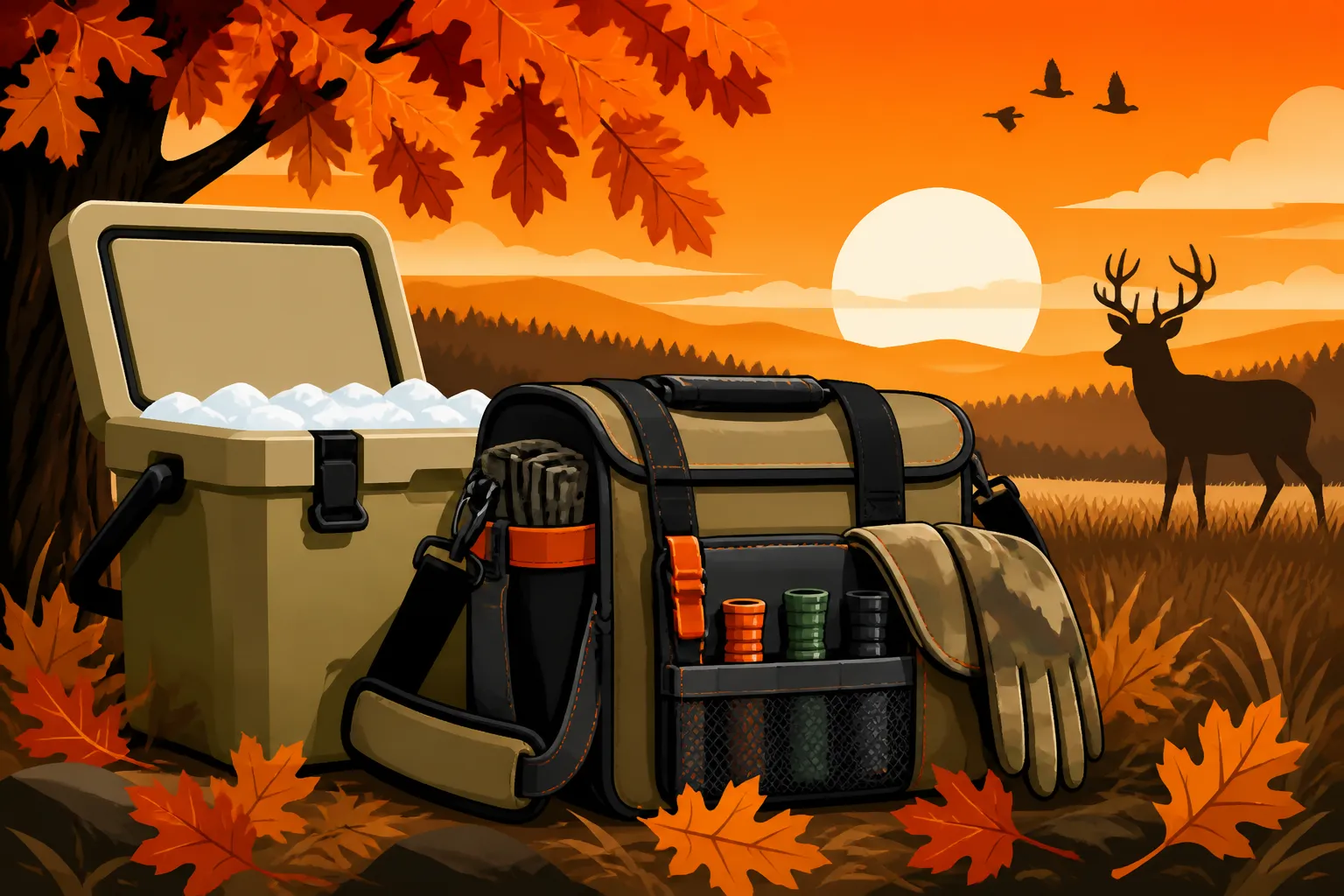
Coolers and Game Bags for a Georgia October
There’s nothing quite as deflating as putting in all the hard work to harvest an animal in Georgia, only to worry about the meat spoiling before you can get it properly processed. Especially when you’re dealing with the often-unpredictable warmth of an October hunt, keeping your hard-earned venison cool and clean is a crucial part of the entire experience. This guide will walk you through everything you need to know about choosing and using coolers and game bags effectively, ensuring your venison makes it from the field to your freezer in prime condition.
The Unique Challenges of Georgia's October Heat
October in Georgia can be a real wild card. Some years, we get those crisp, cool mornings that feel like true fall, perfect for hanging deer. Other years, it feels like summer decided to make an unwelcome return, with temperatures soaring into the 80s. This unpredictability, coupled with Georgia's inherent humidity, creates a challenging environment for preserving game meat.
The Unpredictable October Warmth
While we all dream of hunting during a cold snap, Georgia's October often delivers anything but. I’ve seen more than a few early season bucks taken on days that felt more like late summer than mid-fall. When that sun beats down, especially after a long retrieve, the clock starts ticking immediately on your hard-earned venison. A deer that’s down at 9 AM on an 80-degree day needs immediate attention, far more so than one taken when the mercury barely scrapes 50 degrees. This fluctuating weather means you can't just assume it'll be cold enough to let a deer hang for hours; you need a solid plan for rapid cooling.
Humidity's Role in Spoilage
It's not just the temperature; it's the humidity that really puts the pressure on. High humidity means that any moisture on the carcass, whether from field dressing or dew, won't evaporate quickly. This creates a damp, warm environment that is a perfect breeding ground for bacteria. While a dry, cold air environment helps create a "crust" on the meat that slows bacterial growth, Georgia's humid air works against you, keeping surfaces moist and vulnerable. This is why thorough drying of the carcass, even before bagging, is so critical in our climate.
The Race Against Bacteria
Bacteria, the silent enemy of fresh game meat, thrives in warmth and moisture. Once an animal is down, its internal temperature, which was around 100 degrees Fahrenheit, starts to slowly cool, but not fast enough to prevent bacterial growth if left unaddressed. The sooner you can drop that core temperature below 40 degrees, the better. This race against time impacts every decision, from how quickly you get to the animal, to your field dressing technique, and finally, how you transport it. Neglecting these steps, even for a few hours in warm weather, can mean the difference between delicious venison and spoiled meat, a heartbreaking loss after all your effort.
Choosing the Right Cooler for Georgia Conditions
When it comes to preserving your game meat, not all coolers are created equal. For Georgia's challenging climate, you need something that can truly stand up to the heat and humidity. Investing in a quality cooler is an investment in your harvest.
Insulation Technology and Ice Retention
The primary job of any cooler is to keep what's inside cold, and the best coolers do this through superior insulation. Look for models with thick, roto-molded walls and injected polyurethane foam insulation. This construction minimizes heat transfer from the outside in. Forget those flimsy roadside coolers for deer season; they just won't cut it when the mercury is climbing. High-performance coolers, often referred to as "premium" or "hard-sided" coolers, boast multi-day ice retention, which is exactly what you need when you're several hours from home or a processing facility. Brands like YETI, RTIC, and Orca are popular for a reason—they actually hold ice for extended periods, even in our sweltering conditions.
Size and Portability Considerations
Choosing the right size cooler depends on the game you're hunting and how you plan to transport it. For a whole, field-dressed deer, a large cooler (100-150 quarts) might be necessary, especially if you plan to get it quartered or deboned inside. If you’re deboning in the field, you might get away with a smaller 65-75 quart cooler for the prime cuts. Consider the dimensions not just for the meat, but for your vehicle. Can it fit in the bed of your truck or the trunk of your SUV? Also, think about portability. A large cooler packed with meat and ice is incredibly heavy. Features like durable wheels, sturdy handles, and tie-down points become very important. Remember, you might be dragging this thing quite a distance from the truck to the cleaning station or vice versa.
Drainage and Cleaning Features
After a successful hunt, your cooler is going to be a mess, and that's a good thing! It means it did its job. However, easy cleaning is paramount for hygiene and future use. Look for coolers with large, robust drain plugs that allow for quick and complete drainage. Some even have channels built into the floor to direct water to the drain. The smoother the interior surfaces, the easier it will be to wipe down and sanitize, preventing any lingering odors or bacterial buildup. You'll be dealing with blood, bone fragments, and dirty ice, so a design that simplifies post-hunt cleanup will save you a lot of headache. A clean cooler is essential for maintaining the quality of your meat season after season.
Here’s a quick comparison of common cooler types for Georgia hunting:
| Cooler Type | Best Use Case | Ice Retention (Approx.) | Portability (Empty) | Price Shape | Key Feature |
|---|---|---|---|---|---|
| High-Performance | Multi-day hunts, remote locations, warm weather | 3-7 days | Heavy | Higher | Roto-molded, thick insulation, durable latches |
| Mid-Range | Day hunts, cooler weather, shorter transport | 1-3 days | Moderate | Mid-range | Decent insulation, good value, often wheeled |
| Soft-Sided/Bag | Small game, deboned cuts, quick trips | <1 day | Light | Lower to Mid-range | Flexible, easy to carry, often leakproof |
| Electric/Powered | Extended stays with power, vehicle trips | Constant power | Moderate | Higher | No ice needed, keeps constant temperature |
Understanding Game Bags and Their Role
Game bags are often overlooked but are absolutely essential, especially when Field Dressing a Deer in Warm Weather. They provide a critical barrier between your carefully prepared meat and the elements, insects, and dirt. Think of them as the first line of defense for your venison.
Synthetic Breathable Bags
Modern synthetic game bags are a revelation compared to the old-school cotton sacks. Brands like TAG Bags or Alaska Game Bags offer lightweight, durable, and highly breathable options. These bags allow air to circulate around the meat, which is vital for cooling and helping to form that protective "crust" that inhibits bacterial growth. Crucially, they prevent flies and other insects from laying eggs on the meat, a common problem in warm Georgia weather. They’re also tough enough to resist tearing from sharp bone edges and can be washed and reused, making them a sustainable choice for many hunters. When you're quartering a deer on public land, like when Hunting the Piedmont Farmland Deer, having individual bags for each quarter keeps things organized and clean.
Traditional Cotton Bags
While synthetic bags have gained popularity, traditional cotton game bags still have their place, particularly for smaller game or for quick transport in cooler conditions. They are generally more affordable and readily available. However, cotton bags are less durable, more prone to tearing, and tend to absorb moisture, which can be detrimental in humid conditions. If they get wet, they lose some of their insulating properties and can hold bacteria more easily. For deer, they might be better suited for protecting an entire carcass during a short drag or for initial transport to a processing station rather than long-term field cooling.
Protecting Meat from Contaminants
The primary role of a game bag, beyond allowing airflow, is protection. Picture this: you've just spent hours dragging a deer through thick Georgia pine straw or across muddy terrain. Without game bags, every speck of dirt, every leaf, and every insect is making direct contact with your meat. Game bags create a barrier against environmental contaminants, ensuring your venison stays as clean as possible. This is particularly important for meat that will be aged or processed later. They also prevent the meat from freezing to the inside of your cooler, or from getting waterlogged if your ice melts faster than expected. Quality game bags, combined with careful handling, significantly reduce the risk of meat spoilage due to external factors. Many hunters, especially those who rely on tools like the GoHunt app for scouting, understand that meticulous planning extends to meat care as well.
Field-to-Cooler Strategies for Success
Getting your deer from the field into a cooler quickly and efficiently is perhaps the most critical step in preserving your meat, especially on a warm October day. This process starts immediately after the shot.
Immediate Field Dressing and Cooling
The moment your deer hits the ground, the clock begins. Your first priority, after confirming the animal is deceased and tagging it, should be to field dress it. Removing the entrails helps to rapidly reduce the internal body temperature, which is the warmest part of the animal. Get those organs out as quickly as possible, ensuring you don't puncture the bladder or stomach. If you're hunting in a remote area and have a long drag ahead, or perhaps you’re trying to navigate the challenge of Dragging a Deer Out of a Swamp, consider moving the carcass to a shadier spot before field dressing to get it out of direct sunlight. Once field dressed, if you have water available (even just a few bottles from your pack), you can rinse out the cavity to remove any remaining gut matter or blood, then pat it dry as much as possible with paper towels or a clean cloth to prevent moisture buildup.
Quartering Versus Whole Carcass
The decision to quarter a deer in the field versus attempting to cool and transport a whole carcass largely depends on the temperature, distance, and your personal capabilities.
- Whole Carcass: If temperatures are genuinely cold (below 40 degrees Fahrenheit) and you have a short distance to transport the deer to a processor or your camp where you can hang it, a whole carcass approach might work. The hide acts as a natural protective layer. However, in Georgia's October heat, keeping a whole carcass cool enough is extremely difficult. Even a field-dressed deer can retain significant heat, especially in the muscle mass, leading to rapid spoilage. You would need an enormous cooler, and even then, getting ice into direct contact with all the muscle can be a struggle.
- Quartering: For warm weather, long drags, or simply better meat preservation, quartering in the field is almost always the superior choice. By breaking the deer down into its primal cuts (two hams, two shoulders, backstraps, tenderloins), you expose more surface area for cooling and make it much easier to fit into coolers. This also lightens the load significantly, making retrieval much easier, particularly if you’re hunting solo or on challenging public land. It also allows you to trim off any damaged or soiled meat immediately. These quarters can then be placed into game bags. Butchering a Deer at Camp becomes a much simpler process when you've already done the heavy lifting in the field.
The Art of Ice Management
Once you have your meat quartered and bagged, it's time for the cooler and ice. Don't just dump a few bags of ice on top. The goal is maximum contact between ice and meat.
- Layering: Start with a layer of ice on the bottom of your cooler.
- Meat Placement: Place your bagged meat on top of the ice. Don't overcrowd it. If possible, try to arrange the quarters so that ice can get around them.
- More Ice: Cover the meat completely with more ice. If you have extra room, you can fill it with more ice.
- Drainage: Keep the drain plug open, but elevate one side of the cooler slightly. This allows bloody water to drain out, keeping your meat clean and preventing it from sitting in a murky bath. As the ice melts, you'll want to add fresh ice as needed. The colder and cleaner the meltwater, the better, but draining the blood-stained water is often preferable. Block ice melts slower than cubed ice and can be more efficient for initial cooling, while cubed ice excels at filling voids and making direct contact.
Practical Tips for Success in Georgia
Beyond the core strategies, a few practical tips can make a world of difference when hunting in Georgia’s varied conditions. These small steps can greatly increase your chances of bringing home quality venison.
Pre-Cooling Your Gear
This is such a simple step, yet it's often overlooked. Before you even head out for your hunt, especially if you anticipate warm weather, pre-cool your cooler. Fill it with sacrificial ice (or even frozen water bottles) the night before. Let it sit, sealed, for several hours. This chills down the cooler's internal temperature and insulation, so when you finally add your game meat and fresh ice, the cooler isn't fighting to cool itself down first. It starts working on the meat immediately, maximizing your ice retention. Similarly, if you plan to use a deer cart, or Packs for a Day on Public Land to haul out quarters, ensure they are clean and ready to go, perhaps even placing them in a cool garage overnight.
Transporting Meat Safely
Once your meat is in the cooler, the job isn't quite done. How you transport it from the field back home or to the processor matters.
- Secure the Cooler: Make sure your cooler is securely tied down in your truck bed or vehicle. Bouncing around can cause ice to shift and expose meat to warmer air.
- Keep it Out of Direct Sunlight: Even a high-performance cooler can struggle if it's baking in direct sun for hours. If possible, keep your cooler in the shade, or cover it with a wet towel or blanket to provide evaporative cooling. If it's in a truck bed, consider a tonneau cover or a large tarp.
- Monitor Conditions: If you have a long drive, periodically check your ice levels and drain any excess water. If you're on a multi-day hunt, you might need to replenish ice as it melts. Many hunters use the GoHunt app to check weather forecasts for their hunting areas, which helps them anticipate these needs.
Monitoring Meat Temperature
While you might not carry a meat thermometer into the field, having one at home or camp is incredibly valuable. After the meat has been in the cooler for several hours, use a clean meat thermometer to check the internal temperature of the thickest part of a quarter. Your goal is to get that temperature below 40 degrees Fahrenheit (ideally closer to 35-38 degrees) as quickly as possible. If the temperature is still too high after several hours, you need more ice or better contact with the existing ice. This simple check gives you objective data on how well your cooling efforts are working and whether you need to take additional steps to prevent spoilage. If you plan on Aging Venison in Warm Weather, this monitoring becomes even more crucial.
Alternative Methods for Remote and Challenging Hunts
Sometimes, you find yourself in a situation where packing a large cooler and abundant ice isn't feasible, such as a deep dive into the Chattahoochee National Forest or a multi-day backcountry hunt. In these challenging scenarios, alternative meat care strategies become essential.
The Gutless Method for Remote Backcountry
The "gutless method" is a game-changer for hunters operating far from roads or extensive gear. Instead of gutting the animal, you skin it and remove the quarters, backstraps, and tenderloins (if accessible) in the field. This method avoids opening the body cavity entirely, which can minimize contamination.
- Skinning: Carefully skin the upper side of the animal first, then roll it over to skin the other side.
- Quarters: Detach the front and rear quarters directly from the carcass.
- Backstraps & Tenderloins: Carefully remove the backstraps running along the spine and, if desired, reach inside the cavity to extract the tenderloins.
This approach significantly reduces weight, allows for smaller, more manageable loads, and minimizes mess. Each piece can immediately go into a game bag and then into a lightweight pack for transport. While it requires a good understanding of deer anatomy and sharp knives, it's an invaluable skill for ensuring your meat makes it out, especially when Hunting the North Georgia Mountain Bear Zone or other remote areas.
Air Drying and Carcass Hanging
In truly cold conditions (consistently below 40 degrees Fahrenheit, ideally closer to freezing), air drying and hanging a carcass can be an effective way to cool meat. This involves hanging the field-dressed, skinned (or partially skinned) animal in a shady, airy spot. The cool air circulates around the meat, forming a dry "crust" on the outside that helps prevent bacterial growth. However, this method is highly dependent on ideal weather. In Georgia, October rarely provides consistently cold enough conditions to hang a deer for more than a few hours without significant risk of spoilage, unless it's a very unusual cold front. If you attempt this, ensure the area is free of insects, scavengers, and direct sunlight. Always have a backup plan, like quartering and icing, if the weather turns.
When to Call for Help (and When to Know Your Limits)
There's no shame in knowing your limits, especially when it comes to game recovery and meat care. If you find yourself with a downed animal in a tough spot, rapidly rising temperatures, and insufficient resources, don't hesitate to call for help. This might mean contacting hunting buddies, asking for assistance with a UTV, or even, in extreme cases, reaching out to local game processors who sometimes offer recovery services. Organizations like GoHunt often have forums or resources where local hunters share advice or offer assistance. The goal is always to ethically recover and preserve the meat. Sometimes, this means making the difficult decision to leave an animal if retrieval is impossible and spoilage is inevitable, but proper planning with coolers and game bags can often prevent reaching that point. Always prioritize meat care and safety over a heroic but potentially wasteful effort.
Disclaimer
This article is for general informational purposes only and does not constitute professional advice. Laws, prices and regulations vary by location and change over time. Consult a qualified professional for guidance on your specific situation.