Bowfishing Tackle for Georgia Alligators
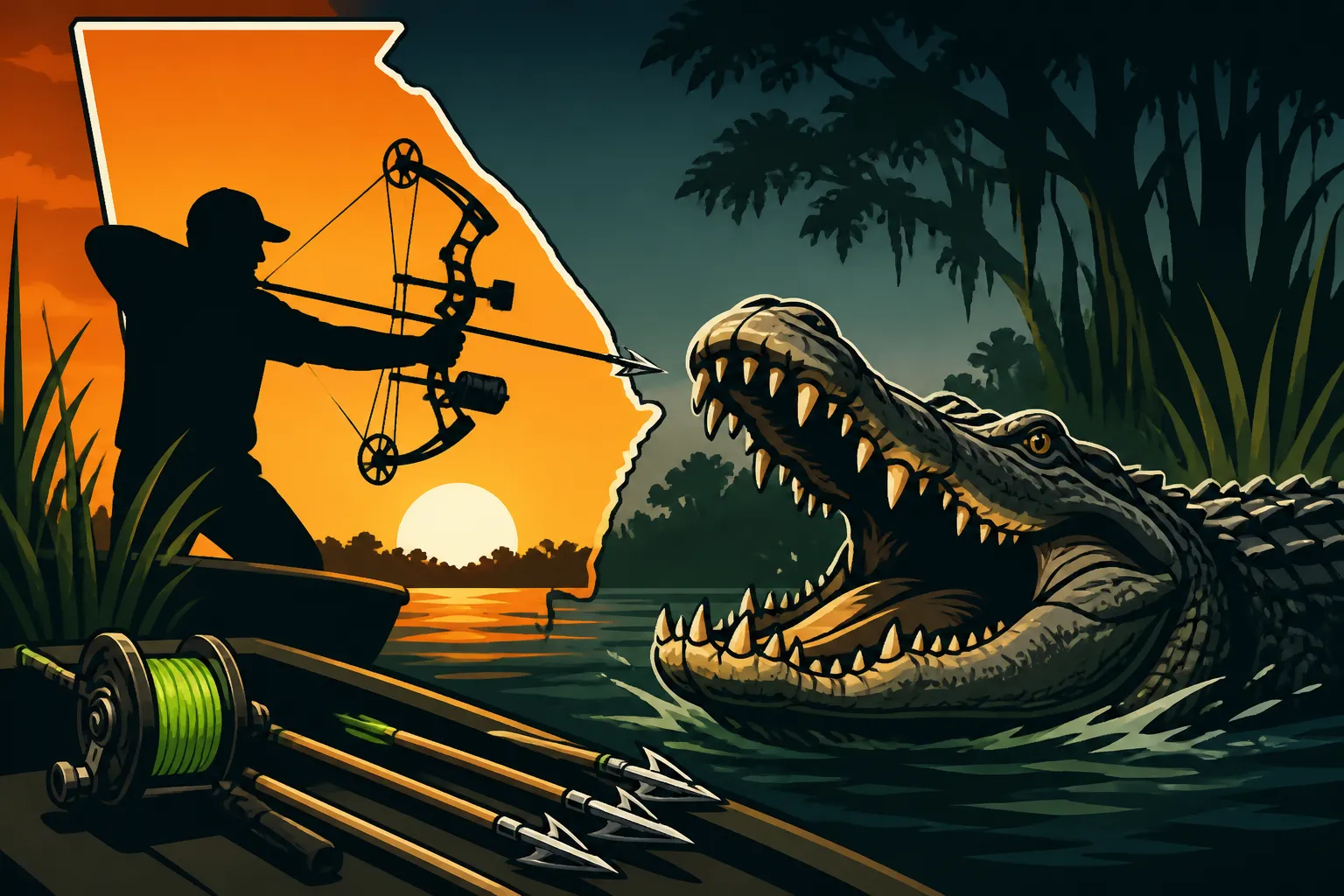
Hunting Georgia alligators with a bow and arrow is an absolutely electrifying experience, but let's be honest, it comes with its own unique set of challenges. You're out there, often in the dark, on the water, targeting a powerful, prehistoric creature, and the last thing you want is for your gear to fail at the moment of truth. Many hunters get caught off guard, assuming their deer bow can simply be repurposed, only to find themselves grappling with inadequate arrows, flimsy lines, or reels that can't handle the strain. This comprehensive guide is here to walk you through every piece of bowfishing tackle you'll need to confidently and effectively pursue alligators in Georgia's diverse waterways, ensuring you're ready for the fight of a lifetime.
The Foundation: Choosing Your Bowfishing Bow for Alligators
When you're staring down a Georgia gator, your bow isn't just a tool; it's the primary connection to your quarry. Selecting the right one is paramount, as the demands of alligator bowfishing are far different from flinging arrows at deer from a treestand. You need power, durability, and reliability, all rolled into one.
Recurve and Compound Bows: A Head-to-Head
The debate between recurve and compound bows in bowfishing is a lively one, and for good reason. Both have their merits, but their performance and handling characteristics differ significantly, especially when tackling something as formidable as an alligator.
Recurve Bows for the Traditionalist and the Agile Hunter: Recurves are often favored by those who appreciate simplicity and rapid shooting. There are no cams, no complex sights, just string, limbs, and riser. This means fewer parts to break or snag in the chaos of a gator hunt. You can shoot a recurve quickly, often in rapid succession, which can be an advantage when multiple gators present themselves or if your first shot doesn't quite stick the way you want it to. They are also generally lighter and more maneuverable in tight spaces, like the dense cover of a cypress swamp or when shooting from a smaller boat. However, a major drawback is the lack of let-off. You're holding the full draw weight throughout the aiming process, which can be fatiguing and make precise aiming difficult, especially when waiting for that perfect broadside shot on a wary gator. If you're new to traditional archery, it takes significant practice to become proficient and accurate, particularly under pressure.
Compound Bows for Power and Precision: Compound bows, with their cam systems, offer a distinct advantage in power and let-off. The let-off means that once you reach full draw, you're holding only a fraction of the peak draw weight, allowing you to hold at full draw for much longer without tiring. This extra time can be crucial for steadying your aim, accounting for boat movement, or waiting for the alligator to present the ideal target. Compounds typically generate higher arrow speeds, delivering more kinetic energy for deeper penetration, which is vital for piercing an alligator's tough hide and bone. However, the complexity of a compound bow means more moving parts that can get fouled with mud, water, or vegetation. They are also generally heavier and bulkier than recurves, which can be a hindrance in tight quarters. Sighting systems, while offering precision, can also get knocked out of alignment more easily. For alligator hunting, many compound bowfishers remove advanced sights, opting for simpler pin systems or even bare-bow shooting for quicker target acquisition.
Draw Weight and Let-Off Considerations
This isn't about bragging rights; it's about ethical and effective hunting. Alligators are heavily armored, and you need to punch through.
The Importance of Adequate Draw Weight: When bowfishing for alligators, you're not just trying to stick an arrow into skin; you're trying to drive a heavy, barbed arrow through thick hide, muscle, and potentially bone. This requires significant kinetic energy, which comes directly from your bow's draw weight. While minimum draw weights for deer might be around 35-40 pounds, for alligators, you'll want to be in the 50-70 pound range, or even higher if you can comfortably and accurately manage it. Too little draw weight, and your arrow might not penetrate deeply enough to secure the animal, leading to lost gators and an unethical hunt. Remember, accuracy trumps brute force; if you can't consistently hit your mark with a heavy bow, drop down to a weight you can control.
Leveraging Let-Off for Precision: This is where compound bows really shine for alligator hunting. Let-off significantly reduces the amount of weight you hold at full draw. If you're drawing a 70-pound bow with 80% let-off, you're only holding 14 pounds at full draw. This allows you to hold your bow back for an extended period, which is invaluable when a gator is slowly cruising, partially submerged, or if you're waiting for boat stability. That extra time means a more controlled shot, less fatigue, and ultimately, a higher chance of a successful and ethical harvest. Recurve shooters don't have this luxury, making their shot windows often shorter and requiring more strength endurance. Whether you use a compound or a recurve, you must be comfortable and capable of holding your draw weight long enough to make a precise shot under challenging conditions.
Specialized Bowfishing Bows
Beyond traditional hunting bows, there's a whole category of bows designed specifically for the rigors of bowfishing. These specialized setups offer features that streamline the experience and improve efficiency.
Dedicated Bowfishing Setups: Many manufacturers, like PSE and Cajun Archery, produce bows built from the ground up for bowfishing. These bows often feature durable, water-resistant components, simplified cam systems (on compounds) for high energy and less maintenance, and often come in bright, highly visible colors so you don't lose them in the water. They might have a shorter axle-to-axle length for better maneuverability in a boat or tight cover, and often lack the elaborate sights and stabilizers found on target or hunting bows, focusing instead on rapid, instinctive shooting. Some are even designed with no let-off, even on a compound platform, to allow for quick snap-shooting without the need to hold at full draw. These bows are often pre-drilled for bowfishing reels and specialized rests, making rigging them a breeze.
Advantages in the Field: The primary advantage of a dedicated bowfishing bow is its inherent durability and simplified design. They're built to get wet, get muddy, and take a beating without compromising performance. For instance, the GoHunt app often shows articles discussing the benefits of these robust setups for varying conditions, from the shallow flats to the deep river bends. You'll find features like all-aluminum risers, stainless steel hardware, and limb pockets designed to withstand the unique stresses of bowfishing. These bows are less prone to issues that can arise from constantly dunking a hunting bow in water or dragging it through vegetation. If you plan on doing a lot of alligator bowfishing, investing in a purpose-built bow will enhance your experience, reduce frustration, and last longer than continually converting a hunting bow.
Essential Arrow and Line Systems for Alligators
Once you have your bow, the next critical components are the arrow and the line system. These are your direct connection to the alligator, and any weakness here can mean a lost animal and a lot of heartbreak.
Heavy-Duty Bowfishing Arrows
Unlike typical hunting arrows, bowfishing arrows are built for extreme abuse and designed to penetrate and hold.
Construction and Weight: Alligator arrows are significantly heavier and more robust than deer arrows. They're typically solid fiberglass, carbon, or a composite blend, designed to be dense for maximum kinetic energy transfer underwater and to withstand the immense forces of impacting an alligator. A common misconception is that a light, fast arrow is best, but for bowfishing, mass is king. A heavier arrow carries its momentum better through the water and through tough hide. They are also often longer than standard hunting arrows to ensure consistent spine for all draw lengths and to prevent overdrawing on some bows. When you consider the sheer power of an alligator, you understand why these arrows are built like tanks.
Barb Types and Retention: The business end of an alligator arrow is crucial. You'll primarily encounter two types of barb systems:
- Fixed Barbs: These are sturdy, non-collapsing barbs that offer maximum holding power. Once they penetrate, they are incredibly difficult to pull out, which is exactly what you want when a gator is thrashing. However, they can be challenging to remove from the animal after harvest, often requiring specialized tools or careful manipulation.
- Retractable/Folding Barbs: These heads feature barbs that collapse upon entry and then expand once through the animal. This makes for easier removal after the hunt, but there's a slight chance they might not deploy perfectly or could shear off if not robustly designed. For alligators, you want the most secure hold possible. Many experienced hunters prefer large, fixed-barb points or points with robust "wing" style barbs that deploy and can be reversed for easier removal. Always check your Bowfishing Arrows for Forty-Eight-Inch Gators and ensure they are up to the task of anchoring a large reptile. The key is that once the arrow is in, it stays in.
Line Selection: Braided vs. Dacron
The line connects your arrow to your reel, and ultimately, to you. It needs to be incredibly strong and resistant to abrasion.
Strength and Abrasion Resistance: For alligators, you need line that can withstand immense pressure, sharp scales, and abrasive environments like barnacle-encrusted logs or rocky bottoms. Most alligator hunters opt for braided line, typically 200 to 400-pound test. This type of line offers incredible strength-to-diameter ratio, minimal stretch, and excellent abrasion resistance. Dacron, while strong, tends to be bulkier and can be more prone to abrasion compared to modern braided lines. The minimal stretch of braided line is also an advantage, as it provides a more direct connection to the animal, allowing you to feel every move and apply consistent pressure. You'll want to ensure you have at least 100 feet, if not more, spooled onto your reel, as a gator's initial run can be powerful and extended.
Knot Tying and Line Care: The strongest line is only as good as its weakest knot. For bowfishing lines, especially heavy braided lines, simple yet strong knots like the Palomar knot or improved Clinch knot are popular for attaching the line to the arrow shaft or a swivel. It's also vital to regularly inspect your line for frays, nicks, or weak spots. A small imperfection can lead to a catastrophic line break when a 300-pound gator decides to roll. After each hunt, rinse your line thoroughly with fresh water to remove any mud, debris, or brackish water, which can degrade its strength over time. Storing your bow with the line free of kinks or tight wraps will also prolong its life.
Reels: Spincast, Bottle, and Retriever Styles
The reel is your recovery system, and it needs to be up to the challenge of retrieving a very angry, very heavy animal.
Spincast Reels for Familiarity and Ease of Use: Many bowfishers start with heavy-duty spincast reels, similar to those used in fishing but reinforced for bowfishing. These are mounted on the bow and allow for relatively easy casting and retrieval. They are familiar to most anglers and are good for lighter targets, but for alligators, they have limitations. The small spool size means less line capacity, and the drag systems, even on heavy-duty models, can struggle with the explosive power of a large gator. They can also create line twist and tangles if not managed carefully. While some hunters use them for smaller gators, they are generally not recommended as the primary recovery system for larger animals.
Bottle Reels for Simplicity and Reliability: Bottle reels, also known as drum reels or hand reels, are incredibly simple and robust. They consist of a large, open drum where the line is manually wrapped. When you shoot, the line peels off freely. To retrieve, you simply grab the line and pull it in, hand-over-hand. There's no mechanical drag to fail, no gears to strip, and they hold a tremendous amount of line. This simplicity is their greatest strength for alligator hunting, as there's very little that can go wrong. However, they require careful management of the loose line to prevent tangles and are slower to retrieve than mechanical reels. For sheer dependability and holding power, many experienced alligator bowfishers swear by bottle reels. They allow you to apply maximum pressure without fear of reel failure.
Retriever Reels for Speed and Mechanical Advantage: Retriever-style reels, such as those made by AMS Bowfishing or Cajun Archery, offer a balance of line capacity and mechanical advantage. They typically use a lever or button system to release the line, which then spools back in with a crank. These reels are designed to spool line in a tidy fashion, reducing tangles, and often feature robust components. The key advantage is the ability to retrieve line faster and with less physical effort than a bottle reel, which can be crucial when a gator is trying to make it to heavy cover. They also typically have a stronger drag system than spincast reels, allowing you to fight the gator with controlled pressure. While more complex than bottle reels, a quality retriever reel is a highly effective tool for alligator bowfishing, offering a good balance of speed, power, and reliability. Here's a quick comparison:
| Reel Type | Pros | Cons | Best Use for Alligators |
|---|---|---|---|
| Spincast | Familiar, easy to learn | Limited line capacity, weak drag, prone to line twist | Small gators, secondary backup, not ideal for primary system |
| Bottle (Hand) | Extremely simple, highly reliable, massive line capacity, no mechanical failure | Slow retrieval, requires manual line management, prone to tangles if not careful | Primary system for large gators, maximum control, ultimate reliability |
| Retriever | Fast retrieval, good line capacity, good drag, less tangling | More complex than bottle reels, mechanical parts can fail, generally more expensive | Primary system for most gators, good balance of speed and power |
Harpoons, Snatch Hooks, and Landing Gear
Hitting a gator with an arrow is only the first step. The real challenge, and where a lot of hunts are lost, is in securing and landing the animal. This is where your secondary tackle comes into play.
The Role of the Harpoon in Alligator Hunting
A bowfishing arrow is designed to penetrate and hold, but it's not always enough to subdue a large, angry alligator. This is where the harpoon becomes absolutely indispensable.
Why It's Essential After the Shot: Think of your bowfishing arrow as the initial tether. It's holding the gator, but often not strongly enough to prevent it from thrashing, rolling, or diving into impenetrable cover. A harpoon, equipped with a heavy-duty dart, provides a secondary, much more robust connection. The dart, typically a broad, flathead design, is designed to penetrate deeply and then turn perpendicular under the hide, creating a far stronger anchor point than a single arrow. Once the gator is close enough, you launch or stab the harpoon, securing the animal with a heavy line attached to a float. This dual-line system (one from your bowfishing arrow, one from the harpoon) greatly increases your chances of safely fighting and landing the alligator. It prevents the gator from breaking free if the arrow pulls out or the line snaps, and helps distribute the stress on the animal, reducing the chance of tearing out.
Types of Heads and Shaft Length: Harpoon darts come in various designs, but the key is penetration and holding power. You'll see flathead darts, often called "whale darts" or "Muzzy Gator Getters," which are designed to toggle under the skin. The shaft of the harpoon should be sturdy, often aluminum or fiberglass, and long enough to provide leverage and reach from your boat. A typical harpoon shaft might be 6-8 feet in length. The longer shaft allows you to stay a safe distance from a thrashing gator while still getting a solid connection. It's common for hunters to have multiple harpoon setups ready, each with its own line and float, so they can quickly deploy another if needed. Remember, getting that second point of contact is absolutely critical to a successful alligator hunt.
Snatch Hooks and Gaffs for Control
Once the gator is tethered and subdued, you need methods to gain closer control, especially for smaller animals or to guide larger ones.
When and How to Use Them: Snatch hooks, or treble hooks weighted for casting, are typically used to snag an alligator when it's just out of bow range or to bring a tethered but distant gator closer to the boat. They are cast over the gator and then retrieved with a jerking motion, hoping to snag its hide. While effective for getting a line on an animal, they are not a primary harvesting tool and are often regulated in how and when they can be used. Gaffs, on the other hand, are used for direct control once the gator is alongside the boat. A stout gaff with a large, sharp hook can be used to pull the gator's head or tail closer, allowing for safer handling or for applying restraint. They are particularly useful for maneuvering a gator for a final dispatch or when transferring it into the boat. Always use gaffs with extreme caution, as a sudden movement from the gator can put you or your crew in danger.
Safety First with Sharp Tools: Any tool with a sharp hook or point near a thrashing alligator in a boat is a recipe for potential injury. Ensure all gaffs and snatch hooks have secure, non-slip handles and are kept in a safe, accessible location when not in use. When using a gaff, maintain a firm grip and always be aware of your surroundings and your boat mates. Never try to gaff a gator that isn't already securely tethered and somewhat exhausted. These tools are for control and dispatch, not for the initial capture of a fully energized animal.
Ropes, Buoys, and Restraint Tools
Landing an alligator is a team effort and requires a robust system of ropes and floats to manage its power.
Importance of Heavy-Duty Rope: You cannot skimp on rope for alligator hunting. You'll need multiple lengths of heavy-duty, braided nylon or polypropylene rope, typically 3/8-inch to 1/2-inch in diameter, with a breaking strength well over 1000 pounds. This rope is used for your harpoon lines, for securing floats, and for ultimately tying off the animal. It needs to be resistant to abrasion and saltwater. It's often recommended to have at least two separate lines attached to the gator once it's harpooned—one to the bowfishing arrow, and another to the harpoon dart. These lines should then be attached to large, brightly colored buoys.
Buoy Types and Their Purpose: Buoys, typically bright orange or yellow fishing floats, serve several critical purposes. They act as visual markers, showing where your gator is if it dives or runs. More importantly, they provide drag and tire the animal out. A gator trying to dive with multiple floats attached will exhaust itself much faster than one with a single line. The size and number of floats depend on the size of the gator you're targeting. For a large gator, multiple football-sized or larger floats are essential. As discussed in Handling Rope and Restraint Gear for Gators, having these ready and easily deployable is crucial for success.
Hog Ties and Tape for Post-Capture Restraint: Once the gator is subdued and brought alongside the boat, you're not done yet. A live alligator, even a tired one, is incredibly dangerous. You'll need heavy-duty zip ties, electrical tape, or specialized alligator restraint straps to "hog tie" its jaws and feet securely. The jaws should be taped shut first, often with multiple wraps of strong electrical tape, to prevent any accidental bites. Then, the legs can be tied behind its back. This ensures that the animal is completely immobilized and safe to handle for transport. Always have these restraint tools easily accessible and practice using them beforehand. Your safety, and the safety of your crew, depends on securely restraining the animal before bringing it fully into the boat.
Lighting, Electronics, and Safety Accessories
Alligator hunting in Georgia often happens at night, which means visibility, navigation, and emergency preparedness are paramount. The right accessories can make or break your hunt.
Powerful Lights for Night Hunting
Trying to spot a gator at night with a cheap flashlight is a recipe for frustration. You need serious illumination.
Types of Lights and Their Mounting Options: For effective night hunting, you'll want a combination of lights. A powerful, focused spotlight is essential for scanning the water for alligator eyes, which glow red in the beam. LED spotlights with a high lumen output and a tight beam are ideal. These can be handheld or mounted on the bow of your boat. Many hunters also use a smaller, head-mounted light or cap light for hands-free illumination while rigging, tying knots, or handling gear. Additionally, general boat lighting, such as deck lights, can be useful for illuminating the immediate work area once a gator is alongside. Ensure all lights are waterproof and have robust battery life, or carry spare batteries.
Battery Life and Redundancy: Nothing kills a night hunt faster than dead batteries. Invest in quality rechargeable batteries for your primary spotlight and always carry fully charged spares. For critical lights, consider having a backup light source. Some hunters run their main spotlight directly off the boat's battery for extended use. It's a good practice to test all your lights thoroughly before heading out. The duration of your hunt, combined with the power demands of your lights, means you need a reliable power strategy. The ability to spot those tell-tale red eyes from a distance can dictate your success, so don't skimp on your lighting setup.
Rangefinding and Navigation Tools
While rangefinding might not be as critical as in deer hunting, knowing where you are and where you're going certainly is.
Why Range is Less Critical but Navigation is Key: In bowfishing for alligators, particularly from a boat, shot distances are often relatively short, typically within 10-25 yards. Therefore, a rangefinder isn't usually a primary piece of equipment for shot placement itself. However, understanding distances can still be helpful for estimating the size of a gator or for communicating with your boat operator. More importantly, accurate navigation is absolutely vital, especially when you're on unfamiliar waters in the dark. You need to know where you are, where you've been, and how to get back safely. GPS units, whether dedicated devices or robust phone apps (as discussed in GPS Units Versus Phone Apps), are indispensable. These tools help you track your path, mark potential hotspots, and most importantly, guide you back through winding waterways to the boat ramp.
Utilizing GPS and Mapping for Safety: Modern GPS devices and mapping apps offer detailed satellite imagery and topographical maps, allowing you to scout waterways virtually before you even launch your boat. During the hunt, they provide real-time location tracking, helping you avoid getting lost in a maze of swamps and river bends. You can mark "waypoints" for dangerous submerged obstacles, good hunting areas, or the location of your initial gator sighting. Some apps even allow for offline map downloads, which is crucial in areas with no cell service. Always ensure your navigation device is fully charged, waterproof, and that you have a backup plan, whether it's a secondary device or paper maps and a compass, just in case.
Crucial Safety Gear Beyond the Shot
Hunting alligators involves inherent risks. Being prepared for emergencies is not just smart; it's non-negotiable.
First Aid and Emergency Supplies: A well-stocked first-aid kit is absolutely essential. You're dealing with sharp arrows, hooks, knives, and potentially a very large, dangerous animal. Cuts, scrapes, and punctures are always a possibility. Your kit should include items for severe bleeding, basic wound care, pain relief, and any personal medications. Beyond medical supplies, carry other emergency items like a spare prop for your boat, tools for minor repairs, a fire extinguisher, and extra fuel. You can find more detail about general preparedness in First Aid Kits for Remote Swamp Ground. Always tell someone where you're going and when you expect to return.
Knives, PFDs, and Animal Handling: Everyone on the boat should have a sharp, fixed-blade knife readily accessible. These are crucial for cutting lines in an emergency or for dispatching a gator humanely. Personal Flotation Devices (PFDs) are also mandatory and should be worn, not just stowed, especially when moving at night or when dealing with a thrashing gator. Lastly, when handling a captured alligator, remember it's still extremely powerful. Even after taping its jaws, exercise extreme caution. Never put your hands or face near its mouth, and be aware of its tail, which can deliver a powerful blow. Understanding Minimum Legal Alligator Length in Georgia is also crucial, as you don't want to get into a dangerous situation with an undersized animal. Always prioritize safety over getting the perfect picture or expediting the process.
Strategic Considerations for Tackle Setup
Having all the right gear is one thing; knowing how to assemble and use it effectively in Georgia's diverse alligator habitats is another. A well-thought-out tackle setup tailored to your hunting grounds can significantly increase your chances of success.
Customizing Your Rig for Georgia's Diverse Waters
Georgia's alligator habitat ranges from expansive coastal marshes and tidal rivers to vast inland swamps and smaller lakes. Your tackle should reflect these varied environments.
Swamps vs. Open Water: If you're hunting in the thick, cypress-choked swamps of south Georgia, maneuverability and snag prevention become top priorities. Shorter bows might be easier to handle, and you'll want a bowfishing arrow that can punch through any aquatic vegetation without deflecting too much. A bottle reel, while slower, might be preferred due to its sheer reliability and lack of moving parts that can get jammed by debris. In more open rivers or large lakes, where longer shots might be possible and rapid retrieval important, a compound bowfishing rig with a retriever reel might offer advantages. The key is to anticipate the conditions you'll encounter. For instance, fighting a gator in open water allows for more boat maneuvering, while in a tight swamp, you might be limited to a head-on fight. This directly impacts your choice of recovery system and even the length of your harpoon shaft.
Cover Density and Obstacles: Georgia's waterways are often full of submerged logs, cypress knees, and dense vegetation. These obstacles can quickly fray lines, dislodge arrows, or provide escape routes for a gator. For high-cover areas, prioritize braided lines with the highest possible abrasion resistance. Consider using specialized bowfishing arrow points designed to resist snagging or with features that help them track true through sparse cover. Having extra line on your reel is always a good idea in case a gator takes off around an obstacle. It's also wise to have a robust pair of line cutters on hand to quickly free a snagged line if the gator gets hung up. Scouting these areas during daylight, or using your Scouting With the Georgia Outdoors App, can help you identify potential problem spots and adjust your gear accordingly.
Practicing with Your Bowfishing Setup
Just like any other form of hunting, proficiency with your bowfishing tackle comes from practice. Don't let your first shot at a live gator be your first shot with your rig.
Importance of Practice and Realistic Scenarios: You wouldn't hunt deer without practicing with your rifle or bow, and alligator bowfishing is no different. Practice shooting from your boat, simulating the unstable platform you'll encounter on the water. Shoot at targets that are partially submerged to mimic a gator's profile. Practice at various distances, from close-range snap shots to your maximum ethical range. The GoHunt community often shares tips on setting up realistic practice scenarios. Crucially, practice your entire sequence: drawing, shooting, and then immediately reaching for your harpoon or secondary line. Get comfortable with the weight and feel of your loaded bow with the reel attached, as it will handle differently than a standard hunting bow.
Ethical Shots and Target Zones: Understanding where to aim for an ethical shot is paramount. Alligators have a tough hide, and their vital organs are located differently than those of mammals. The primary target zone for a bowfishing shot is usually the "sweet spot" behind the front shoulder, or in the neck/head area if the angle is right and you are confident in your shot placement. Avoid shots into the thick back scutes, as these are incredibly tough and will likely result in a poor hit. Practice aiming for these specific zones on a target. A well-placed shot with adequate penetration is crucial not only for securing the animal but also for a quick and humane harvest, as mandated by Georgia Alligator Quota Hunt Rules.
Maintenance and Preparation for Success
Your gear is exposed to harsh elements—water, mud, sun, and the incredible force of a gator. Proper maintenance ensures it's always ready.
Pre-Hunt Checks and Post-Hunt Care: Before every hunt, thoroughly inspect all your gear. Check your bow string and cables for wear, your arrow shafts for cracks or damage, and your arrow points for sharpness and proper barb deployment. Ensure your reel is functioning smoothly and that your line is free of frays or knots. Grease any moving parts on your reel. After the hunt, especially if your gear has been exposed to brackish or saltwater, rinse everything thoroughly with fresh water. Dry all components completely before storage to prevent rust and corrosion. Pay particular attention to your line, wiping it clean and checking for damage.
Storage and Longevity: Store your bowfishing tackle in a dry, cool place, ideally in a padded case to protect it from impacts. Remove line from reels if storing for extended periods, or at least relieve tension. Keep your arrow points sharp and protected. Regular maintenance will not only prolong the life of your expensive equipment but also ensure that when the opportunity arises to Spotting a Legal Forty-Eight-Inch Alligator or even a monster, your gear won't let you down. A well-maintained setup is a reliable setup, and reliability is key when you're facing down a Georgia alligator.
Disclaimer
This article is for general informational purposes only and does not constitute professional advice. Laws, prices and regulations vary by location and change over time. Consult a qualified professional for guidance on your specific situation.