Ground Blinds on Georgia Field Edges
Hunting Georgia’s deer can be incredibly rewarding, but anyone who’s spent time on a field edge knows the struggle: exposed vantage points, fidgety kids, and the relentless sun or sudden downpour. It often feels like you're either roasting, freezing, or completely busted because you can't move. This guide will walk you through everything you need to know about effectively using ground blinds on Georgia field edges, transforming those exposed spots into comfortable, concealed, and productive hunting locations.
Why Ground Blinds are a Game Changer for Georgia Field Edges
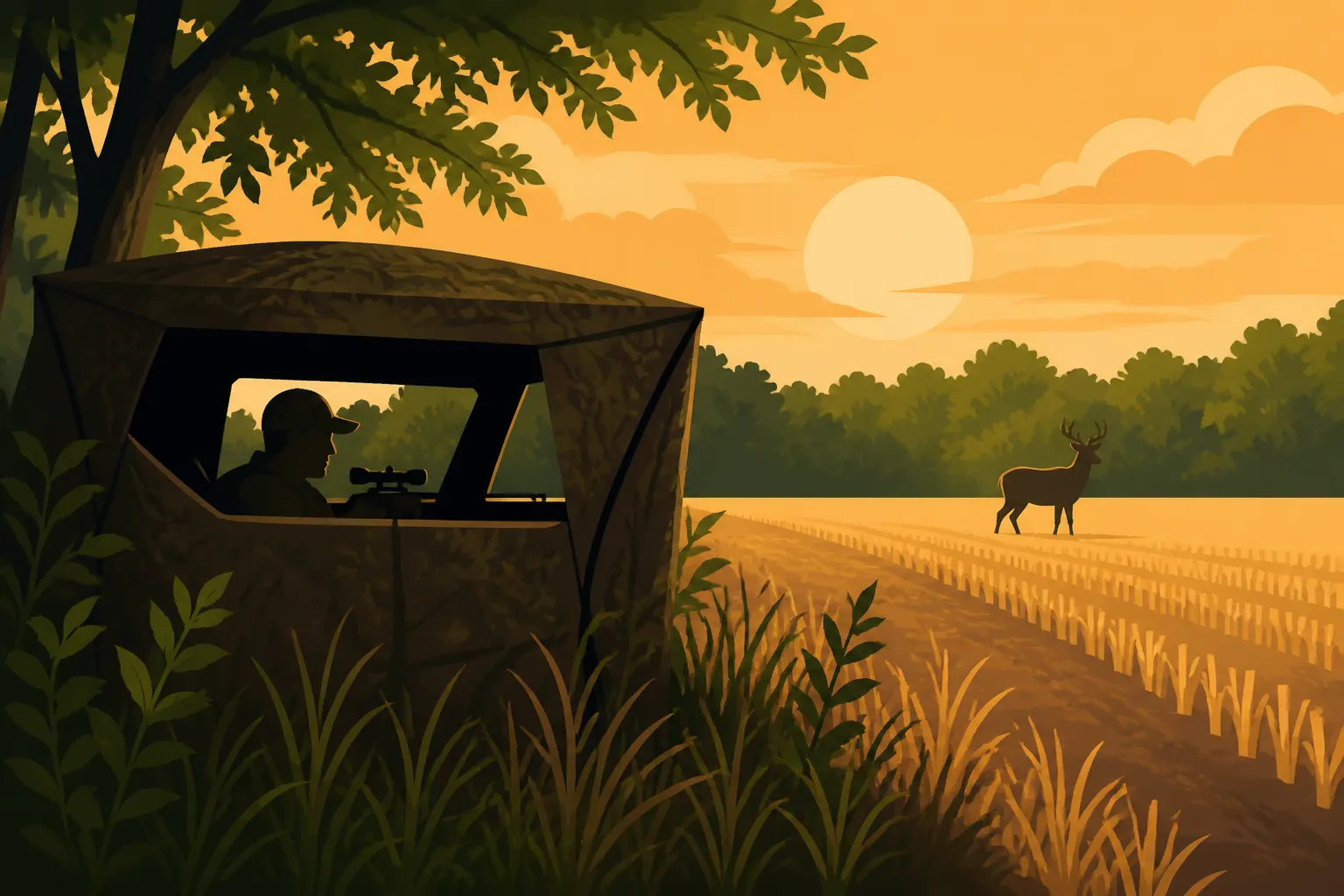
Field edges in Georgia, whether they're planted in corn, soybeans, peanuts, or a meticulously maintained food plot, are undeniable magnets for deer. But they also present some unique challenges for hunters. Unlike the thick hardwoods or dense pine stands where a well-placed tree stand can offer natural concealment and a high vantage, field edges often lack suitable trees for an elevated setup. This is where a ground blind truly shines, offering a versatile solution to many common frustrations.
Dealing with Limited Tree Cover
One of the biggest headaches when hunting agricultural fields or larger food plots in Georgia is the sheer lack of decent trees for hanging a stand. You might find a perfect pinch point or a well-used trail leading into the field, only to discover there's not a single tree large enough, straight enough, or well-located enough to support a treestand. This often forces hunters to compromise their setup, choosing a less-than-ideal spot just because a tree exists, or worse, abandoning the prime location altogether.
Ground blinds eliminate this dependency on trees. You can place a blind precisely where the deer sign is hottest, whether it's along a fenceline, at the corner of a field, or nestled into a brushy transition zone. This flexibility means you're no longer letting the landscape dictate your setup, but rather, you're placing yourself exactly where you have the best chance of intercepting deer. It opens up a whole new world of accessible hunting spots that would otherwise be impractical or impossible to hunt from above.
Staying Comfortable in Georgia's Diverse Weather
Georgia weather is notoriously unpredictable. One moment it's a sweltering 90 degrees with humidity so thick you can chew it, and the next a torrential downpour rolls in, followed by a crisp, cold front that drops temperatures by 30 degrees overnight. Trying to sit out in the open, or even in a minimalist treestand, in these conditions can be miserable, leading to shorter hunts, reduced focus, and ultimately, missed opportunities.
A quality ground blind provides invaluable protection from the elements. On those scorching early-season days, it offers shade and can be positioned to catch a breeze, making it tolerable to sit for longer periods. When the afternoon thunderstorms inevitably roll through, you'll stay dry. And as we move into the Late-Season Food Sources for Georgia Whitetails and the colder months, the enclosed space helps block the wind and retain some body heat, especially if you bring a small portable heater. This comfort isn't just a luxury; it directly translates to increased sit times and a more focused, patient hunter, which are crucial for success.
A Family-Friendly Hunting Option
Hunting with kids or new hunters, or even those with mobility challenges, often presents its own set of considerations. Treestands, while effective, can be intimidating and require a certain level of physical agility and safety discipline that might not be suitable for everyone. The elevated height, the cold, and the general exposure can make it less enjoyable for younger or less experienced companions.
Ground blinds are fantastic for family hunting. They offer a safe, enclosed space where kids can move a little, stretch, and even whisper without immediately spooking every deer in the county. You can bring extra snacks, drinks, and even a book or quiet toy, making the experience more comfortable and engaging for them. For hunters with mobility issues, a ground blind can be set up level with the ground, eliminating the need for climbing and making access much easier. It's a wonderful way to introduce new generations to the outdoors, fostering a love for hunting in a low-pressure, comfortable environment.
Choosing the Right Ground Blind for Georgia Conditions
Selecting a ground blind isn't a one-size-fits-all decision, especially with Georgia's varied terrain and climate. What works perfectly for an open Kansas field might not be ideal for a tight Georgia pine thicket. You need to consider construction, window setup, and camouflage specific to our local environment.
Hub-Style Versus Pop-Up Blinds
The most common types of ground blinds you'll encounter are hub-style and pop-up designs, each with its own advantages and drawbacks.
Hub-style blinds are typically more robust and spacious. They feature a sturdy framework of fiberglass poles that "hub" into a central locking mechanism, making them surprisingly rigid once set up. This design allows for larger interior spaces, often with enough room for two hunters and gear, or even three if you’re cozy. The heavier construction means they stand up better to Georgia’s often intense winds and heavy rains. They might take a few extra minutes to set up compared to a true pop-up, but the added stability and durability are often worth it for season-long placement or in areas prone to harsh weather. Many hunters prefer these for their longevity and reliability in varied conditions.
True pop-up blinds, sometimes called "umbrella-style," are designed for ultimate portability and speed. They literally pop open in seconds, making them ideal for run-and-gun scenarios or when you need to move quickly to a new spot. They are often lighter and more compact when folded down. However, this quick setup can sometimes come at the cost of stability and interior space. They might be more susceptible to strong winds, and their fabric can be thinner, offering less insulation. For hunters who need to be mobile or only plan on short sits, a pop-up can be a fantastic choice. Just be mindful of anchoring it well, especially in open fields.
Window Configurations and Visibility
The window setup on a ground blind is crucial for both visibility and shot opportunity. You'll find a wide array of options, from simple mesh windows with elastic loops to elaborate silent-slide systems.
Look for blinds with a good balance of panoramic visibility and silent operation. Many modern blinds feature "shoot-through" mesh panels, which allow you to keep the windows closed for maximum concealment while still being able to shoot an arrow or bullet directly through them. This is excellent for archery hunters, as it helps hide movement when drawing a bow. However, some hunters find that shooting a firearm through mesh can slightly alter point of impact or cause minor glare, so it's always wise to test your setup before heading afield. Many blinds now offer a combination of shoot-through mesh and larger, openable windows, giving you flexibility.
Consider the height and placement of windows. For hunting deer on a field edge, you'll want windows that allow you to see clearly from a seated position, covering various distances and angles into the field. Some blinds have 360-degree windows, offering full perimeter visibility, which is a huge advantage when deer can approach from any direction. Ensure the window openings are large enough to comfortably draw your bow or shoulder your firearm without snagging on the blind material. Silent closures, whether magnets, zippers, or toggles, are paramount; nothing busts a hunt faster than a loud rip of Velcro when a buck steps out.
Fabric, Camo Patterns, and Durability
The fabric of your ground blind plays a significant role in its overall effectiveness and lifespan. You want something durable, weather-resistant, and with a camouflage pattern that blends naturally with Georgia's environment.
Most blinds are made from polyester or nylon fabric, often with a waterproof coating. Look for a denier rating, which indicates fabric thickness; higher numbers (e.g., 300D, 600D) mean thicker, more durable material that will resist tears and punctures from briars and sharp branches. The coating is essential for keeping you dry during those sudden Georgia rain showers. Also, consider the interior coating – a dark, non-reflective interior helps hide your silhouette and movements from keen deer eyes.
For camouflage, choose a pattern that matches the predominant vegetation around your chosen field edge. If you're hunting against a backdrop of mature hardwoods and pines, a pattern with bark and leaf elements will work well. If you're tucking into a fencerow with tall grasses and brush, something with more earthy tones and vertical lines might be better. Brands like GoHunt often have detailed satellite imagery that can help you visualize the ground cover around a field edge, guiding your camo choice. Don't just pick a "pretty" pattern; pick one that genuinely disappears into your specific hunting location. Over time, UV exposure can fade even the best camo, so consider a blind with UV-resistant fabric if you plan to leave it out for extended periods.
Strategic Placement and Setup on Field Edges
Once you've chosen your blind, where you put it and how you set it up are just as important as the blind itself. Proper placement can be the difference between a successful hunt and a frustrating sit.
Wind Direction and Thermals
Georgia's unpredictable winds and thermals are probably the biggest factors in deer movement and your scent dispersion. Ignoring them is a surefire way to educate every deer in the area to your presence. When setting up a ground blind on a field edge, you absolutely must consider the prevailing winds.
Deer almost always approach a field with the wind in their favor, trying to scent-check for danger ahead. Therefore, you want your blind positioned so that your scent is blowing away from where you expect deer to approach and feed. This usually means setting up downwind of trails, pinch points, and common entry/exit routes. However, wind can swirl, especially near treelines and terrain features. Use a milkweed puff or a commercial wind checker frequently to monitor current conditions.
Thermals are also critical, particularly in the mornings and evenings. As the sun rises, the air warms and begins to rise, carrying your scent upward. In the evenings, as the air cools, it sinks and flows downhill into lower areas. On a field edge, if there's any elevation change, be it a subtle slope or a creek bottom, thermals will play a role. A tool like the mapping features found on GoHunt can help you visualize contour lines and elevation changes, assisting in predicting how thermals will behave. Ideally, you want to position your blind so that your rising morning thermals or sinking evening thermals are carrying your scent away from the deer's likely travel patterns. Sometimes, this means setting up slightly elevated on a ridge overlooking a field, or tucked into a small dip.
Entry and Exit Routes
Getting to and from your blind without spooking deer is just as important as the hunt itself. A poorly planned entry or exit can ruin a spot for days, if not weeks.
When selecting a blind location, always scout your entry and exit routes meticulously. Can you approach the blind without walking through an open field where deer might see you? Can you leave after the hunt without bumping deer already in the field or along their travel corridors? Look for natural cover like ditches, hedgerows, thick timber, or even the edge of a standing crop that allows for a concealed approach. Your route should ideally take you downwind of the field, minimizing the chance of deer smelling you before you even settle in.
Consider the time of day you'll be using the blind. For a morning hunt, you’ll be approaching in the dark, so a well-defined, easy-to-navigate path is crucial. For an evening hunt, you’ll likely be leaving after dark, so again, a clear and quiet path is essential. If possible, trim any noisy branches or clear away crunchy leaves from your path before the season starts. Minimizing disturbance is key to keeping deer comfortable around your setup. This is where pre-season scouting, potentially using an app to mark precise routes, truly pays off. Scouting Georgia Public Land Before Season is not just for public land; it applies equally to your private field edge setups.
Scouting with Digital Tools
Modern technology has revolutionized how we scout and choose hunting locations. Digital mapping tools are invaluable for identifying prime ground blind spots on Georgia field edges.
Applications like GoHunt allow you to examine aerial photos, topographic maps, and even property boundaries right from your phone or computer. Before you ever step foot in the woods, you can pinpoint potential travel corridors, pinch points, bedding areas, and feeding zones relative to your field edges. Look for funnel points where deer are naturally constricted, such as where two timber blocks meet a field, or where a creek bottom runs parallel to a field edge. These are often ideal spots for a ground blind.
Use the layering features in these apps to understand the terrain. Topo maps reveal subtle elevation changes that can affect wind and thermal patterns, while aerial imagery helps you identify natural cover like thickets or standing crops where you can effectively hide your blind. You can mark potential blind locations, entry/exit routes, and even predict where deer might be coming from based on surrounding habitat. This kind of virtual scouting, coupled with actual boots-on-the-ground confirmation, is incredibly efficient and helps you make the most informed decision for blind placement. For more on this, check out Reading Aerial Photos for Piedmont Deer.
Concealment and Blending Your Blind
A ground blind, no matter how good its camo pattern, will stick out like a sore thumb if it's just plopped down in the middle of nowhere. The key is to make it disappear into the natural environment.
Brushing In Your Blind
One of the most effective ways to make your ground blind invisible is to "brush it in." This means gathering natural materials from the surrounding area and integrating them into the blind's exterior.
Start by placing your blind hard against existing cover, if possible. A dense fencerow, a patch of briars, or the edge of a thicket are perfect backdrops. Then, begin breaking off branches, cutting tall grasses, or collecting deadfall from around your setup. Weave these materials into the brush straps or loops that many blinds come equipped with. The goal is to break up the blind's hard outline and make it look like a natural part of the landscape. Don't overdo it, but cover enough of the blind so that its silhouette is obscured. Pay particular attention to the corners and edges, as these are often the most unnatural-looking parts of a blind.
Do this well in advance of your hunt, if possible. A blind that has been brushed in and allowed to sit for a few weeks will "settle" into the environment, and the deer will become accustomed to its presence. Even if you're setting up for a one-day hunt, spending an extra 15-20 minutes brushing it in can make a huge difference. For a detailed guide, refer to Brushing In a Blind on a Field Edge.
Integrating with Natural Cover
Beyond just brushing it in, think about how your blind's placement can leverage existing natural cover to its maximum potential.
Instead of just putting the blind near cover, try to tuck it into cover. For example, if there's a small clump of pines or a thicket of cedars along a field edge, try to position the blind so it's partially enveloped by that vegetation. This immediately breaks up the blind's profile and casts shadows that help it disappear. If you're on the edge of a standing crop like corn or peanuts, position the blind just inside the crop line, allowing the vegetation to provide a natural screen. Just be mindful of farmer's fields and ensure you're not damaging crops or trespassing. Entry Routes Through a Standing Peanut Field and Hunting a Standing Soybean Field can provide further context on how deer interact with these features.
Consider the time of day and how the sun will hit your blind. Setting up on the shady side of a treeline or a large brush pile can help keep your blind in shadow for longer, making it harder for deer to spot. Remember, deer are constantly scanning their environment for anything out of place. The more you can make your blind look like "nothing," the better your chances.
Managing Shadows and Background
The play of light and shadow is a hunter's best friend or worst enemy. How your blind interacts with light can significantly impact its visibility.
Always try to position your blind with a dark background directly behind it. This could be a dense stand of timber, a thick fencerow, or a dark shadow line. A dark background helps to absorb light and make your blind's silhouette less distinct. If you place your blind with an open, bright sky behind it, your blind will be silhouetted, making it very easy for deer to spot. This is especially true if you are opening a window on the back of the blind.
Similarly, be mindful of your own shadows inside the blind. Wear dark clothing inside the blind, even if your camo is light. The dark interior of most blinds is designed to hide your movements, but if you're wearing a bright shirt and move around, your silhouette will be visible through the mesh or open windows. The goal is to become an unidentifiable blob of darkness within the dark void of the blind, allowing you to move subtly without alarming wary deer.
Hunting from a Ground Blind Effectively
Having the perfect blind setup is only half the battle. Knowing how to hunt effectively from within it is what truly brings success.
Understanding Shot Angles and Limitations
Hunting from a ground blind presents different shot considerations than hunting from a treestand. Your perspective is lower, and shot angles can feel different.
From a ground blind, you'll be shooting at eye level or slightly upward at deer, depending on the terrain. This means your arrow or bullet trajectory will be much flatter than from an elevated stand. Be mindful of obstacles between you and your target – even small twigs or blades of grass that would be clear from a treestand can deflect a shot from the ground. Always ensure a clear line of sight and an unobstructed shooting lane through your chosen window.
Practice shooting from a seated position, exactly as you would in your blind. This is especially critical for bowhunters, as drawing a bow while seated requires different muscle engagement and can feel awkward if you're not used to it. Familiarize yourself with how much clearance you have for your bow limbs or rifle barrel through the window. Knowing your effective range from a blind, and sticking to it, is paramount. Unlike a treestand, you generally won't have the luxury of shooting straight down at a deer, so broadside or slightly quartering-away shots are usually your best bet.
Managing Scent in a Confined Space
Even though you're in a seemingly enclosed space, scent control is still incredibly important when hunting from a ground blind. In fact, it can be even more challenging because the blind can trap and concentrate your scent.
Think of your blind as a "scent chamber." Any human odor you bring in will linger. Start with a thorough scent-elimination routine: shower with scent-free soap, use scent-free deodorant, and wash your hunting clothes in scent-free detergent. Dress completely outside the blind, or if you must dress inside, do it carefully. Consider using a small, battery-operated ozone generator inside the blind if allowed and practical, but don't rely solely on it.
The biggest factor is still the wind. As discussed earlier, strategic placement based on wind direction is your primary defense. Even with windows closed, some air exchange happens. When you open a window to shoot, your scent will inevitably escape. Always aim to have the wind carrying your scent away from where the deer are or where you expect them to be. A good quality blind with minimal leakage and a dark interior will help contain scent and hide movement, but proper wind assessment remains critical.
Patience and Minimizing Movement
Deer, especially mature bucks, are masters of detecting the slightest anomaly in their environment. Your ground blind provides excellent concealment, but it's only effective if you maximize its potential by minimizing movement and practicing extreme patience.
Once inside the blind, settle in and make yourself as comfortable as possible. Get all your gear organized and within easy reach. Minimize any unnecessary movements. Resist the urge to constantly peek out different windows or fidget with your phone. Even subtle movements can be magnified if a deer is looking directly at your blind. Use the shoot-through mesh or the corners of open windows to scan the field, turning your head slowly and smoothly.
Patience is a virtue in deer hunting, and it's particularly important from a ground blind. Deer often appear suddenly, seemingly out of nowhere. Be ready. Have your bow in hand or your rifle rested. If you need to make a move, do it slowly and deliberately when the deer's head is down feeding or looking away. The dark interior of the blind will help mask some movement, but it's not foolproof. The longer you can sit still and blend into your surroundings, the higher your chances of success.
Maintenance and Off-Season Care for Your Ground Blind
A ground blind is an investment, and like any hunting gear, proper care and maintenance will ensure it lasts for many seasons to come. Neglecting it can lead to premature wear, mildew, and functionality issues.
Cleaning and Drying Your Blind
After each season, or even after a particularly wet or muddy hunt, your blind needs a thorough cleaning and drying.
First, remove all vegetation, dirt, and debris from both the interior and exterior of the blind. Use a soft brush or a vacuum to get rid of any loose material. If the blind is muddy, you can gently spray it down with a hose. Avoid using harsh detergents or pressure washers, as these can damage the waterproof coating and fabric. A mild, scent-free soap and water solution is usually sufficient for tougher stains. Focus on areas where mildew might form, especially around the bottom edges or where water tends to collect.
Once cleaned, it is absolutely critical to dry your blind completely before storing it. Set it up in a shaded, well-ventilated area and let it air dry for several days. Even a slightly damp blind can develop mildew, which not only smells terrible but also degrades the fabric over time. Ensure all zippers and mesh panels are dry. If you have to pack it up damp, make it a priority to set it back up and dry it out as soon as possible.
Proper Storage Techniques
How you store your ground blind during the off-season will significantly impact its longevity. Don't just toss it in a corner of the garage.
Once your blind is clean and bone dry, fold it up according to the manufacturer's instructions. Incorrect folding can stress the fabric and frame, leading to damage. Store it in its original carrying bag, or a designated storage bag, to protect it from dust, pests, and accidental damage. Keep it in a cool, dry place, away from direct sunlight and extreme temperature fluctuations. Attics or hot sheds can cause accelerated degradation of the fabric and elastic components.
Consider adding a few mothballs or cedar blocks to the storage bag to deter insects and rodents, which can chew through fabric. If you have any silica gel packets, tossing a few of those in can help absorb any residual moisture and prevent mildew. Periodically, during the off-season, pull the blind out, unfold it, and inspect it. This gives you a chance to check for any issues and air it out again.
Minor Repairs and Inspection
A little preventative maintenance and timely repairs can save you from having to buy a new blind prematurely.
Before and after each season, and especially after any particularly rough hunts, give your blind a thorough inspection. Check the main hub mechanisms and poles for any cracks, bends, or signs of stress. Look at the fabric for small tears, fraying seams, or worn spots. Examine zippers to ensure they're functioning smoothly and aren't snagging.
Many minor issues can be easily fixed at home. Small tears can be patched with fabric repair kits designed for tents or outdoor gear. Zippers can often be lubricated with a silicone spray to prevent sticking. If a pole is cracked, replacement pole sections are often available from the manufacturer or generic repair kits. Addressing these small problems immediately prevents them from becoming larger, more expensive issues down the road. A well-maintained blind is a reliable blind, and reliability is priceless when you’re out in the Georgia woods.
| Feature/Aspect | Pros of Ground Blinds | Cons of Ground Blinds |
|---|---|---|
| Visibility | Concealment of movement, dark interior | Limited vertical vantage, ground-level perspective |
| Comfort | Protection from elements (rain, wind, sun), spacious | Can get hot/stuffy in warm weather, requires more gear |
| Accessibility | Easy access for all ages/mobility, no climbing | Can be bulky to transport to remote spots |
| Stealth | Hides movement and scent with proper setup | Scent can concentrate inside if not managed, loud zippers |
| Flexibility | Can be set up anywhere, not reliant on trees | Requires brushing in and careful placement for camouflage |
| Shot Angles | Flat trajectory, easy aiming | Obstructions like grass/twigs can be an issue |
| Setup Time | Hub-style quicker than climbing a stand, pop-up is instant | Initial brushing in takes time, can be cumbersome to move |
| Durability | Can last many seasons with proper care | Fabric can degrade from UV, prone to mildew if not dried |
Disclaimer
This article is for general informational purposes only and does not constitute professional advice. Laws, prices and regulations vary by location and change over time. Consult a qualified professional for guidance on your specific situation.