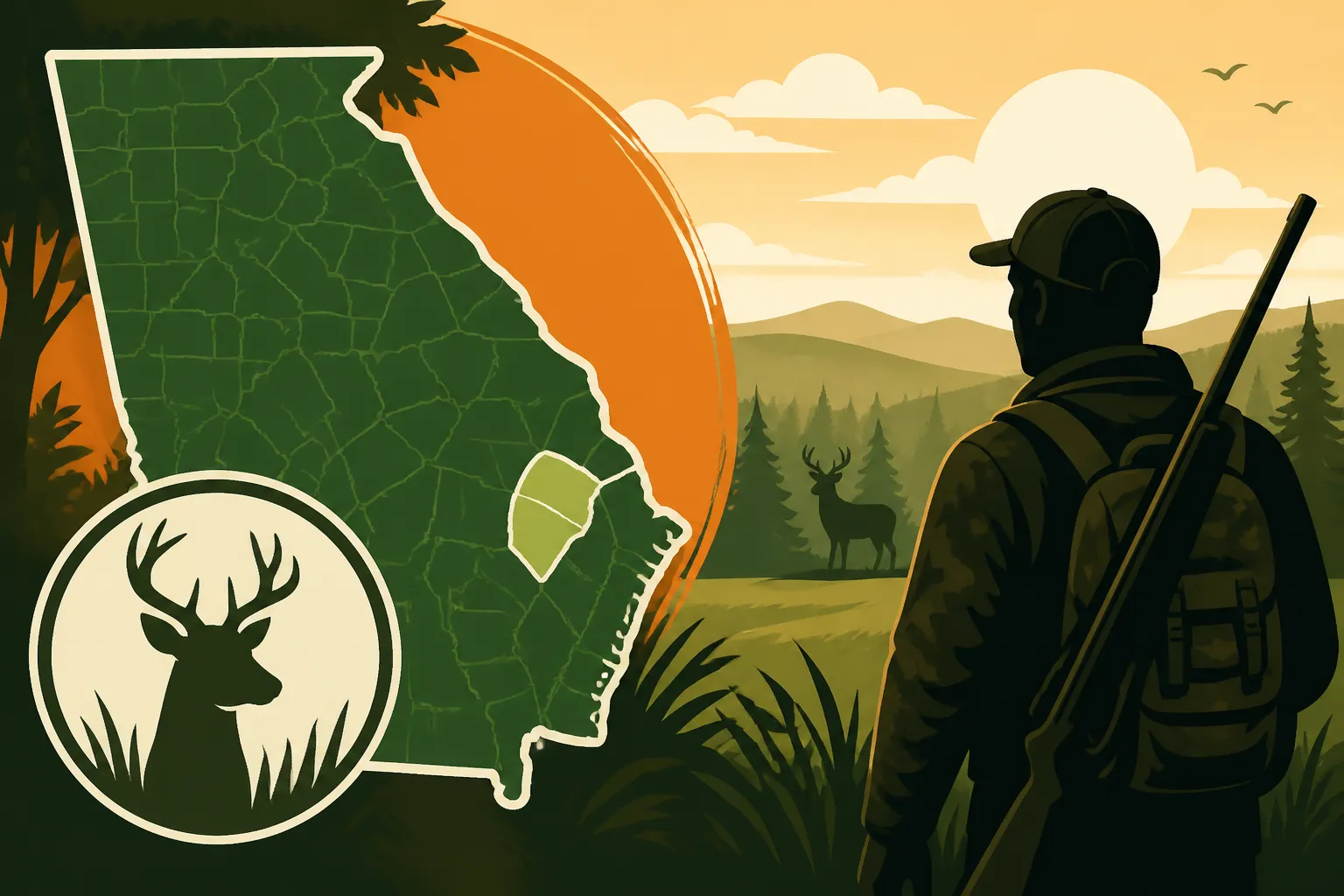
Appling County Public Hunting Access
It's a common frustration for hunters in Georgia: you've got your heart set on hitting the woods, but finding accessible public land, especially in parts of the state dominated by agriculture or private timber, can feel like searching for a needle in a haystack. Many of us know the feeling of driving past prime-looking habitat, only to see "No Trespassing" signs at every turn. This guide is here to help you navigate the public hunting access options in and around Appling County, breaking down where to go, what to expect, and how to make the most of your time afield in this rich part of Georgia's Coastal Plain.
Understanding Appling County's Hunting Landscape
Appling County, nestled in the southeastern part of Georgia, presents a unique blend of agricultural fields, vast timber operations, and critical river systems. While it's certainly a productive area for game, the challenge often lies in locating those elusive public access points amidst the private holdings.
Geographical Overview and Habitat Types
Appling County sits squarely in Georgia's Coastal Plain, a region characterized by relatively flat to gently rolling terrain. This isn't the steep, rocky ground you'd find in the North Georgia mountains. Instead, you'll encounter extensive pine plantations, managed timber forests, and significant agricultural operations – think vast fields of peanuts, cotton, and corn. These agricultural areas are often interspersed with blocks of mature hardwoods, particularly along river and creek bottoms.
This mosaic of habitats is fantastic for game. Deer thrive on the agricultural bounty and find cover in the timber. Wild turkeys utilize the open pines and hardwood bottoms. Feral hogs are ubiquitous, drawn to the food sources and dense cover. Waterfowl can be found in the larger river systems and associated wetlands. Understanding this landscape is your first step; you're looking for pockets of public ground within or adjacent to this highly productive, yet largely private, environment.
The Challenge of Finding Direct Public Access
Many hunters, especially those new to the area, often wonder if Appling County itself has large tracts of dedicated public hunting land. The honest answer is that while there might be smaller, localized opportunities or specific programs, Appling County isn't home to one of Georgia's massive flagship Wildlife Management Areas (WMAs). This can be discouraging if you're pulling up a map and not seeing big green blocks of public land directly in the county.
However, this doesn't mean you're out of luck. The key is to expand your search to the immediate vicinity, particularly focusing on the prominent river systems that often serve as natural corridors for wildlife and frequently host public land. The Altamaha River, in particular, is a game-changer for hunters in this region. It's about knowing where to look just beyond the county lines.
Key Public Hunting Opportunities Near Appling County
Since Appling County itself might not boast a massive WMA, the smart strategy is to look to its neighbors and the major river systems that define the region. These areas offer substantial public hunting opportunities that are easily accessible for Appling County residents and visitors.
The Altamaha River Corridor
When talking about public hunting near Appling County, the Altamaha River is truly the star of the show. This vast river system, one of Georgia's largest and most ecologically diverse, carves its way through the landscape, offering extensive public hunting opportunities along its floodplains and associated uplands. The Altamaha River Wildlife Management Area itself is a sprawling complex of lands managed for wildlife, stretching across several counties, including those bordering Appling.
This WMA provides an incredible variety of habitats, from dense river swamp bottoms to higher-elevation pine stands. Deer hunting here can be challenging due to the thick cover, but trophy potential exists. Turkey hunting can be excellent, particularly in the spring, as gobblers work the hardwood ridges and swamp edges. Feral hogs are plentiful, and their populations often provide year-round hunting opportunities. Waterfowl hunting can also be productive in flooded timber and sloughs, especially for species like wood ducks. Access points are numerous along the river, often with boat ramps that allow hunters to navigate deep into the interior. Be prepared for robust terrain, and consider tactics for Hunting Georgia Swamp and River Bottom Deer.
Other Nearby Wildlife Management Areas
While the Altamaha River WMA is likely your closest and most expansive option, there are other WMAs in the broader Coastal Plain region that Appling County hunters might consider, depending on how far they're willing to travel. These areas often cater to slightly different hunting experiences or species focuses.
For instance, depending on your exact location in Appling County, areas like Griffin Ridge WMA or Sansavilla WMA might be within a reasonable drive. These WMAs typically feature a mix of pine flatwoods, hardwood drains, and some agricultural interfaces. They offer opportunities for deer, turkey, and small game. Each WMA has its own unique character and regulations, so always consult the Georgia Department of Natural Resources (DNR) website for specific details on hunt dates, bag limits, and special restrictions. These areas can be excellent for scouting and employing tactics like Still-Hunting South Georgia Pine Flats or hunting various food sources.
When considering multiple WMAs, it's helpful to compare their offerings:
| WMA Name | Primary Location (Near Appling Co.) | Key Game Species | Habitat Focus | Special Considerations |
|---|---|---|---|---|
| Altamaha River WMA | Long, widespread corridor | Deer, Turkey, Hogs, Waterfowl | River swamp, hardwoods, pine | Boat access often key; very rugged |
| Sansavilla WMA | McIntosh/Glynn Counties | Deer, Turkey, Hogs, Small Game | Pine flatwoods, cypress swamps | Quota hunts for certain species |
| Griffin Ridge WMA | Wayne County | Deer, Turkey, Hogs, Small Game | Pine plantations, hardwood drains | Check specific hunt dates carefully |
| Ocmulgee WMA (further) | Twiggs/Pulaski Counties | Deer, Turkey, Hogs, Small Game | Ocmulgee River bottomland, uplands | Significant driving distance from Appling |
This table provides a snapshot, but deeper research into each WMA's specific features and regulations is always recommended.
Navigating Regulations and Access for Public Land
Public land hunting comes with a set of rules and considerations that are crucial to understand before you head out. These regulations ensure fair chase, manage wildlife populations, and help minimize conflicts among hunters and other outdoor enthusiasts.
General WMA Rules and Specific Area Regulations
Every Wildlife Management Area in Georgia operates under a specific set of regulations, and it's your responsibility as a hunter to know them. Beyond a general hunting license and Georgia Resident Big Game License Cost, you'll almost always need a WMA license or a Georgia Resident Sportsman License bundle to hunt on these public lands. Many WMAs also require hunters to check in and out, either physically at a kiosk or electronically through the Georgia Game Check system.
Key things to look out for in WMA regulations include:
- Season Dates: WMA seasons often differ from statewide private land seasons. They might be shorter, have different opening and closing days, or be designated for specific weapon types (e.g., archery-only periods, primitive weapons weeks). For instance, understanding Georgia Primitive Weapons Season Dates is crucial.
- Bag Limits: While Georgia has a generous statewide deer bag limit, WMAs might have more restrictive antler restrictions or antlerless deer limits to manage local populations.
- Weapon Restrictions: Some WMAs may restrict certain firearms or ammunition types. Always check before you load up.
- Vehicle Access: Roads on WMAs might be gated, seasonal, or limited to specific vehicle types. Knowing where you can and cannot drive is vital for both access and avoiding penalties.
- Treestands and Ground Blinds: There are usually rules about when you can put up a stand, what kind of stands are allowed, and how long they can remain on the WMA. For example, Treestand Rules on Georgia Public Land generally prohibit leaving stands up year-round.
- Quota Hunts: Some WMAs, or specific hunts within them, are managed through quota draws, especially for high-demand species or periods. Make sure you haven't stumbled onto a quota-only hunt without applying.
Always consult the most current Georgia Hunting Regulations guide, available from the Georgia DNR, and look specifically at the section for the WMA you plan to visit. Ignorance of the rules is never an excuse.
Utilizing Mapping and Information Tools
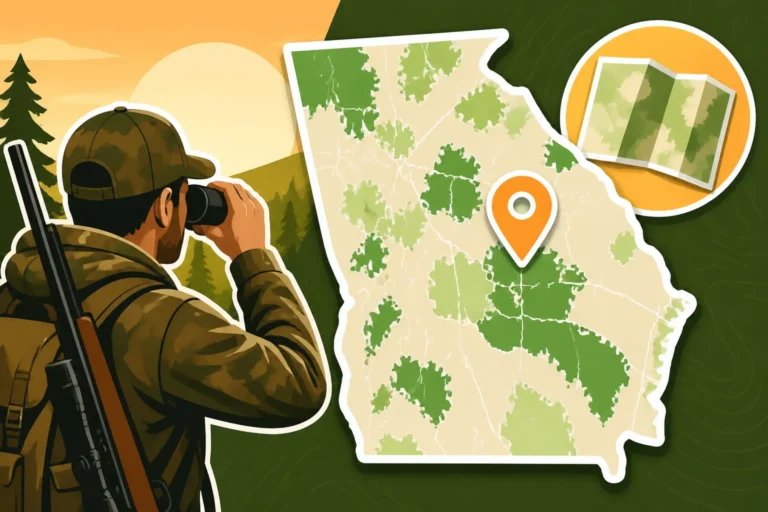
In today's hunting world, digital mapping tools are an absolute game-changer, especially when navigating complex public land holdings like WMAs. Brands like onX Hunt are invaluable for showing property boundaries, identifying public versus private land, displaying WMA borders, and detailing topography, roads, and trails. Using an app like onX Hunt on your phone allows you to:
- Verify Public/Private Boundaries: Crucial for staying off private land, especially in areas where WMA boundaries might be less clearly marked on the ground.
- Locate Access Points: Find legal parking areas, gates, and walk-in access points, even those that aren't obvious from a main road.
- Scout Remotely: Use satellite imagery to identify potential pinch points, clear-cuts, creek crossings, and bedding areas before you ever set foot in the woods. This is excellent for applying knowledge about Reading Aerial Photos for Piedmont Deer, which often applies to the Coastal Plain as well.
- Track Your Movement: Ensure you stay within WMA boundaries and can navigate back to your vehicle after dark.
- Understand Topography: Even in the relatively flat Coastal Plain, subtle elevation changes, sloughs, and creek drainages can funnel deer movement.
Another valuable resource is GoHunt, which often provides detailed information on hunting units, season dates, and even harvest statistics, helping you narrow down productive areas. While these tools won't guarantee success, they significantly reduce the guesswork and improve your safety and efficiency in the field. Don't leave home without a fully charged phone with these apps downloaded and offline maps enabled, especially when Using Georgia Outdoors Without Cell Service is a real possibility in remote areas.
Strategies for Successful Hunting in Appling's Vicinity
Hunting in the Coastal Plain, particularly in diverse areas like the Altamaha River corridor, requires a thoughtful approach. Success often boils down to thorough scouting, adapting your tactics to the specific environment, and understanding game behavior in these unique habitats.
Scouting the Coastal Plain Habitat
Pre-season scouting is paramount, regardless of your target species. In the Appling County region, this means looking for specific elements that indicate game presence and movement.
- Food Sources: Pay close attention to available food. In pine plantations, this might mean looking for fresh browse or areas with recent prescribed burns that stimulate new growth. Along river bottoms, identify mast-producing hardwoods like oaks and persimmons. In areas bordering agriculture, deer and hogs will often be using crop fields, so look for trails leading to and from these areas. Late-Season Food Sources for Georgia Whitetails are often different from early season, so scout accordingly.
- Water: The Altamaha River and its tributaries provide abundant water, but smaller sloughs, oxbow lakes, and beaver ponds can be key attractants, especially for hogs and waterfowl.
- Cover and Travel Corridors: Game animals, particularly deer and hogs, need dense cover for bedding and security. Look for thickets, blowdowns, and sections of the swamp that offer sanctuary. Identify natural funnels, such as narrow strips of hardwoods between clear-cuts, dry ridges within a swamp, or creek bottoms. These are prime locations for ambushing animals on the move. When Scouting Georgia Public Land Before Season, prioritize finding these hidden travel routes.
- Sign: Fresh tracks, rubs, scrapes, and droppings are obvious indicators. For hogs, look for rooting and wallows. For turkeys, fresh scratchings, droppings, and dusting bowls are good signs.
Adaptable Hunting Tactics for Diverse Environments
Given the varied habitats near Appling County, a flexible hunting approach will serve you well. What works in a sprawling pine flat might not be effective in a dense river swamp.
- River Bottoms and Swamps: These areas are often challenging due to thick vegetation and water, but they can hold mature animals seeking refuge. Still-hunting, moving slowly and deliberately, is often highly effective. Utilize boat access if available to reach remote areas. Treestand placement here should focus on subtle high ground, pinch points, or crossings. Be prepared for mud, water, and plenty of insects. Hunting Georgia Swamp and River Bottom Deer often involves patient observation and precise shot placement in tight windows.
- Pine Plantations: Managed pine forests can be deceptive. While they may appear uniform, deer and turkeys use them extensively. Look for internal roads, firebreaks, and the edges of recent clear-cuts. These are often great places to set up a ground blind or a mobile treestand. Deer will often bed in dense young pines and feed on new growth or acorns in adjacent mature timber.
- Agricultural Edges: If hunting public land that borders private agricultural fields, focus on the transition zones. Deer and hogs will move from the security of the woods into fields to feed, especially at dawn and dusk. Setting up a stand or blind along these edges, with the wind in your favor, can be very productive. Remember to always stay on the public side of the fence line.
- Calling: For deer, rattling and grunt calls can be effective during the rut, which often peaks in mid-October in this region. Rattling Volume in Thick Pine Cover should be adjusted based on visibility. For turkeys, a variety of calls, from locator calls to yelps and purrs, can draw in a curious gobbler. Be mindful of hunting pressure; sometimes less aggressive calling works best on public land.
The key is to observe your surroundings, understand the seasonal patterns of game, and be willing to adjust your strategy based on the conditions. The rewards of hunting these productive, yet often challenging, public lands near Appling County are well worth the effort.
Disclaimer
This article is for general informational purposes only and does not constitute professional advice. Laws, prices and regulations vary by location and change over time. Consult a qualified professional for guidance on your specific situation.