How Big Chattahoochee National Forest Actually Is
There’s nothing quite like the feeling of looking at a sprawling topo map of North Georgia and seeing that massive green expanse that denotes public land. But for many hunters, that green can be both incredibly exciting and, let's be honest, a little bit intimidating. The Chattahoochee National Forest stands as one of Georgia's crown jewels for public land hunting, yet its sheer scale and diverse terrain can leave folks wondering exactly how big it actually is and how best to tackle it. This guide is here to unravel the vastness of this incredible resource and provide insights into making the most of your hunting adventures within its boundaries.
Understanding the Sheer Scale of the Chattahoochee National Forest
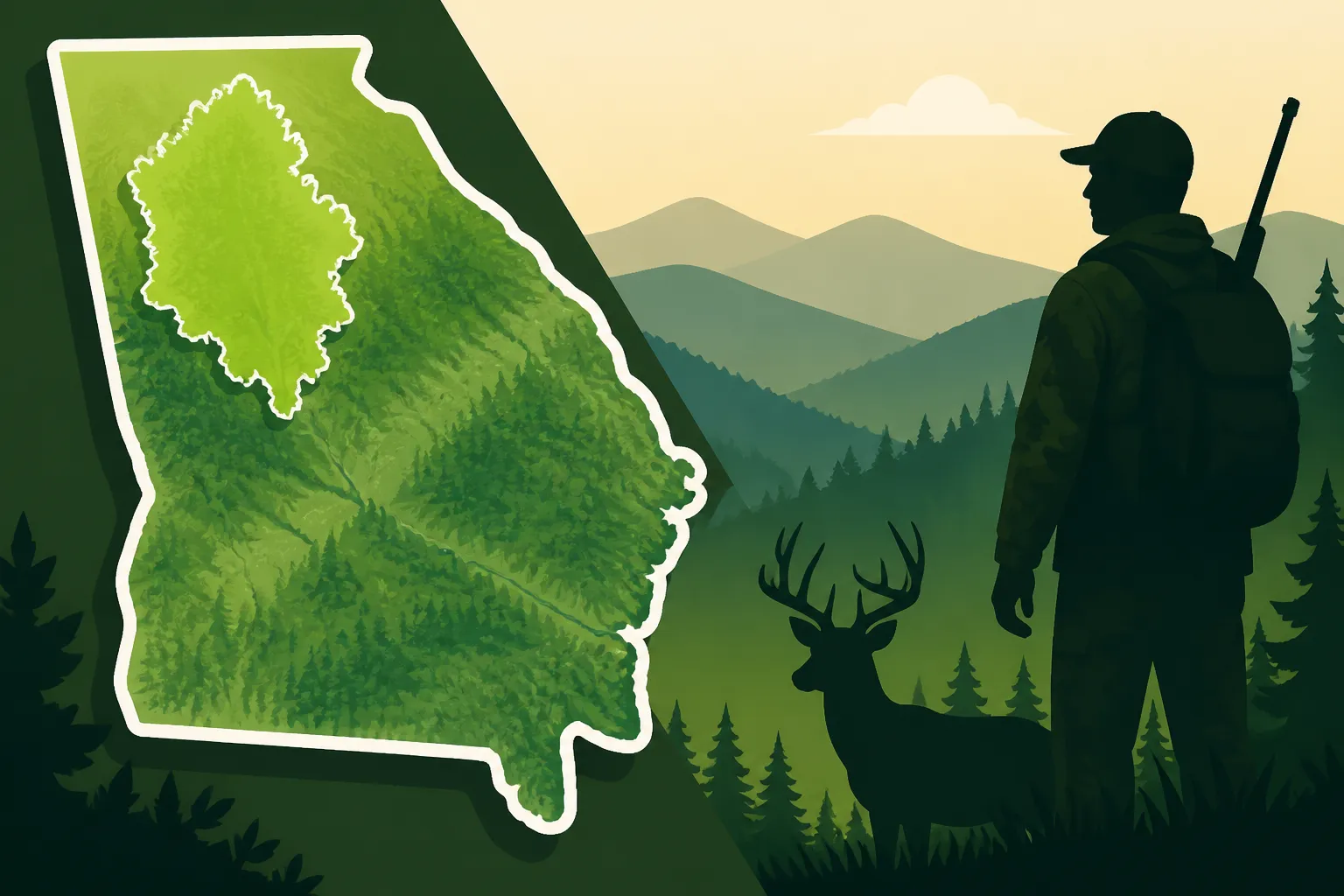
When we talk about the Chattahoochee National Forest, we're not just discussing a large tract of woods; we're talking about a significant portion of Georgia's mountainous northern region. It’s part of a larger National Forest system that combines with the Oconee National Forest, creating a truly immense public holding. While it's easy to picture it as one continuous, unbroken block of timber, the reality is a bit more nuanced. The Chattahoochee is actually a mosaic of federal lands interspersed with private holdings, county roads, and small communities, all woven together across the rugged topography of North Georgia.
Think about traversing multiple counties – Fannin, Union, Lumpkin, White, Rabun, Towns, and more – and that gives you a sense of the geographical spread. This isn't a place you can "see" in a day or even a week. Its expansive nature means that habitat types vary wildly, from the dense rhododendron thickets of higher elevations to the mature hardwood stands in valleys and the occasional pine plantation on more accessible ridges. For a hunter, this diversity translates to endless opportunities, but also requires a deep understanding of how to read the land and adapt your tactics to specific micro-environments. It's a place where you can truly get lost in the wilderness, in the best possible sense of the word, pursuing everything from whitetails to black bears.
Diverse Hunting Opportunities Across This Vast Landscape
The immense size and varied habitats of the Chattahoochee National Forest make it a phenomenal destination for a wide array of hunting pursuits. It's not just a deer hunting ground, though whitetails certainly thrive here. It's a complex ecosystem that supports a robust population of game animals, each requiring different strategies and offering unique challenges.
Chasing Mountain Whitetails
Deer hunting in the Chattahoochee National Forest is a distinctly different experience from hunting the flatlands of South Georgia. Here, it’s often about steep climbs, glassing distant slopes, and understanding how deer utilize elevation, saddles, and creek bottoms. The deer density might not be as high as in some agricultural areas, but the satisfaction of tagging a mature buck that has navigated this rugged terrain is unparalleled. You'll spend a lot of time on your feet, perhaps covering miles in a day, which is why physical conditioning is so crucial. Hunters often focus on natural funnels created by the topography, such as saddles between peaks or benches on steep hillsides. Reading a Ridge for North Georgia Deer can give you a significant advantage, helping you identify travel corridors and bedding areas that are less obvious to the casual observer. During the rut, bucks will often cruise these same features, scent-checking for does, making these natural pinch points prime locations for a stand or still-hunting.
The Realm of the Black Bear
For those looking for a bigger challenge, the Chattahoochee National Forest is a primary stronghold for Georgia's black bear population. The vast, unfragmented forests provide ideal habitat for these impressive animals, particularly in the northern counties. Bear seasons here are highly anticipated and require careful planning and often some serious scouting. Unlike deer, bears are often found in the densest, nastiest cover, where they feel secure. This means hunters need to be prepared for thickets of mountain laurel, rhododendron, and other dense vegetation. Understanding the available food sources, like acorns, berries, and even wild cherries, is key to locating bears as they forage. The Georgia Northern Zone Bear Archery Dates and Georgia Northern Zone Bear Firearms Dates typically offer specific windows for bear hunting, and being aware of those short seasons is critical. Hunters often set up near known feeding areas or along heavily used game trails that lead to these food sources. It’s a hunt that demands patience, keen observation, and a willingness to explore remote corners of the forest.
Spring Gobblers and Small Game Opportunities
Beyond big game, the Chattahoochee also offers excellent spring turkey hunting. The mountains echo with gobbler calls each spring, providing thrilling opportunities for run-and-gun tactics or patient setups. Turkeys in the mountains are often patterned differently than their lowland counterparts, frequently roosting high on ridges and flying down to creek bottoms or open areas to feed. Locating a roost and getting ahead of the birds at first light can be a highly effective strategy. For a challenging but rewarding experience, consider Roost Hunting Georgia Gobblers.
Small game hunting, while perhaps less heralded, is also very much alive in the Chattahoochee. Squirrels are abundant in the hardwood forests, providing a fantastic way to introduce new hunters to the sport or just enjoy a quiet day afield. Rabbit hunting, particularly along logging roads and regeneration cuts, can also be productive. The beauty of small game in such a large forest is that you can often find unpressured areas, offering a more tranquil experience away from the crowds.
Navigating Access and Planning Your Hunt in the Chattahoochee
The sheer size of the Chattahoochee National Forest means that access can vary dramatically, from easily reachable spots off paved roads to remote wilderness areas requiring significant effort to reach. Planning your hunt involves much more than just picking a county; it means understanding the lay of the land, identifying access points, and utilizing modern tools to maximize your time and effort.
Unlocking the Forest's Secrets with Mapping Tools
Gone are the days when a paper topo map was your only resource (though having one as a backup is always a good idea!). Today, digital mapping applications have revolutionized how hunters scout and navigate public land. Services like onX Hunt or GoHunt provide invaluable layers that show property boundaries, forest service roads, hiking trails, and even satellite imagery that can reveal hidden clearings or dense cover. Before you even set foot in the woods, you can use these tools to identify potential access points, pinpoint likely bedding areas, and map out your entry and exit routes. This is particularly useful in an area like the Chattahoochee, where public land often borders private property, making it crucial to know exactly where you stand. Understanding Where to Get a Georgia Public Land Map and how to use it effectively, especially when cell service might be spotty, is a game-changer.
Finding Your Way Off the Beaten Path
While major forest service roads provide convenient access to many areas, the real treasures often lie beyond where most vehicles can go. Many hunters choose to walk or use mountain bikes on gated roads or designated trails to get deeper into the forest, away from typical hunting pressure. However, navigating these remote sections requires excellent orienteering skills and a good understanding of the terrain. Finding Ground Others Walk Past is often the key to success in highly trafficked areas.
Here's a quick comparison of common access challenges and solutions in the Chattahoochee:
| Access Type | Description | Challenges | Solutions |
|---|---|---|---|
| Paved Roads | Easy drive-up access, parking areas often available | High hunting pressure, limited seclusion | Hunt midweek, walk further, scout remote trails |
| Forest Service Roads | Maintained gravel roads, some gated | Can be rough, gates restrict vehicle access | Use mountain bike or walk, check road status |
| Hiking Trails/Wilderness | Foot traffic only, marked and unmarked trails | Strenuous, remote, can get lost | GPS/onX, physical fitness, carry essentials |
| River/Creek Access | Floating or wading into areas adjacent to water | Currents, private land boundaries, hidden hazards | Scout from water, confirm public land lines |
Always be mindful of your surroundings and pack essentials like a first-aid kit, extra water, and communication devices. While the goal is to get away from it all, safety should always be your top priority.
Key Considerations for Success in Such Expansive Terrain
Hunting the Chattahoochee National Forest is a deeply rewarding experience, but it demands respect for the land and thorough preparation. Success here often hinges on understanding the unique characteristics of mountain hunting and adapting your approach accordingly.
Physical Demands and Gear Preparedness
This isn't a sit-in-the-deer-stand-for-an-hour kind of hunt. The Chattahoochee requires effort. The steep inclines, uneven footing, and dense undergrowth mean you'll be burning calories and testing your endurance. Being in good physical condition will not only make the hunt more enjoyable but also safer and more effective. You'll cover more ground, access more remote areas, and be better able to retrieve game from difficult spots.
Your gear needs to match the environment. Sturdy, waterproof boots with good ankle support are non-negotiable. Layered clothing is essential to adapt to the often-changing mountain weather, which can swing from chilly mornings to warm afternoons. A good quality pack, like those designed for a Packs Built for a Chattahoochee Day Hunt, is crucial for carrying water, snacks, extra layers, a first-aid kit, and anything you might need for game recovery. Don't forget bug repellent, especially during the warmer early seasons, as ticks and mosquitoes can be quite persistent.
Understanding Pressure and Finding Sanctuary
Due to its accessibility and popularity, certain areas of the Chattahoochee National Forest can experience significant hunting pressure, especially during opening weekends of popular seasons. However, the sheer size of the forest means that sanctuary areas exist. The trick is to identify them. These are often the places that are hardest to reach: steep, remote ridges, deep ravines, or areas a few miles back from any road or trail.
Learning to interpret topography and aerial imagery to identify these low-pressure zones is a skill that pays dividends. Often, simply walking an extra mile or two further than other hunters are willing to go can put you into an entirely different caliber of hunting. Consider setting up a mobile treestand or saddle system, as discussed in Treestand Setups in North Georgia Mountains, allowing you to move with the animals and adapt to changing conditions. Understanding Hunting Pressure on Georgia Public Land is key to formulating a strategy that will give you the best chance of success, whether it means targeting midweek hunts or venturing into truly wild sections of the forest.
Ultimately, the Chattahoochee National Forest is a hunter's paradise, offering endless challenges and rewards. Its expansive acreage ensures that there's always more to explore, more to learn, and another adventure waiting just around the bend. Embrace its scale, prepare thoughtfully, and you’ll discover a hunting experience unlike any other in Georgia.
Disclaimer
This article is for general informational purposes only and does not constitute professional advice. Laws, prices and regulations vary by location and change over time. Consult a qualified professional for guidance on your specific situation.