Hunting Chattahoochee Mountain Ridgelines
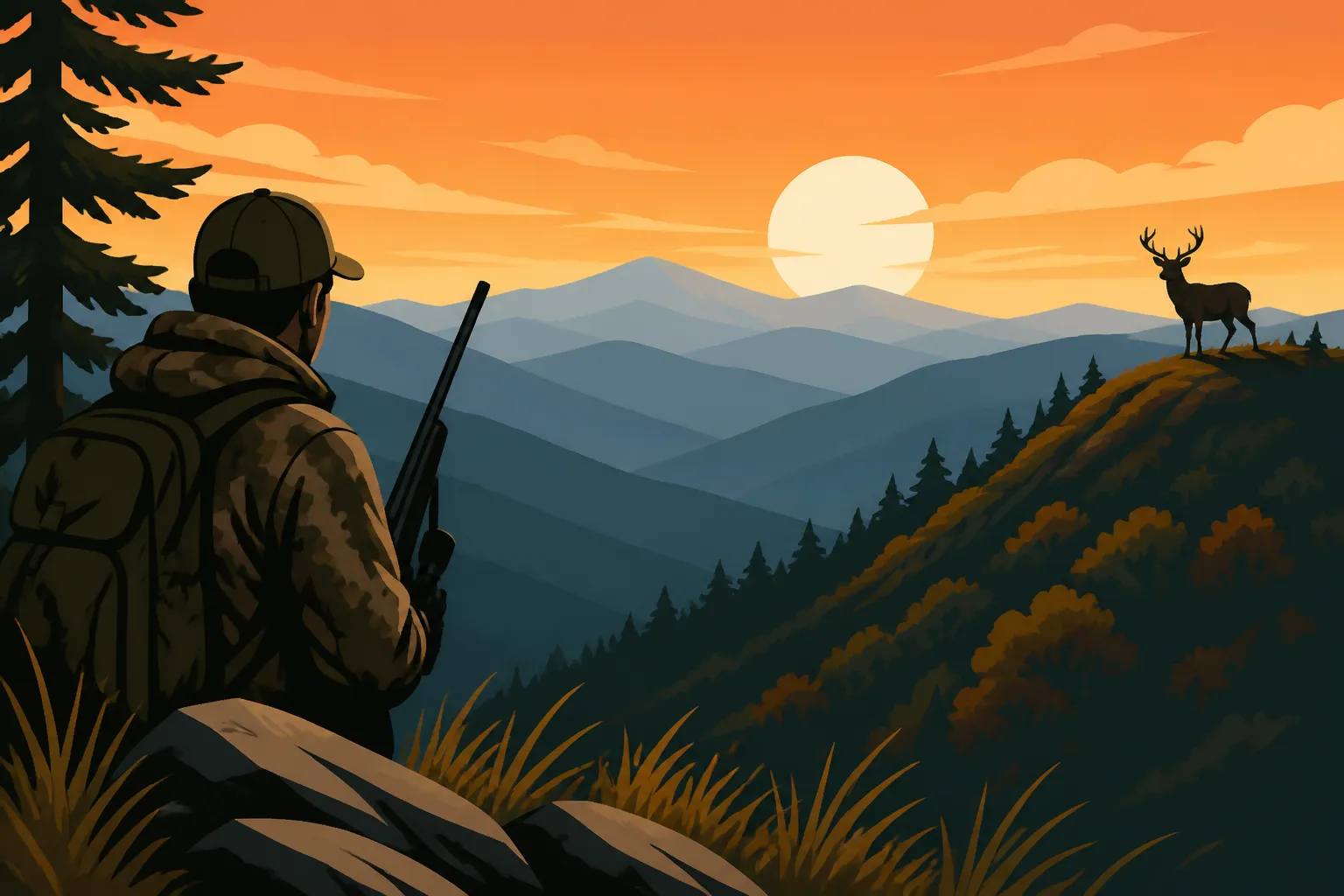
Hunting the steep, unforgiving ridgelines of the Chattahoochee National Forest can feel like an entirely different sport compared to hunting flatland pines or Piedmont hardwoods. The dense cover, extreme elevation changes, and the often-elusive nature of mountain deer present a unique set of frustrations for even seasoned hunters. This guide will walk you through understanding these challenging environments, developing effective scouting strategies, and employing successful hunting tactics specifically tailored for Georgia's rugged mountain terrain.
Understanding the Unique Challenges of Mountain Hunting in Georgia
The mountains of North Georgia, particularly within areas like the Chattahoochee National Forest, offer breathtaking views and a sense of wild solitude, but they also demand a completely different approach from hunters. Forget your usual low-country tactics; the deer here live by a different rulebook, and so must you. The very landscape itself dictates everything from deer movement to your physical exertion, making it crucial to adapt your mindset and methods before you even step foot in the woods.
The Steep Learning Curve of Elevation
One of the most immediate and significant challenges you'll face on these ridgelines is the sheer verticality of the terrain. We're talking about ascents that will leave your lungs burning and descents that test your knees, often covered in loose rock, slick leaves, or treacherous roots. This isn't just about physical fitness, though that's certainly a big part of it; it also impacts how deer move. Instead of meandering through flatlands, mountain deer often use contours, benches, and saddles as their highways, conserving energy while moving between bedding and feeding areas. Understanding these natural travel corridors is paramount.
The steepness also means that noise carries differently, and visibility is often limited to much shorter distances, even on what seems like an open ridge. Sound travels up and down valleys and hollows, making it harder to pinpoint the source of a distant rustle or snap. Similarly, what looks like a clear shot from one angle can quickly become obstructed by a slight rise or a thicket you couldn't see from your vantage point. This constant battle with elevation and sightlines requires heightened awareness and careful, deliberate movement. You're not just looking for deer; you're constantly evaluating your footing and your immediate surroundings.
Dense Cover and Limited Visibility
While you might envision wide-open vistas from a Georgia mountain ridge, the reality on the ground is often far denser. Areas of thick rhododendron, mountain laurel, and tangled briar patches create impenetrable cover that deer can melt into within seconds. These dense spots aren't just frustrating to navigate; they serve as prime bedding areas and escape routes for deer. They offer security from predators and hunters alike, making it difficult to spot game until they are almost on top of you.
This limited visibility fundamentally changes how you hunt. Long-range shots are rare; instead, you're looking for opportunities within 50 to 100 yards, often much closer. This means you need to be exceptionally quiet, patient, and prepared for quick shots. Your ability to pick apart small openings, anticipate deer movement through pinch points in the cover, and react swiftly becomes far more critical than ranging skills over open fields. It’s a game of inches and calculated risks, where every rustle in the leaves could be a deer or just a squirrel playing tricks.
Scouting Strategies for Chattahoochee Ridgelines
Effective scouting is the bedrock of successful mountain hunting. You simply cannot walk into these woods blindly and expect consistent results. The scale of the Chattahoochee National Forest is immense, and finding those elusive pockets where deer frequent requires dedication, smart use of technology, and plenty of boots-on-the-ground effort. This pre-season work will save you countless hours of unproductive hunting and dramatically increase your odds of success. If you're new to the area, checking out resources on Scouting Georgia Public Land Before Season is a great starting point.
Utilizing Topographic Maps and Aerial Imagery
Before you even tie your boots, immerse yourself in digital scouting. Tools like GoHunt or other detailed mapping applications are invaluable for dissecting mountain terrain. Start by identifying the main ridgelines and how they connect to smaller secondary ridges. Look for distinct features:
- Saddles: These are dips or low points along a ridge. Deer frequently use saddles as travel corridors, as they offer the path of least resistance when moving from one side of a ridge to another. They often feature worn trails. You can learn more about Hanging a Stand on a Mountain Saddle for specific tactics.
- Benches: These are relatively flat areas or terraces on a steep slope. Deer love to bed on benches because they offer a flat spot to rest, often with good visibility of the slope below and scent control from the prevailing winds coming over the ridge.
- Funnels and Pinch Points: Look for areas where the terrain narrows, forcing deer into a predictable path. This could be where two hollows converge, or where dense thickets push deer along a specific line.
- North-facing slopes: These often hold thicker, colder cover, which can be attractive for bedding in warmer weather. South-facing slopes tend to be sunnier and can produce more browse.
Pay close attention to changes in timber type visible on aerial photos. Patches of hardwoods might indicate acorn production, while pine thickets or clear-cuts offer dense thermal cover. Mark potential bedding areas, prominent trails, and feeding zones. This initial digital phase is about narrowing down vast tracts of land into manageable areas that warrant further investigation.
Boots-on-the-Ground Reconnaissance
Once you have your digital map marked up, it’s time to hit the woods. Nothing beats physical scouting for confirming what you see on a map and uncovering fresh sign. Plan several trips before the season, focusing on those areas you identified as promising. Look for:
- Well-worn trails: These are highways for deer. Pay attention to how they traverse the contours, especially leading into and out of saddles and benches.
- Scrapes and rubs: While these might not be as abundant as in flatter regions, finding fresh ones indicates current buck activity.
- Droppings: Fresh droppings give you an idea of deer density and recent presence.
- Bedding areas: Look for matted-down spots in dense cover, particularly on benches or just below the crest of a ridge, where deer can see downwind.
- Water sources: Seeps, small springs, or creek heads can be crucial, especially during dry periods.
When scouting, move slowly and quietly, as if you are hunting. This allows you to observe natural deer behavior if you bump a deer and helps you identify potential stand locations or still-hunting routes. Make mental notes, or better yet, drop pins on your GoHunt app for every piece of sign, every potential stand tree, and every natural funnel. Understanding Reading a Ridge for North Georgia Deer truly comes alive when you're walking the ground. Remember to carry a good pack, as you'll be covering some serious ground, and a suitable pack can make a huge difference, particularly one designed for long hikes like those mentioned in Packs Built for a Chattahoochee Day Hunt.
Tactics for Still-Hunting and Stand Placement
Hunting Chattahoochee ridgelines successfully often requires a blend of patient observation and strategic movement. It's rarely a "sit-and-wait" game for long periods unless you've pinpointed a very specific, high-traffic area. Instead, hunters need to be versatile, combining the stealth of still-hunting with the advantage of elevated stands when the situation calls for it. The goal is to maximize your chances in an environment where deer are constantly moving and often unpredictable.
Still-Hunting the Ridge Crests and Sides
Still-hunting is arguably one of the most effective methods for these challenging mountain landscapes. It involves moving extremely slowly and deliberately, taking only a few steps at a time, then pausing for several minutes to scan your surroundings. You're not just walking; you're hunting every step of the way. Focus on moving parallel to the ridge crest, just below it on the downwind side, or along a known deer trail. This allows you to see deer moving along the ridge or bedded on benches without exposing yourself against the skyline.
When still-hunting, use the terrain to your advantage. Walk on the softest ground possible—pine needles, wet leaves, moss—to minimize noise. Use every tree, rock, and change in elevation as cover. Constantly scan ahead and to your sides, looking for parts of a deer: an ear flick, a patch of brown, a horizontal line in a vertical world. This method is incredibly demanding, both physically and mentally, as it requires intense focus and patience. The reward, however, is a deeper understanding of deer movement and the thrill of spotting an animal before it ever knows you're there.
Strategic Treestand and Ground Blind Setups
While still-hunting is productive, there are certainly times when a stand is the optimal choice. When selecting a stand location on a ridgeline, think about visibility, wind, and deer movement patterns. The best spots are often overlooking saddles, benches, or tight funnels where multiple trails converge. Look for trees that offer good concealment and a clear shooting lane down the primary travel corridors. For safety and stealth, consider utilizing climbing sticks when setting up your stand, especially in the larger trees found in mountain hardwoods, as discussed in Climbing Sticks for Mountain Hardwoods.
A common mistake is placing a stand directly on the ridge crest, which often exposes you to deer traveling on both sides. Instead, try to set up just off the crest, perhaps 10-20 yards down a slope, allowing you to peek over the top without silhouetting yourself. Ground blinds can also be effective in dense thickets or along a field edge on a plateau if you can brush them in well. The key is to be in a location where you can intercept deer moving naturally, rather than hoping they stumble upon you. Remember that during firearms season, Georgia requires hunters to wear blaze orange, a critical safety measure detailed in Georgia Blaze Orange Requirements.
Navigating Thermals and Wind on Mountain Ridges
The combination of shifting winds and thermals in mountainous terrain is arguably the most complex factor to master when hunting ridgelines. What might seem like a consistent wind direction on a weather app can behave entirely differently once it interacts with steep slopes, deep hollows, and dense timber. Misreading these air currents is a surefire way to have deer bust you before you even know they're there.
Reading the Daily Thermal Cycle
Thermals are essentially localized air currents caused by temperature changes throughout the day. In the morning, as the sun warms the earth, air begins to rise. This creates an updraft or "uphill thermal." Deer will often bed higher on the slopes or near the crest of a ridge, allowing their scent to be carried upwards and away from the valley below, giving them an early warning system. As the day progresses and the sun sets, the earth cools, causing air to sink back down into the valleys. This is the downdraft or "downhill thermal." During this time, deer might move down into hollows or lower benches to feed, with their scent being carried downward.
Understanding this cycle is critical for your approach and exit routes, as well as your stand placement. In the morning, you generally want to approach from below your stand, letting your scent rise above you. In the evening, you might want to approach from above, letting your scent fall below. This dynamic interaction between air currents and topography is fascinating and frustrating, and it's something you constantly need to monitor. A good resource for this complex topic is Wind and Thermals on a Mountain Ridge.
Playing the Prevailing Wind Patterns
Beyond the daily thermal cycle, you also have the prevailing wind direction to contend with. These general winds are influenced by larger weather systems, but they still get channeled and deflected by mountain features. A wind that's blowing west at 10 mph might be swirling wildly in a deep hollow or getting funneled directly up a specific drainage. Always carry a wind checker (a small bottle of powder or a milkweed pod works great) and use it constantly. Check the wind every few minutes to see how it's behaving at your exact location.
The most successful mountain hunters learn to read the nuances of these air currents, using them to their advantage. They'll often approach a stand or still-hunt a ridge with the wind quartering to their face or side, allowing their scent to drift harmlessly away from potential deer. They might also choose a stand location that anticipates a change in the thermal or prevailing wind, positioning themselves for when the conditions are just right. For instance, a saddle might be a travel corridor, but if the wind is swirling, it could be a terrible place to sit. Always err on the side of caution when it comes to your scent.
Here’s a quick overview of how thermals typically behave in mountain terrain:
| Time of Day | Thermal Direction | Deer Behavior Consideration | Hunter Approach/Exit Strategy |
|---|---|---|---|
| Pre-dawn | Calm / Weak Down | Bedded high, scent drifts down | Approach from below, move quietly up |
| Morning | Uphill (Rising) | Moving up to bed, scent rises | Approach from below, let scent rise behind you |
| Mid-day | Strong Uphill | Bedded high, scent rises away | Still-hunt high on ridge, above deer |
| Afternoon | Downhill (Falling) | Moving to feed, scent falls down | Approach from above, let scent fall below you |
| Evening | Strong Downhill | Moving to feed, scent falls away | Position below deer, let scent carry down |
Remember, these are general guidelines, and local topography can cause significant variations. Always trust your wind checker more than a general forecast or even this table. Mountain hunting truly tests your ability to read the landscape and adapt on the fly. Don't be afraid to change your plan if the wind isn't cooperating.
Disclaimer
Hunting is an inherently dangerous activity. Always prioritize safety, understand and follow all Georgia Department of Natural Resources regulations, and ensure you have the appropriate licenses and permits, such as those detailed in Georgia Hunting Licenses and What They Cost. Always inform someone of your hunting location and expected return time. The information provided here is for educational purposes only and should not replace proper training or adherence to local laws and safety guidelines.