Harpoons and Snatch Hooks for Alligators
Alright, let's talk about the sharp end of alligator hunting. You've done the hard part: located your gator, made a clean shot, and now it's time for the retrieve. But anyone who’s ever wrestled a determined gator, even a seemingly incapacitated one, knows that the real challenge often begins after the shot. This guide is all about mastering the use of harpoons and snatch hooks, crucial tools for safely and effectively securing your alligator and ensuring a smooth, controlled retrieval, especially from a small boat.
Understanding the Role of Harpoons and Snatch Hooks in Alligator Hunting
When you're out on the water, whether it's the blackwater swamps of the Okefenokee or a broad coastal river, bringing in a gator isn't just about the initial shot. Alligators are incredibly powerful, resilient creatures, and even when hit, they can still deliver a crushing bite or a devastating tail whip. That's why having redundant control measures is paramount. Harpoons and snatch hooks aren't just for pulling; they're for control, for safety, and for making sure that once you've committed to a gator, it doesn't get away or, worse, injure you or your hunting partners.
These tools are not a replacement for a clean shot, but rather a vital follow-up to secure your quarry. Imagine you've made a perfect bowfishing shot on a truly massive gator. That animal might still have a lot of fight left, even if fatally wounded. You can't just reach out and grab it. This is where a harpoon, tethered to a buoy or directly to your boat, provides an essential safety line, preventing the gator from sounding into deep water or tearing away from your initial attachment. Similarly, snatch hooks offer a way to get a solid hold on a gator that's just below the surface or if you need to gain additional control after an initial harpoon strike.
The Critical Need for Redundant Control
Hunting alligators, especially larger ones, requires a multi-faceted approach to securing the animal. Relying on a single point of attachment, like a bowfishing arrow or a snag hook, is often a recipe for disaster. These animals are masters of escape, and a stressed gator can easily dislodge an arrow or pull free from a less-than-perfect hookup. This is where the concept of redundant control comes into play. You want multiple, strong connections to the animal before you even consider bringing it alongside the boat.
A typical scenario might involve an initial bow shot, followed quickly by a harpoon strike. The harpoon’s breakaway tip, designed to toggle inside the gator's tough hide, offers a much more secure attachment point than an arrow. This is then backed up by a strong line to a float. As you pull the gator closer, you might then deploy a snatch hook to further secure it, perhaps around a leg or through a tougher part of its hide, providing yet another point of contact. This layered approach ensures that if one line or attachment fails, you still have others to maintain control, preventing the gator from disappearing into the murk or making a sudden, dangerous lunge. It’s about building a fortress of connection to that gator, making sure it stays exactly where you want it.
Safety First: Understanding the Risks
Alligator hunting is inherently exciting, but it also carries significant risks that demand respect for the animal and adherence to strict safety protocols. These aren't cuddly critters, and even a "dead" gator can surprise you with a reflex snap or a powerful thrash. Using harpoons and snatch hooks correctly is crucial not just for success, but for the safety of everyone in the boat. A misplaced harpoon strike could glance off the gator's armor, sending the shaft flying back at the boat, or, worse, you could accidentally harpoon your own boat or a fellow hunter if you're not careful with your swing.
The sheer power of an alligator, especially when it's hooked or harpooned, is immense. It can pull lines, boats, and even people into the water if not managed properly. Always ensure your lines are clear, your footing is secure, and everyone in the boat understands their role. Never stand directly over a gator, even a seemingly subdued one, and always be prepared for a sudden, violent reaction. Wearing appropriate personal protective gear, like sturdy boots and gloves, is not just advisable; it's essential. Think through every step, from the moment you approach to the final securing of the animal, with safety as your absolute top priority.
Choosing the Right Harpoon Setup for Georgia Alligators
A harpoon is arguably the most important piece of gear for securing a large alligator once you've made your initial shot. It's designed to penetrate the gator's tough hide and provide a rock-solid attachment point, allowing you to fight the animal and bring it close enough to dispatch humanely. However, not all harpoons are created equal, and understanding the components of a good setup is key to success on the water, whether you're chasing them in the Ocmulgee or the Altamaha zones.
When considering a harpoon, you're really looking at a system rather than just a single tool. This system consists of the harpoon shaft, the breakaway tip, the line, and often a buoy or float. The combined strength and reliability of these components will dictate how effectively you can control a powerful alligator. Don't skimp on any part of this setup; a weak link in the chain can mean a lost gator, or a dangerous situation. Hunters often spend considerable time researching the best options, checking reviews and product specifications, perhaps even visiting sites like GoHunt to compare different models and read about other hunters' experiences with specific gear.
Harpoon Shafts and Breakaway Tips
The harpoon shaft itself needs to be robust, yet manageable. Fiberglass or aluminum shafts are common, typically ranging from 6 to 10 feet in length. You want something with enough length to reach the gator safely from your boat, but not so long that it becomes unwieldy in close quarters or in a smaller vessel. The shaft’s strength is vital; it needs to withstand the force of the throw and the immediate struggle as the gator reacts to the strike.
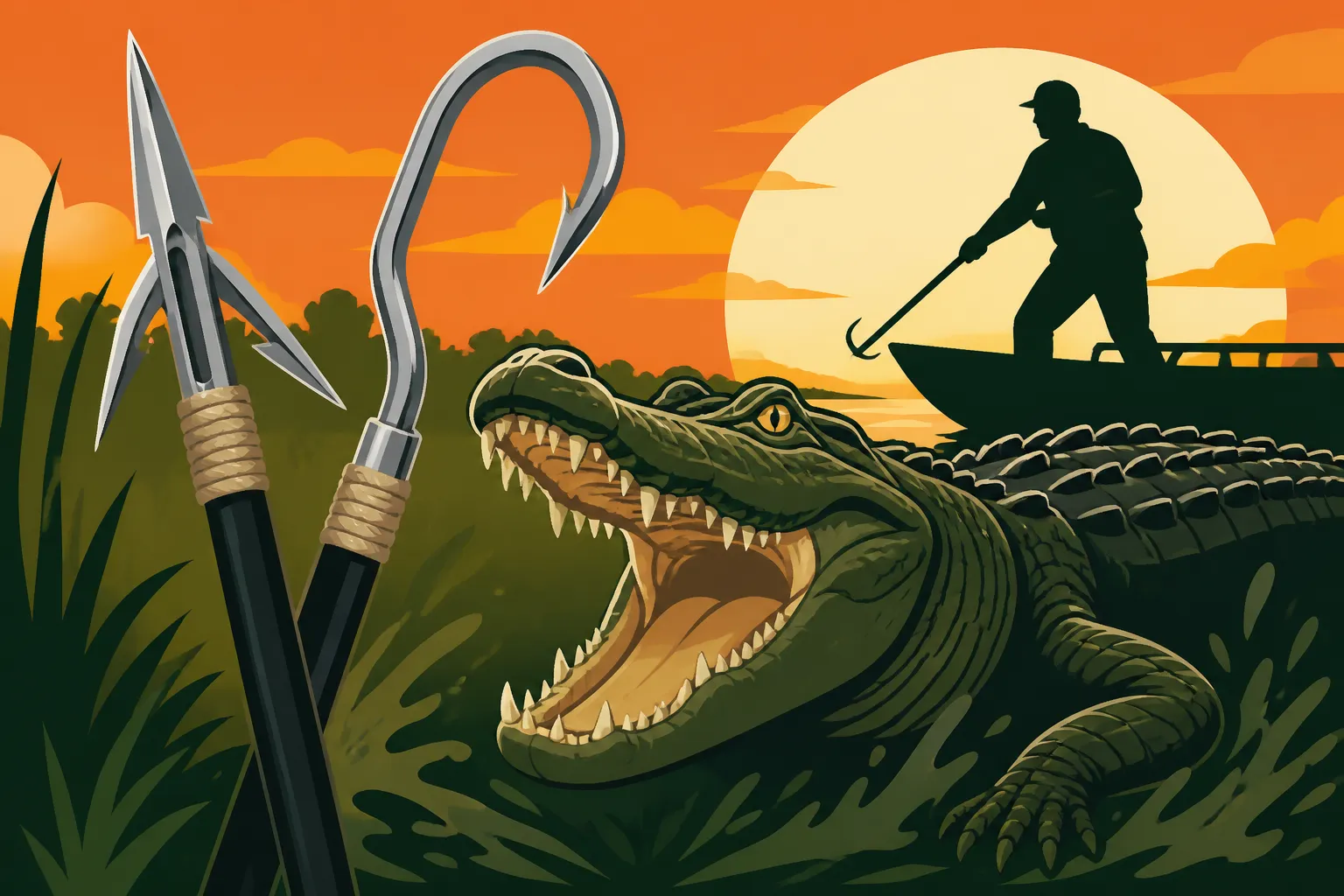
The true genius of the alligator harpoon lies in its breakaway tip. Unlike a fixed spear, these tips detach from the shaft upon impact, toggling sideways inside the gator’s flesh. This toggle action creates an incredibly secure anchor, making it very difficult for the gator to tear free. Common designs include a single-barb or dual-barb style, usually made from hardened steel. The tip is connected to a strong line, often 300-500 lb test, which is then tied to a buoy or directly to the boat. This breakaway design means the gator isn't fighting against the resistance of the entire shaft, reducing the chances of the tip pulling out and allowing the shaft to be reused for subsequent gators or missed shots.
Line and Float Systems
Once your harpoon tip is securely embedded in the alligator, the line and float system takes over. The line is crucial; it must be incredibly strong and abrasion-resistant. Many hunters opt for braided nylon or dacron line, often with a minimum of 300-pound test strength, sometimes even heavier for truly massive gators. The length of your line is also important; having enough slack allows the gator to run without immediately snapping the line or pulling your boat along. A common setup involves anywhere from 50 to 100 feet of line, giving the animal some room to work off its initial burst of energy.
The float, or buoy, serves multiple purposes. Primarily, it acts as a marker, allowing you to track the gator even if it dives or runs. Large, brightly colored floats, often inflatable boat fenders or specialty gator buoys, are ideal because they provide significant resistance in the water, helping to tire the gator out more quickly. Attaching the line to the float and then letting the gator pull the float is often the safest initial strategy. This allows the gator to fight against the drag of the float rather than directly against your boat, minimizing the risk of a sudden lunge or capsizing, especially when you're Landing an Alligator From a Small Boat. It also keeps your hands free and out of harm's way until the animal is sufficiently tired.
Selecting Effective Snatch Hooks and Their Applications
While a harpoon is your primary means of securing an alligator from a distance, snatch hooks serve a different, but equally important, role. These are heavy-duty, usually unbarbed, hooks designed to grab and hold the gator's thick hide or even a limb once it's closer to the boat. Think of them as a versatile tool for gaining additional purchase and control, especially when a gator is just below the surface or if you need to maneuver a secured animal.
Unlike harpoons, which are typically thrown, snatch hooks are often deployed from a heavy-duty pole or gaff. Their design allows for a quick, firm grab without the need for a deep, penetrating strike. This makes them ideal for situations where you need to quickly gain control of a thrashing gator that’s already tethered, or if you need to guide it into a specific position. When browsing for the right gear, you might look at specialty hunting outfitters or consult platforms like GoHunt for reviews and recommendations on different snatch hook designs.
Different Types of Snatch Hooks and Their Design
Snatch hooks come in a few variations, but they all share common characteristics: they are incredibly strong, often made of stainless steel, and designed to withstand immense pulling pressure. The most common type features a large, open hook, often without a barb, mounted on a sturdy pole. The lack of a barb is intentional; it allows for easier removal and minimizes damage to the hide once the gator is secured, assuming you're just using it for control and not for the final dispatch. Some designs feature a more enclosed "grabber" style, intended to cinch down on a limb or the neck, providing an even more secure hold for control purposes.
The poles these hooks are attached to are just as important as the hook itself. They need to be incredibly robust, often heavy-gauge aluminum or thick fiberglass, capable of handling the twisting and pulling forces exerted by a large alligator. Lengths typically range from 6 to 12 feet, allowing hunters to reach the gator from a safe distance. Having a well-designed, sturdy snatch hook and pole combination is crucial for safely bringing a gator alongside your vessel.
When to Use a Snatch Hook
Snatch hooks are typically employed after the gator has been harpooned and is starting to tire, or when it’s close enough to the boat that you need more direct, hands-on control. One primary use is to secure an additional point of contact to prevent the gator from rolling, thrashing, or making a final dive. For example, if your harpoon is in the tail section, a snatch hook can be used to grab the gator closer to the head or a foreleg, giving you better leverage and preventing it from presenting a dangerous threat to the boat.
They are also invaluable when a gator is just out of reach or just beneath the surface, making it difficult to get a visual for a final shot. You can use the snatch hook to gently, but firmly, bring the gator to the surface or pull it into a position where a clean, humane dispatch shot can be made. Remember, the goal is always humane dispatch as quickly and safely as possible. A snatch hook helps you achieve this by providing that necessary control. It's not usually the first tool you deploy, but rather a tactical one used in the later stages of the retrieval to ensure maximum control and safety for the hunters.
Techniques for Deploying Harpoons and Snatch Hooks Safely and Effectively
Knowing what gear to use is one thing; knowing how to use it safely and effectively is another. Deploying harpoons and snatch hooks on a powerful, struggling alligator in a boat can be chaotic if you don't have a plan and practice. The key to successful deployment lies in precision, timing, and a clear understanding of each tool's purpose. This isn't a game of brute force; it's a calculated effort to gain control over a wild animal.
Before you even head out, run through scenarios with your hunting partners. Who throws the harpoon? Who handles the lines? Who has the dispatch weapon ready? Clear communication is your best friend when things get hairy on the water. Whether you’re hunting under Georgia Alligator Quota Hunt Rules or just navigating the seasonal ebb and flow, preparation is everything.
Harpoon Deployment Best Practices
Throwing a harpoon effectively requires practice. You want a strong, accurate throw that drives the tip into the thickest part of the gator's hide, ideally in the shoulder or flank area, avoiding the head or tail where penetration might be less effective or dangerous. The goal is to embed the breakaway tip securely. Practice your throw on a target well before you ever go hunting. Feel the balance of the harpoon shaft and get a sense of the trajectory.
When the moment arrives, keep a few things in mind:
- Line Management: Ensure your harpoon line is completely clear of tangles and kinks. You do not want the line catching on anything in the boat as the gator takes off. Have your float ready to deploy immediately after the strike.
- Angle of Attack: Try to strike perpendicular to the gator's body for the best penetration. A glancing blow can cause the harpoon to richochet or simply not embed properly.
- Follow-Through: Just like in sports, a good follow-through helps ensure accuracy and power.
- Immediate Float Deployment: As soon as the harpoon strikes, release the float. Let the gator fight the float and exhaust itself. Don't try to hold the line directly from the boat immediately unless absolutely necessary and you have heavy-duty cleat tie-offs.
A well-executed harpoon strike, followed by proper float deployment, turns a chaotic situation into a controlled fight, allowing the gator to tire itself out without putting hunters at undue risk.
Snatch Hook Application and Retrieval
Snatch hooks are typically used once the alligator is closer and somewhat subdued by the harpoon and float system. They are not usually thrown but rather extended on their pole to grab the gator. The application should be firm and decisive. Aim for a secure part of the body, like a limb, the base of the tail, or the neck, for maximum control. Avoid sensitive areas unless absolutely necessary for humane dispatch.
Retrieval with snatch hooks is often a team effort. One person might be holding the harpoon line, while another applies the snatch hook to guide the gator alongside the boat. The key here is not to just yank, but to apply steady pressure, steering the gator rather than just pulling. This can prevent unnecessary thrashing and maintain control. Once the gator is alongside, the snatch hook can help hold it steady for the final dispatch. Always ensure your hands and feet are clear of the gator’s mouth and tail as you apply and remove the hook.
Combining Tools for Ultimate Control
The most effective alligator hunters don't rely on just one tool; they use a combination of methods to ensure complete control from start to finish. A common sequence might look like this:
- Initial Contact: A bowfishing shot or heavy treble hook is cast to snag the gator. This provides a first, albeit often less secure, point of contact.
- Harpoon Strike: As the gator is pulled closer or surfaces, a harpoon is accurately deployed. The breakaway tip secures a strong anchor, and the line is immediately connected to a float. This is your primary control.
- Tiring and Retrieval: The gator fights the float, exhausting itself. Hunters retrieve the float and begin to pull the gator closer to the boat using the harpoon line.
- Snatch Hook Application: Once the gator is within pole's reach, a snatch hook is applied to a strategic point, like a foreleg or the neck, to gain additional, direct control. This is especially useful for managing a gator that's still thrashing or attempting to dive.
- Final Dispatch: With multiple points of control, the gator is brought alongside the boat in a controlled manner, allowing for a quick, humane dispatch with a bang stick or firearm. Remember, for the safety of everyone involved, never bring a live, uncontrolled gator into the boat.
This layered approach maximizes safety and efficiency, ensuring that you can successfully and humanely harvest your gator. Learning about Alligator Hunting in Georgia means understanding the importance of every piece of gear and every step in the process.
Essential Gear Considerations for Alligator Hunters
Beyond the harpoons and snatch hooks themselves, there are other pieces of gear that complement their use and are vital for a successful and safe alligator hunt. From the vessel you choose to the personal protective equipment you wear, every item plays a role in navigating the challenges of hunting these formidable reptiles. Planning your gear carefully, potentially referencing resources like GoHunt for reliable product information, can make all the difference when you're out on the water.
Boat Selection and Setup
The type of boat you use for alligator hunting directly impacts how you can deploy and manage your harpoons and snatch hooks. Most hunters opt for flat-bottomed jon boats or airboats, which provide stability and can navigate the shallow, often obstructed waters where alligators reside. The boat needs to be sturdy enough to handle the immense pulling power of a large gator and stable enough to allow hunters to stand and move safely during the fight.
Crucially, your boat should be set up for alligator hunting. This means having clear decks free of clutter, strong cleats or attachment points for lines, and designated areas for your harpoon, snatch hooks, and other gear. A well-organized boat minimizes the risk of tripping, tangled lines, or fumbling for a critical tool when seconds count. Consider where you’ll store extra lines, floats, and the dispatch weapon to ensure they are easily accessible but safely stowed. For more on this, you might find specific advice on Landing an Alligator From a Small Boat helpful.
Personal Protective Equipment (PPE)
Given the inherent dangers of alligator hunting, wearing appropriate Personal Protective Equipment is non-negotiable. This isn't just about comfort; it's about minimizing the risk of injury.
- Sturdy Gloves: Heavy-duty gloves are essential for handling lines, especially when a gator is pulling hard. They protect your hands from rope burn, cuts, and the gator's rough hide.
- Eye Protection: Safety glasses or sunglasses are critical to protect your eyes from splashing water, flying debris, or accidental impacts from gear.
- Footwear: Non-slip, sturdy boots are a must. You need good traction on a wet boat deck, and protection for your feet if you accidentally step on something sharp or a line.
- Life Vest/PFD: Even if you’re a strong swimmer, a life vest should be worn, especially when working lines or in close proximity to a struggling gator. Accidents can happen quickly on the water, and being prepared is paramount.
- Appropriate Clothing: Dress in layers suitable for the weather, but also consider clothing that won't snag easily and offers some protection against abrasions.
Table: Harpoon vs. Snatch Hook Comparison
To help clarify the distinct roles of these essential tools, here’s a quick comparison:
| Feature | Harpoon | Snatch Hook |
|---|---|---|
| Primary Use | Initial secure attachment, tiring gator | Additional control, guiding, securing near boat |
| Deployment | Thrown from a distance | Extended on a pole from closer range |
| Tip/Hook Type | Breakaway tip, toggles inside | Large, open hook (often barbless) |
| Line Connection | Directly to line/float system | Often integrated into a pole/gaff |
| Range | Medium to long (several feet from boat) | Close range (within pole's reach) |
| Impact | Penetrating, deep hold | Grabbing, surface-level hold |
| Safety Role | Prevents escape, allows gator to tire | Maneuvers, stabilizes for dispatch |
Disclaimer
This article is for general informational purposes only and does not constitute professional advice. Laws, prices and regulations vary by location and change over time. Consult a qualified professional for guidance on your specific situation.