Climber Stands on Straight Trunks
It's a familiar scenario for many Georgia hunters: you've finally found that perfect sign, maybe a fresh scrape line or a rub down a ridge, but there isn't a pre-set stand in sight, and the big, gnarly oak you usually favor just isn't cutting it. You need to be mobile, adaptable, and get up a tree quickly and quietly. This guide is all about how to confidently use climber stands, focusing on the specific advantages and techniques that make them ideal for the abundance of straight-trunked trees we have across Georgia's diverse landscapes.
Why Climber Stands Excel on Georgia's Straight Trees
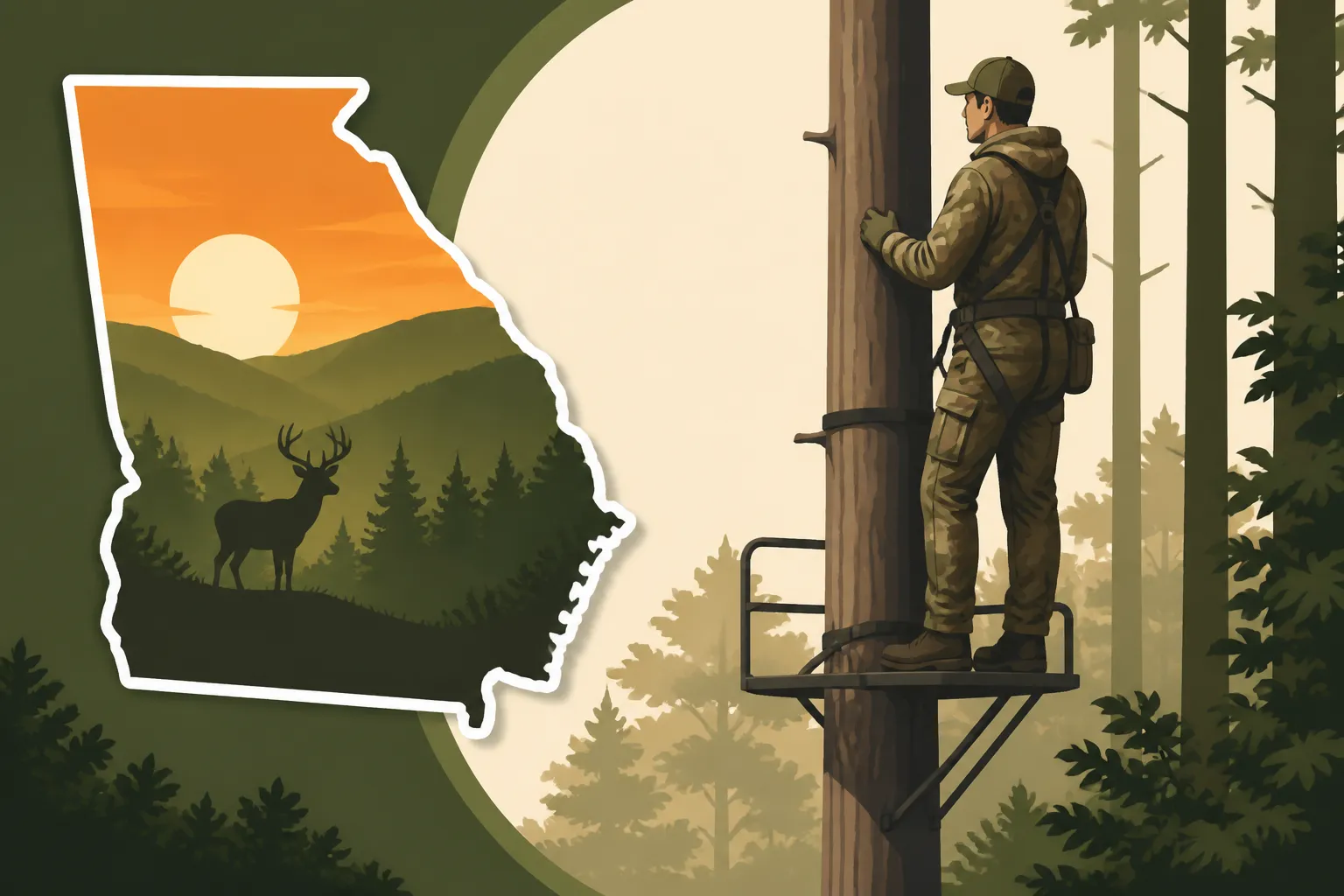
Climber stands are truly a game-changer for hunters who value mobility and versatility, especially here in Georgia where we have such a mix of timber. Unlike a hang-on stand that requires screw-in steps or climbing sticks, or a bulky ladder stand that’s cumbersome to move, a climber is a self-contained unit. It's designed to be carried in as one piece and then "climbed" up a tree, using your own body weight and momentum.
The magic of a climber, and where it shines brightest, is on trees with straight, limbless trunks. Think about our vast pine forests in the Coastal Plain, or even those perfectly straight hardwoods you find in the Piedmont creek bottoms. These aren't the gnarled, multi-branched oaks often found in older growth, but rather the more uniform timber that's perfect for a climber. This design means less gear to pack in, a quicker setup, and the ability to adapt your location on the fly if the deer movement shifts. If you've ever hauled in a full set of climbing sticks and a hang-on stand, only to realize the setup isn't quite right and you need to move, you understand the frustration a climber stand can alleviate.
The Portability Factor in Georgia's Diverse Terrain
One of the biggest advantages of a climber stand in Georgia is its inherent portability. We hunt everything from the rolling Piedmont hills to the dense bottomland swamps and vast pine plantations. Dragging heavy, multi-piece stands through thick underbrush or across long distances can be exhausting and noisy. A climber, typically weighing between 18 and 30 pounds, can be worn like a backpack, allowing you to cover ground efficiently. This is particularly beneficial when Scouting Georgia Public Land Before Season or when you need to make a quick move in response to a changing wind or fresh sign.
This portability means you're not tethered to a single stand location for an entire season. Imagine hunting a dynamic environment like a river bottom where water levels fluctuate, or a recently thinned pine plantation where deer movement patterns have changed dramatically. With a climber, you can quickly relocate to a new area that's holding deer, whether it's setting up along a Piedmont Creek Bottom Funnel or a subtle ridge-top saddle in the mountains. This adaptability significantly increases your chances of success, allowing you to hunt where the deer are, not just where your stand happens to be.
Speed and Stealth in Stand Setup
Setting up a climber stand correctly is not only about safety but also about speed and stealth. Once you've identified a suitable tree, the process of attaching the stand, engaging the climbing cables or chains, and ascending can be remarkably quiet and quick with practice. This is a huge benefit, especially during the crucial morning or evening hours when deer are most active. You can slip into your spot well before daylight, or move to an evening setup without causing a ruckus that would alert every deer in the area.
Compare this to the potential noise of attaching multiple screw-in steps, or clanking metal climbing sticks against a tree. While those methods certainly have their place, the self-contained nature of a climber means fewer moving parts and less opportunity for unwanted noise. This stealth factor becomes even more critical when hunting pressured public land, where every little advantage counts. The ability to quietly ascend and descend undetected is a skill that takes practice but pays huge dividends in the woods.
Mastering the Art of Climbing: Technique and Safety First
Using a climber stand effectively and safely requires a solid understanding of both the equipment and the environment. It's not just about clamping it to a tree; it's about a methodical approach to ensure you're secure from the moment your feet leave the ground until you're safely back down. Neglecting any part of this process can lead to serious injury, which no amount of hunting success is worth.
Your life-line, a full-body harness, is non-negotiable. Many hunters still resist wearing them, but the reality is, accidents happen, and a fall from any height can be devastating. Beyond the harness, understanding how to 'walk' the stand up the tree, keeping your weight centered, and ensuring a stable platform are all part of the climb.
Essential Safety Gear and Practices
Before you even think about putting a foot in a climber, you need the right safety gear. A full-body harness is paramount. This isn't just a chest strap; it's a system that secures you to the tree with a tether, preventing a free fall if you slip or if your stand fails. Always connect your harness to the tree before you start climbing, and remain connected until both feet are firmly on the ground. This often means using a lineman's belt for initial attachment and then transitioning to your tree strap as you climb. For detailed guidance on this, check out Treestand Safety Gear for Wet Ground.
Beyond the harness, regularly inspect your stand for any wear and tear on cables, straps, or welds. Check all nuts and bolts to ensure they are tight. Before each hunt, practice setting up and climbing a tree in a safe, open area, especially if you're new to a particular stand or haven't used it in a while. Pay close attention to the tree itself – avoid dead trees, slick bark, or trees with excessive moss or vines. Always climb within the stand's weight limits, and never try to carry too much gear while ascending. A small accessory pack can be pulled up with a haul rope once you're safely seated.
| Safety Item | Description | Importance |
|---|---|---|
| Full-Body Harness | Distributes fall impact, prevents free fall. | Critical (Non-negotiable) |
| Lineman's Belt | Allows hands-free operation during initial setup and securing to tree. | High |
| Tree Strap/Tether | Keeps you connected to the tree while climbing and sitting. | High |
| Haul Rope | Used to bring up bows, rifles, and gear after you're seated. | High (Prevents carrying items while climbing) |
| Stand Inspection | Check cables, straps, welds, bolts for damage before each use. | Critical (Prevents mechanical failure) |
| Footwear with Grip | Sturdy boots with good traction on wet or mossy bark. | High |
| Practice Climbs | Familiarization with your stand and proper technique in a safe environment. | High (Builds confidence and muscle memory) |
| Mobile Phone | For emergencies, even if out of service area (call 911 sometimes works). | High (Last resort for help) |
The Ascent and Descent: A Step-by-Step Guide
Climbing with a climber stand involves a coordinated "walking" motion. First, ensure both sections of your stand (the seat and the platform) are securely attached to the tree and to each other, often with a safety strap or bungee, to prevent one section from falling if it slips. Then, attach your full-body harness to the tree via a lineman's belt. Once secure, begin the climb.
To ascend, you typically stand on the platform section, lift the seat section a few inches, push it up the tree, and then sit down on the seat. While seated, you lift the platform section a few inches with your feet, push it up the tree, and then stand up, repeating the cycle. The key is to keep your weight low and centered, making small, controlled movements. Never try to make large jumps. As you gain height, pay attention to the tree's taper – a rapidly narrowing trunk can cause the stand's cables to become loose, creating a dangerous situation. Adjust your cable settings as needed or choose a different tree.
For descent, the process is reversed. Stand on the platform, lift the seat down, sit, then lift the platform down. Always maintain three points of contact (two hands and a foot, or two feet and a hand) with the stand or tree as you move. And remember, your harness tether should always be adjusted to keep you snug against the tree, minimizing any potential fall distance. When you get to the height you want, adjust your harness tether for comfort and security.
Finding the Perfect Perch: Identifying Ideal Trees in Georgia
Choosing the right tree is arguably as important as having a good climber stand. The beauty of Georgia's diverse forests is that we have an abundance of trees suitable for climbers, but you need to know what to look for. The "perfect perch" isn't just about cover and shooting lanes; it's fundamentally about tree shape, bark texture, and overall health.
You’re looking for trees that are straight, free of major limbs or knots for at least the first 20-25 feet, and have bark that the stand's gripping teeth can effectively bite into. Identifying these trees during scouting trips, long before hunting season, can give you a significant advantage. Tools like GoHunt can assist in this by allowing you to pre-scout aerial imagery for areas with promising timber types.
Identifying Climber-Friendly Species
In Georgia, several tree species stand out as ideal for climber stands. Pines are often the gold standard, especially the loblolly and longleaf pines that dominate many of our timberlands, particularly in the Coastal Plain and parts of the Piedmont. These trees typically grow tall and straight with few lower limbs, and their rough, scaly bark provides excellent grip for a climber. When Hunting South Georgia Pine Flats, you'll find no shortage of perfect pine trees.
Hardwoods can also be excellent, but you need to be more selective. Straight-trunked oaks, poplars, sweetgums, and even some maples can work. The key is to find individuals that have grown straight and shed their lower limbs, often found in denser stands where they're competing for sunlight. Avoid trees with smooth bark, like some beeches or younger poplars, as they can be notoriously slick and offer poor grip. Also, steer clear of trees with excessive vines, as these can interfere with the stand's cables and create trip hazards.
Assessing Tree Health and Characteristics
Beyond species, always perform a quick "health check" on any tree you plan to climb. Never climb a dead tree, a leaning tree, or one that shows any signs of rot, fungal growth, or insect damage. These trees are structurally compromised and could break under your weight or during a strong gust of wind. Look for healthy, living bark and a strong, stable base. You want a tree that feels solid and secure.
Consider the tree's diameter. Most climber stands are designed for trees ranging from about 8 to 20 inches in diameter. A tree that's too small might not provide enough stability, while one that's too large could prevent the stand's cables from fully engaging or create too much tension. Always check your stand's specific diameter recommendations. Additionally, be mindful of the tree's taper as you ascend. A tree that narrows too quickly can cause the stand's cables to lose tension, potentially leading to a slip. If you notice significant taper, it's best to find a different tree.
Beyond the Climb: Maintenance and Smart Practices
Once you've safely climbed your tree and settled in, the journey isn't over. Effective hunting from a climber stand involves more than just getting up there. It’s about being prepared for the conditions, maintaining your equipment, and having smart strategies for the hunt itself. From dealing with unexpected weather to maximizing your visibility and concealment, these practices enhance your overall experience and success.
Long-term care of your stand ensures it remains safe and functional for many seasons. Just like your firearm or bow, your stand needs regular attention. And when you're perched high, environmental factors become even more pronounced. Being aware and prepared for the unique challenges of hunting from an elevated position, especially on public land in Georgia, will set you apart.
Maximizing Your Position and Concealment
After a successful climb, take a moment to assess your surroundings from your new vantage point. Are your shooting lanes clear? Is your cover adequate? Sometimes, a slight adjustment to your height or rotation on the tree can make a big difference. Use natural cover to your advantage; don't just sit in the open. A few strategically placed branches or the natural density of leaves can break up your silhouette. In areas with thicker canopy, consider if you need to trim a few small branches, but always do so minimally and ethically, especially on public land where excessive trimming is often prohibited.
Think about the sun's position and your shadow, especially morning and evening. You want the sun in the deer's eyes, not yours. Also, consider the wind. Even if it was perfect on the ground, thermals can shift higher up, particularly in hilly or mountainous terrain. Being able to quickly and quietly adjust your position, if the situation demands it, is a key advantage of a climber. And remember to use a haul rope to bring up your gear; never climb with your bow or rifle in hand.
Stand Maintenance and Off-Season Storage
Just like any piece of critical hunting gear, your climber stand requires proper maintenance. After each season, give your stand a thorough cleaning. Remove any dirt, mud, or debris, paying special attention to the moving parts, pivot points, and cables. Check for rust, cracks, loose bolts, or frayed cables. Lubricate pivot points with a silicone-based spray or dry lubricant, avoiding anything that might attract dirt or emit an odor.
If any components are damaged, replace them immediately with manufacturer-approved parts. Never try to jury-rig a repair on a safety-critical piece of equipment. Store your stand in a cool, dry place, ideally in a cover or bag to protect it from dust and rodents. Proper off-season storage will extend the life of your stand and ensure it's safe and ready to go for Bowhunting Georgia's Early Archery Season or when Georgia's Long Firearms Deer Season rolls around. Taking these small steps in maintenance can prevent a catastrophic failure down the road, ensuring your stand remains a reliable partner in the deer woods for years to come.
Disclaimer
This article is for general informational purposes only and does not constitute professional advice. Laws, prices and regulations vary by location and change over time. Consult a qualified professional for guidance on your specific situation.