Rangefinders Under 100 Yards
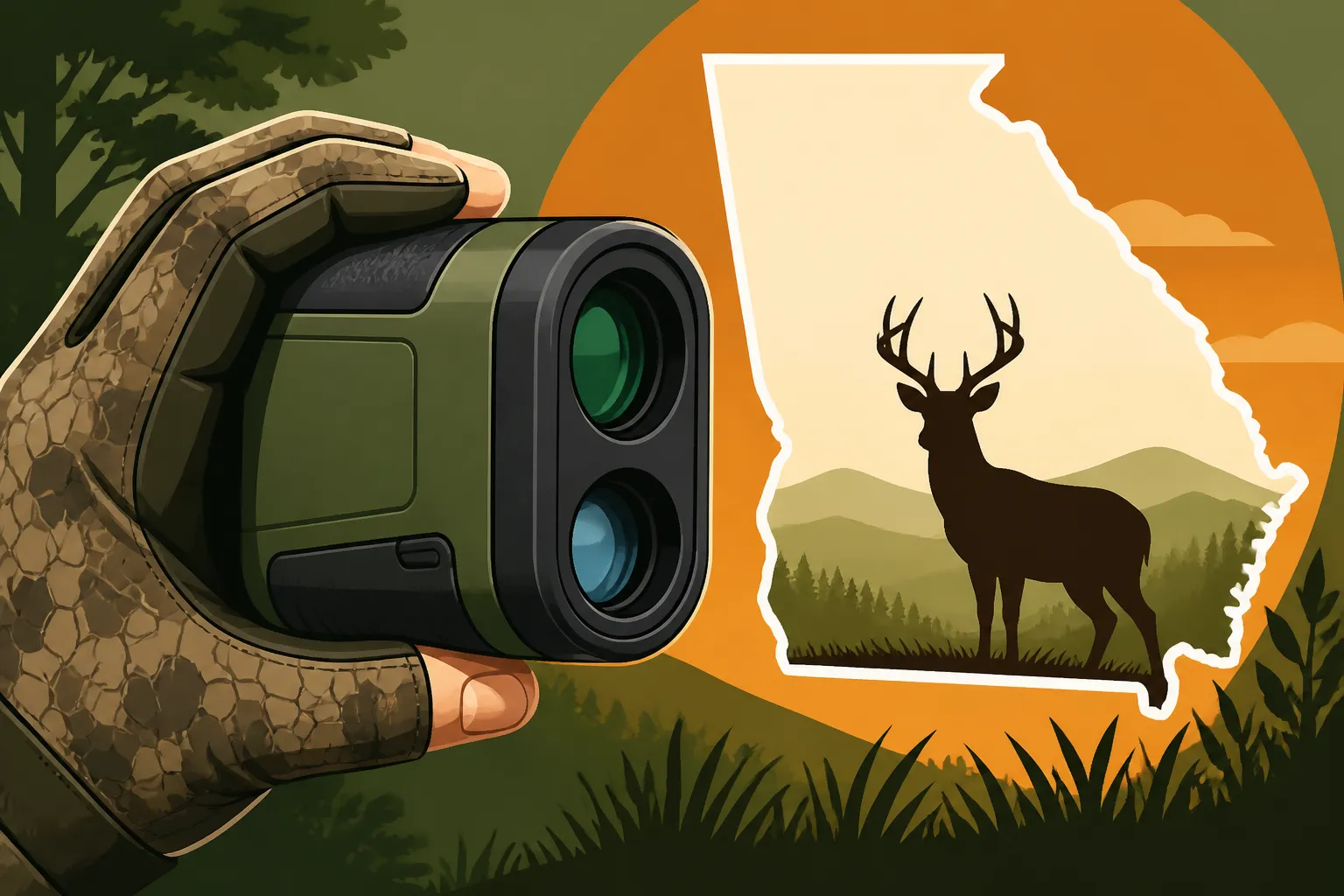
For many Georgia hunters, especially those of us navigating the thick woods and dense undergrowth, the idea of needing a fancy, long-range rangefinder often feels like overkill. The truth is, most of our shots, particularly for deer, bear, or even turkey, happen at distances well under 100 yards. The real problem isn't needing to range a mile away; it's getting an accurate, quick reading on that buck slipping through the pines at 40 yards, or that gobbler strutting at 30, without breaking the bank. This guide is all about helping you find a reliable, effective rangefinder that performs admirably for those crucial close-range situations, all while keeping your budget under control.
Why You Need a Rangefinder for Close Shots in Georgia
It's easy to get caught up in the hype of rangefinders that can ping targets out to a thousand yards or more. But let's be realistic about hunting here in Georgia. Our landscapes, from the rolling Piedmont to the swampy river bottoms, are often characterized by dense timber, thick brush, and irregular terrain that rarely offers those wide-open, long-distance shot opportunities you might see out West. For us, precise ranging under 100 yards isn't just nice-to-have; it's absolutely essential for ethical and successful hunting.
The Archery Hunter's Best Friend
If you're an archery hunter in Georgia, you know that every yard counts. A deer at 30 yards looks vastly different than one at 40, and that 10-yard difference can mean the difference between a clean kill and a frustrating miss. Our target ranges for archery are typically much shorter, often topping out around 40 or 50 yards, sometimes pushing to 60 for highly proficient shooters. In these situations, your brain simply cannot accurately judge distance with the precision required for a bow shot. Your pins are set for specific yardages, and a rangefinder ensures you're using the right one, every single time. It's not about guessing; it's about knowing, especially when you're perched in a Treestand Setups in North Georgia Mountains and that buck appears out of nowhere. Without a reliable rangefinder, you're essentially handicapping your shot before you even draw.
Dense Cover and Quick Shots
Think about still-hunting in South Georgia pine flats or navigating the tight funnels of a Piedmont creek bottom. Deer often appear suddenly, offering only a small window for a shot before they vanish back into the shadows. In these scenarios, a quick, accurate range is paramount. You don't have time to stare through your binoculars, trying to estimate distance against a tree line. A compact, fast rangefinder allows you to quickly acquire your target, get a reading, and make the shot with confidence. This is especially true during the chaos of Hunting the Georgia Rut in Mid-October, when deer are moving fast and opportunities are fleeting. Even with a rifle, understanding the exact yardage can prevent a poor shot placement that results from misjudging how far that deer actually is through the thick stuff.
What to Expect from a Sub-$100 Rangefinder
When you're looking at rangefinders in the under-$100 price bracket, it's important to set realistic expectations. You won't be getting all the bells and whistles found on top-tier models, but that doesn't mean you can't get a highly functional and effective tool for your hunting pack. The key is understanding where these units shine and where they might have some limitations.
Focusing on Core Functionality
A budget-friendly rangefinder's primary job is to give you a clear, accurate distance to your target, and for ranges under 100 yards, many excel at this. They typically use a laser to measure the time it takes for a pulse of light to travel to the target and back, displaying the distance in yards or meters. What you might sacrifice are features like extremely fast scan modes that continuously update distances as you pan across terrain, advanced ballistic calculators that suggest holdovers, or super-rugged, waterproof casings designed for extreme conditions. However, for most Georgia hunting situations, particularly within those crucial close-range windows, these high-end features are often unnecessary luxuries. Your focus should be on reliability for those short, critical distances. Many hunters find resources like GoHunt invaluable for planning their hunt and then rely on their simple rangefinder for the on-the-spot distance verification.
Limitations and How to Work Around Them
One common limitation of sub-$100 rangefinders can be their performance in very low light or adverse weather conditions like heavy fog or rain. While they might still function, the readings could be slower or less consistent than more expensive units. Another area can be the quality of the optics; the view through the rangefinder might not be as crystal clear or bright as a premium model, but again, for quick ranging at close distances, this is often a minor inconvenience. They might also struggle to pick out very small targets at longer ranges, but since our primary focus is under 100 yards, this is less of an issue. Understanding these trade-offs allows you to select a unit that fits your needs without overspending. For example, if you know you'll be Blood Trailing After Dark in Georgia, you'll want a reliable headlamp rather than relying on your rangefinder's low-light capability.
Essential Features for Budget-Friendly Ranging
Just because you're shopping on a budget doesn't mean you have to settle for a poor performer. There are specific features that are non-negotiable for any rangefinder, regardless of price, especially when dealing with shots under 100 yards. Prioritizing these will ensure you get the most bang for your buck.
Accuracy and Speed Are Non-Negotiable
The absolute most important feature of any rangefinder is its ability to provide accurate readings. For close ranges, a good budget unit should consistently deliver distances within +/- 1 yard. Anything less precise makes the tool less useful, especially for archery. Equally important is speed. When a deer steps out, you need that reading almost instantly. Look for models that boast quick target acquisition and display times. You don't want to be fumbling with buttons or waiting for the display to catch up while your target walks away. A delay of even a few seconds can ruin an opportunity, particularly when trying to get a bead on a quick-moving target in thick cover.
Simplicity and Portability for the Field
Complicated menus and multiple modes can be distracting and slow you down in the field. For a sub-$100 rangefinder, simplicity is a virtue. You want a device with straightforward operation: point, press a button, and get a reading. That's it. A compact, lightweight design is also crucial. It needs to fit comfortably in a pocket, a bino harness, or attached to your belt, without adding unnecessary bulk to your gear. Our Georgia woods can be unforgiving, so a unit that's easy to carry and quick to deploy is invaluable. Nobody wants to be wrestling with a bulky piece of equipment when a shot opportunity presents itself.
Angle Compensation: A Bonus Feature
While not always present on the absolute cheapest models, angle compensation (often called "slope" or "angle intelligence") is a fantastic feature to look for if you can find it in your budget. In hilly North Georgia terrain or even when shooting from a high treestand, the true horizontal distance to your target is often less than the straight-line distance. Angle compensation calculates and displays this "shoot-to" distance, which is critical for accurate shot placement, especially with a bow. For rifle hunters, it might be less critical for extreme close range but still beneficial. It's a feature that truly adds value for hunters navigating varied terrain, making your ranging even more precise when that deer is crossing a steep ridge or when you're aiming down from a lofty perch.
Making the Most of Your Affordable Rangefinder in the Field
Having a rangefinder, even a great one, is only half the battle. Knowing how to use it effectively in the varied environments of Georgia will truly unlock its potential and help you make those critical shots with confidence. It's about more than just pointing and shooting; it's about integration into your overall hunting strategy.
Practice Makes Perfect
Like any piece of gear, your rangefinder will perform best when you're intimately familiar with it. Before opening day, take it to your shooting range or even just your backyard. Range known objects at various distances, both flat and angled. Practice quickly acquiring targets and getting readings. This builds muscle memory and speed, which are essential when a real animal steps into view. Don't just practice with stationary targets; try to range objects that mimic a walking deer or turkey. Understanding how your particular unit behaves in different lighting conditions and against various backgrounds (like dense foliage versus an open field edge) will make you a far more efficient hunter. This kind of preparation is just as important as patterning your shotgun for Spring Turkey Hunting in Georgia or sighting in your rifle.
Battery Life and Maintenance
Even the most affordable rangefinders run on batteries, and nothing is more frustrating than a dead battery in the field. Always carry a spare! Check your battery before each hunt, especially if it's been a while since you last used the unit. Keeping the lens clean is also crucial for clear, accurate readings. Dust, dirt, and fingerprints can obscure the laser and impair performance. A soft cloth or lens pen specifically designed for optics will keep your rangefinder in top shape. While many budget models aren't fully waterproof, they are often water-resistant enough for a light drizzle. However, avoid submerging them and wipe them dry if they get wet. Proper maintenance extends the life of your gear, making your sub-$100 investment last longer.
Carrying and Protecting Your Investment
How you carry your rangefinder can make a big difference in both accessibility and protection. Many hunters prefer a dedicated pouch on their bino harness for quick, one-handed access. This keeps it secure but readily available when you need it most. Others might clip it to a belt loop or stow it in a cargo pocket. The key is to find a method that allows you to deploy it without fumbling, while also protecting it from bumps, scratches, and the elements. Even a basic neoprene case can add a layer of protection. Think about the terrain you'll be covering – will it be brushy, wet, or rocky? Choose a carrying method that minimizes the risk of damage while ensuring it's there when that crucial moment arrives, whether you're working a Scrape Lines Along a Logging Road or waiting patiently by a Green Field Planted for Deer.
Choosing the Right Sub-$100 Model for Your Georgia Hunts
The market for budget rangefinders is surprisingly robust, with several brands offering solid performance for under $100. While I can't name specific models or their exact prices, I can guide you on what to prioritize and how to research.
Understanding the Trade-offs
When you're shopping for a rangefinder in this price range, you're primarily looking for reliability, accuracy at short distances, and ease of use. You might find that some units have slightly less durable housing, or that their maximum advertised range is overly optimistic, especially on non-reflective targets. Don't get hung up on a "maximum range" of 500 yards if you're only ever going to use it out to 75. Focus on how well it performs in the sweet spot of 0-100 yards. Look for clear, crisp readouts and a comfortable grip. It's often better to choose a simpler model from a reputable brand that consistently performs well at close ranges than a cheap unit promising a mile-long range that it can't deliver reliably.
Brands and Models to Keep an Eye On
Several manufacturers offer entry-level rangefinders that fit this budget. Many outdoor brands that you recognize from other hunting gear often have more affordable optics lines. When researching, pay attention to consumer reviews, particularly those from other hunters who describe similar hunting conditions to Georgia's. Look for consistent praise regarding accuracy and speed for distances under 100 yards. Sites and forums where hunters discuss their gear are goldmines for real-world feedback on performance. This is where resources like GoHunt can be particularly helpful, as they often feature discussions or reviews of various gear, allowing you to gauge user satisfaction with different budget-friendly options.
User Reviews and Real-World Performance
The best way to determine if a sub-$100 rangefinder will meet your needs is to dive deep into user reviews. Pay close attention to comments about:
- Accuracy at close range (under 100 yards): Do users report consistent, reliable readings for deer, trees, or other typical hunting targets?
- Speed of acquisition: How quickly does it provide a reading? Is there noticeable lag?
- Ease of use: Is the interface intuitive? Can it be operated easily with one hand, even with gloves on?
- Durability: While not expecting military-grade toughness, does it hold up to light use and occasional bumps? Is it at least splash-proof for unexpected Georgia showers?
- Battery life: Do users complain about it draining batteries quickly?
By sifting through these real-world experiences, you can often find a gem that outperforms its price point and delivers exactly what you need for successful close-range hunting in Georgia. It's about finding that balance of affordability and dependable functionality for the distances that truly matter in our neck of the woods.
| Feature | Sub-$100 Rangefinder (Typical) | Premium Rangefinder (Typical) | Relevance for Georgia Under 100 Yards |
|---|---|---|---|
| Max Range | 300-600 yards (optimistic) | 1000-2000+ yards (accurate) | Less critical, only need <100 yards |
| Accuracy | +/- 1-2 yards (good at <100) | +/- 0.5-1 yard (consistent) | Critical, good budget units excel here |
| Speed | 1-2 seconds (acceptable) | Sub-second (very fast) | Important, faster is always better |
| Optic Quality | Basic, functional, clear enough | Bright, crisp, multi-coated lenses | Less critical for short ranges |
| Angle Compensation | Sometimes available (bonus) | Standard feature (advanced calc) | Highly beneficial for treestands/hills |
| Durability | Basic water resistance, plastic | Waterproof, fog-proof, rugged | Acceptable with care and protection |
| Size/Weight | Compact, lightweight (ideal) | Varies, often slightly larger | Ideal for easy carry and quick use |
| Scan Mode | Basic, slower continuous readings | Rapid, smooth, continuous scans | Less critical for static short shots |
Disclaimer
This article is for general informational purposes only and does not constitute professional advice. Laws, prices and regulations vary by location and change over time. Consult a qualified professional for guidance on your specific situation.