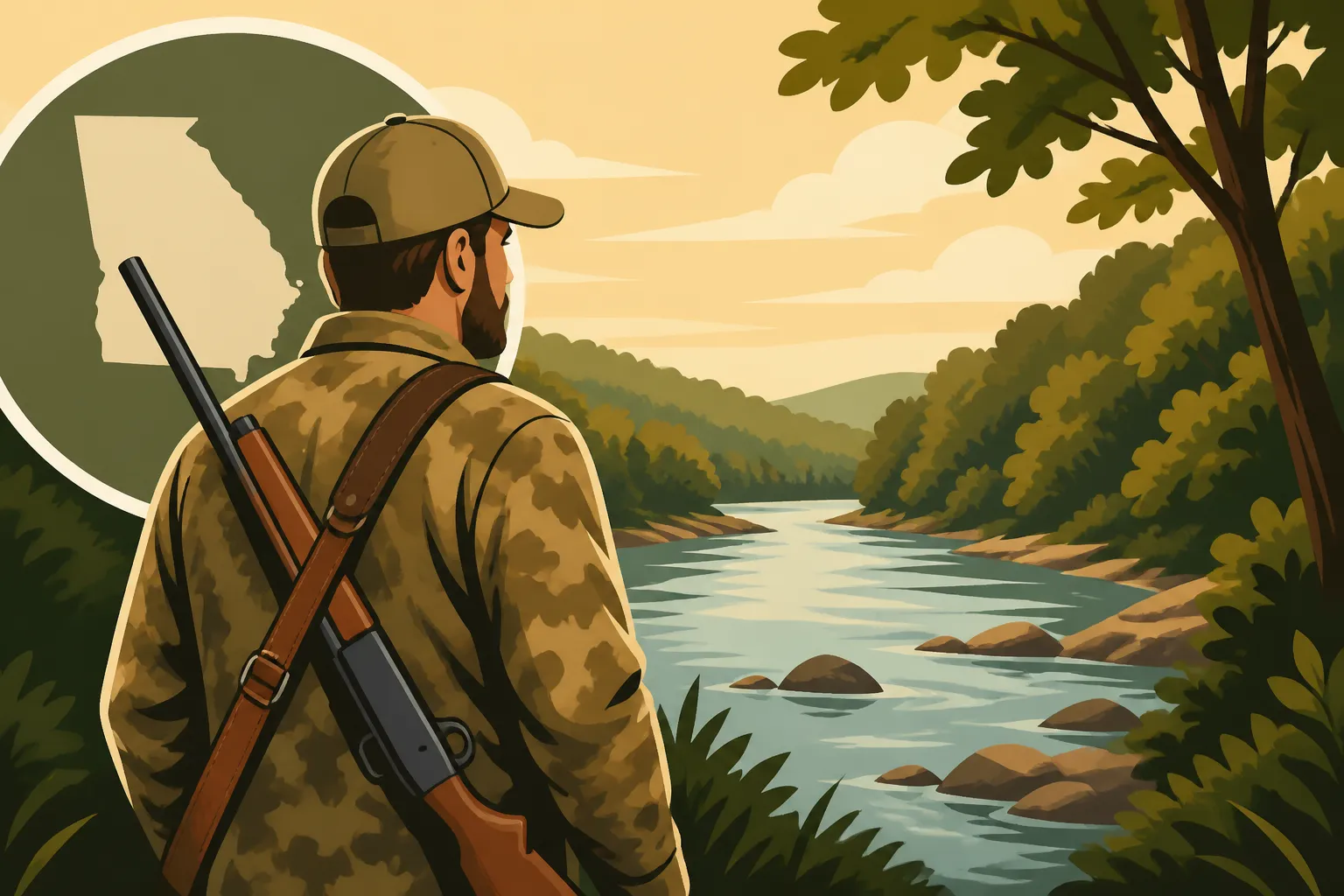
Slings for a Long Chattahoochee Walk
When you're planning a hunt in Georgia, especially if your sights are set on the vast, rugged terrain of the Chattahoochee National Forest, you quickly realize that comfort and efficiency are not luxuries – they are absolute necessities. Hauling your rifle through miles of dense timber, up and down steep ridges, and across creek bottoms can turn a promising day into a grueling slog, leaving your arms tired and your focus diminished. This guide is all about understanding why a proper rifle sling is your unsung hero for those long Chattahoochee walks and how to choose and use one effectively.
Why a Sling is Essential for Chattahoochee Walks
The Chattahoochee National Forest covers a massive swath of northern Georgia, presenting hunters with some incredibly rewarding but equally demanding conditions. Unlike hunting flat farmland, this isn't a place where you can just stroll along with your rifle cradled in your arms for a short distance. You'll be navigating steep inclines, crossing rocky streams, and pushing through thick rhododendron thickets. A quality sling transforms your experience from an exhausting chore into a more manageable, hands-free adventure.
The Strain of Carrying a Rifle Barehanded
Imagine starting your morning hike, rifle in hand, through the pre-dawn chill. The first mile feels fine, maybe even invigorating. But as the sun climbs higher, and you've navigated a few steep sections, your arms start to burn. The weight of your rifle, which felt negligible at first, suddenly feels like a lead pipe. You shift it from one hand to the other, try carrying it by the scope, or even resort to resting it on your shoulder precariously. These are all tell-tale signs of fatigue setting in, and they compromise your ability to react quickly and shoot accurately when the moment of truth arrives.
Furthermore, carrying a rifle constantly occupies at least one hand, if not both, which severely limits your dexterity. You can't easily grab a water bottle, check your map on your GoHunt app, or stabilize yourself on a slippery rock without an awkward struggle or, worse, risking a fall and damage to your firearm. The cumulative effect of this strain can really wear you down mentally and physically over a long day of hunting, especially when you're deep in the wilderness trying to locate sign in big Chattahoochee timber.
Keeping Your Hands Free for Other Tasks
This is where a good sling truly shines. By distributing the weight of your rifle across your shoulder or back, it frees up both of your hands. Think about the practical implications on a challenging hunt. You can use trekking poles for stability on treacherous slopes, preventing falls and conserving energy. You can carry your rattling antlers or grunt tube, ready for action, without having to set your rifle down. Need to climb over a fallen log? No problem, your hands are free to help you balance.
When you're scouting or still-hunting, having your hands free also allows you to comfortably use binoculars to glass distant ridges, or hold your rangefinder without juggling your rifle. This capability isn't just about convenience; it's about safety and opportunity. In an emergency, your hands are free to brace a fall, use a first-aid kit, or quickly access a GPS device. The ability to perform these essential tasks without fumbling is paramount when you’re miles from the truck.
Protecting Your Firearm from the Elements
The Georgia woods, particularly in the Chattahoochee, can be a harsh environment for your gear. Rain, mud, briars, and abrasive rocks are all part of the experience. Carrying your rifle without a sling means it's constantly exposed to potential scrapes, dents, and dings as you navigate tight spots or brush against trees. If you have to set it down, even for a moment, it’s often directly on damp ground, mud, or sharp debris.
A sling, especially one that allows for multiple carrying positions, helps protect your firearm by keeping it off the ground and closer to your body. When carrying it slung across your back, it's less likely to snag on brush or take a direct hit from a fall. When transitioning through thick cover, you can adjust the sling to keep the muzzle pointed safely and the optics tucked away from harm. This simple accessory significantly extends the life and maintains the functionality of your valuable rifle, reducing the need for constant maintenance like cleaning a rifle after a humid sit.
Choosing the Right Sling for Georgia's Diverse Terrain
Picking a rifle sling might seem straightforward, but for the varied conditions of the Chattahoochee National Forest, certain designs offer distinct advantages. It's not just about what looks good; it's about functionality, comfort, and reliability when you're tackling hunting North Georgia mountain country.
Two-Point Slings: The Versatile Workhorse
The two-point sling is arguably the most common and versatile type, attaching to your rifle at two points: usually near the buttstock and near the fore-end. This design offers excellent stability when carrying, allowing you to sling the rifle over one shoulder, across your back, or even diagonally across your chest for hands-free transport. For long hauls over uneven ground, a well-adjusted two-point sling helps distribute the rifle's weight evenly, preventing shoulder fatigue.
The true beauty of a two-point sling in the Chattahoochee is its adaptability. You can tighten it down for a secure carry while scrambling up a ridge or loosen it quickly to bring the rifle into a shooting position. Many modern two-point slings feature rapid-adjust buckles or cams that allow for on-the-fly length changes, which is crucial when you need to transition from carrying to shooting in a matter of seconds. This quick adjustability is vital for hunters who traverse varied terrain and encounter unexpected opportunities.
Single-Point Slings: Quick Access, Limited Comfort for Long Hauls
Single-point slings attach to a single point on the rifle, typically near the receiver or pistol grip. Their primary advantage is extremely fast deployment and ease of transitioning the rifle from one shoulder to the other, or from strong-side to weak-side shooting. This makes them popular in tactical applications where speed and maneuverability are paramount in close quarters.
However, for hunting in the Chattahoochee, a single-point sling generally falls short on comfort for extended periods. Because the rifle hangs from a single point, it tends to swing and bounce more, especially when you're hiking vigorously. The entire weight of the rifle is concentrated on a smaller area of your shoulder or neck, leading to faster fatigue and potential discomfort over miles of walking. While they offer rapid access, the trade-off in carrying comfort makes them less ideal for the typical long walks and varied terrain you'll encounter when hunting Chattahoochee-Oconee National Forest Hunting.
Padded vs. Unpadded: Prioritizing Comfort for Miles
When you're covering serious ground, padding on your sling is not a luxury; it's a necessity. An unpadded sling, while lighter and less bulky, can dig into your shoulder over time, causing significant discomfort and even chafing, especially when carrying heavier rifles or wearing lighter clothing. The narrow strap concentrates the rifle's weight, leading to pressure points that can become quite painful after a few hours.
A padded sling, on the other hand, distributes the weight over a wider area of your shoulder, significantly reducing pressure and increasing comfort. Look for slings with closed-cell foam padding that won't absorb moisture and will retain its cushioning properties even after years of use. While a padded sling might be slightly bulkier, the added comfort it provides during long walks up and down hunting Chattahoochee mountain ridgelines is well worth the minor increase in size and weight. Your shoulders, neck, and back will thank you at the end of a strenuous hunting day.
Key Features to Look for in a Georgia Hunting Sling
Beyond the basic type of sling, there are several specific features that make a sling truly suitable for the demands of hunting in Georgia's diverse environments, from the wet lowlands to the dry mountain peaks.
Material Durability and Weather Resistance
The Chattahoochee National Forest throws everything at you: sudden downpours, thick, abrasive brush, and humid conditions that can foster mildew. Your sling needs to be tough enough to handle it all. Look for materials like heavy-duty nylon webbing, often Cordura or similar high-denier fabrics. These materials are incredibly durable, resistant to tearing and abrasion, and won't stretch or degrade when wet.
Avoid slings made of absorbent materials like cotton or untreated leather, as they can soak up water, become heavy, and take a long time to dry, leading to discomfort and potential mildew growth. Metal hardware should be corrosion-resistant, such as stainless steel or anodized aluminum, to prevent rust in humid conditions. Plastic buckles and adjusters should be robust, made from high-strength polymers that won't become brittle in cold weather or easily break if accidentally impacted. A sling built for these conditions is an investment that pays off season after season.
Quick Adjustments and Attachment Systems
One of the most valuable features of a hunting sling is the ability to quickly adjust its length. Imagine still-hunting through thick undergrowth, where you want your rifle cinched tight to your body to prevent snagging. Then, you spot a deer in a small clearing ahead and need to quickly transition to a shooting position. A sling with a quick-adjust cam, buckle, or pull tab allows you to lengthen or shorten the strap with one hand in mere seconds.
Similarly, the attachment system matters. Swivels that allow for smooth rotation prevent the sling from twisting and binding, which can be a major nuisance when shouldering your rifle. Many slings use quick-detach (QD) swivels, which allow you to rapidly remove the sling from your rifle when it's in a rifle cases for travel to Georgia or when you prefer to shoot without it. Ensure the attachment points on your rifle are compatible with the sling's system. For example, if your rifle has QD sockets, choose a sling with QD swivels.
Swivels and Mounts: Compatibility is Key
The small pieces of hardware that connect your sling to your rifle are just as important as the strap itself. Most hunting rifles come equipped with swivel studs, which are small posts designed to accept traditional sling swivels. Make sure the swivels on your chosen sling are compatible with these studs and are robust enough to handle the weight of your rifle without failing. High-quality swivels will have a strong spring mechanism to prevent accidental detachment and are made from hardened steel.
For rifles that don't have traditional swivel studs, or for those who prefer different attachment methods, there are alternatives. Many modern sporting rifles feature M-LOK or KeyMod slots, or Picatinny rails, which allow for the attachment of specialized sling mounts or QD sockets. When selecting a sling, always double-check the attachment method and ensure it matches the mounting options on your specific firearm. A mismatch here can lead to frustrating compatibility issues or, worse, an insecure attachment that could fail in the field.
| Sling Feature | Benefit for Chattahoochee Hunting | Considerations |
|---|---|---|
| Two-Point Design | Excellent stability, versatile carrying, hands-free operation | Ensure quick-adjustability for rapid transitions |
| Padded Strap | Superior comfort for long walks, reduces fatigue | May be slightly bulkier, but worth it for comfort |
| Durable Material | Resists tears, abrasion, and weather degradation | Look for heavy-duty nylon (Cordura), avoid absorbent fabrics |
| Weather Resistance | Performs well in rain, humidity; prevents rust/mildew | Corrosion-resistant metal hardware, quick-drying fabrics |
| Quick Adjustment | Fast transitions from carry to shooting position | Essential for dynamic hunting scenarios |
| Secure Attachment | Prevents accidental detachment, compatible with rifle's mounts | Choose quality swivels/mounts matching your rifle's studs/sockets |
Practical Tips for Using Your Sling in the Chattahoochee
Having the right sling is only half the battle; knowing how to use and adjust it effectively can make a world of difference in your comfort and readiness in the challenging Georgia woods. It's about making the sling an extension of your body and your rifle, not just an add-on.
Proper Adjustment for Optimal Comfort
The key to comfortable sling use is proper adjustment. For a two-point sling, the ideal length will allow the rifle to hang freely without bouncing, but not so low that the muzzle drags on the ground or snags on brush when carrying it over your shoulder. When carrying across your back, you want it snug enough that the rifle doesn't shift excessively but loose enough that it doesn't restrict your movement or breathing.
Experiment with your sling at home, or even better, on a practice hike with your unloaded rifle. Try different lengths and carrying positions to find what feels most comfortable and secure for your body and your rifle. The adjustability should be easy enough that you can make minor tweaks in the field as conditions or your activity level change. For example, you might want it tighter when scrambling up a steep incline and a little looser when you're still-hunting slowly and need quicker access.
Carrying Positions for Different Situations
Your sling offers multiple carrying options, each suited for different scenarios you'll encounter in the Chattahoochee.
- Shoulder Carry: This is probably the most common. With the sling over one shoulder, the rifle hangs diagonally across your back. It keeps the rifle readily accessible, and with practice, you can smoothly transition it to your shoulder to shoot. This is great for open woods or when you need reasonably quick access.
- Back Carry (Rifle Across Back): For long hikes, especially through dense brush or when you need both hands completely free (like setting up a tree stand or climbing over obstacles), slinging the rifle across your back is often the most comfortable and secure method. The rifle is out of the way, protected from snags, and its weight is distributed across your back. Just remember it takes a moment longer to deploy.
- African Carry (Rifle on Shoulder, Barrel Up): This involves carrying the rifle on your shoulder with the muzzle pointing skyward, often with your hand holding the sling or stock to stabilize it. It keeps the muzzle clear of the ground and brush and allows for quick shouldering. It's particularly useful when moving through areas with low hanging branches or when you need to cover ground quietly with good visibility.
Learning to seamlessly switch between these positions will enhance your efficiency and readiness in the field. When utilizing tools like GoHunt for navigation or planning your route, being able to quickly shift your rifle to a secure back carry allows you to focus on your map or reading aerial photos for Piedmont deer without fumbling your firearm.
Integrating Your Sling with Other Gear
Your rifle sling shouldn't exist in a vacuum; it needs to integrate smoothly with the rest of your hunting gear. This means considering how it interacts with your backpack, your jacket, and even your binoculars harness. When wearing a substantial backpack, ensure the sling's padding doesn't interfere with your pack straps or cause uncomfortable pressure points. Some packs are designed with specific channels or attachment points for slings.
Consider how your sling works with your layering system. In Georgia's variable weather, you might start with a light jacket and end up shedding layers. Your sling should be easy to adjust as your clothing profile changes. Similarly, if you wear a binocular harness, check that the sling and harness don't create a tangle of straps that impedes quick access to either your rifle or your optics. Taking the time to test these interactions beforehand will prevent frustrating hang-ups when it counts. It's all part of preparing for a successful day, especially when you're packing essentials in packs built for a Chattahoochee day hunt.
Maintaining Your Sling for Longevity
Like any piece of critical hunting gear, your rifle sling requires a bit of attention to ensure it performs reliably season after season. Neglecting it can lead to premature wear, reduced comfort, or even failure in the field.
Cleaning and Storage
After a long day in the Georgia woods, your sling is likely to be dusty, muddy, or damp. Take the time to clean it. For nylon slings, a simple wipe down with a damp cloth is often sufficient. For heavier mud, you can hand wash it with mild soap and water, ensuring you rinse it thoroughly to remove all soap residue. Allow it to air dry completely before storage to prevent mildew and unpleasant odors. Avoid harsh chemicals or machine washing, as these can degrade the material and compromise its strength.
When storing your rifle, it's often best to remove the sling if you won't be using it for an extended period, especially if it's still damp. If you keep the sling on the rifle, ensure it's not tightly cinched, which could create pressure points on the rifle's finish or stock over time. Store the sling in a cool, dry place, away from direct sunlight or extreme temperatures, which can degrade materials like nylon and rubber over the long term.
Inspecting for Wear and Tear
Before each hunting season, and periodically throughout, give your sling a thorough inspection. Check the webbing for any signs of fraying, cuts, or excessive abrasion, particularly around the attachment points and any buckles or adjusters. Look at the stitching; ensure it's intact and not pulling apart. Pay close attention to the hardware: inspect swivels for any signs of bending, cracking, or rust. Test their movement to ensure they rotate freely and securely.
The padding should also be checked. If it's compressed, flattened, or no longer provides cushioning, it might be time for a replacement. Any sign of weakness or damage, no matter how small, should prompt you to replace the sling or have it professionally repaired. A sling failure in the field, especially when traversing steep terrain or crossing water, could result in damage to your rifle or, more importantly, a safety hazard. Your sling is there to support your rifle reliably, and regular inspection ensures it can always do its job.
Disclaimer
This article is for general informational purposes only and does not constitute professional advice. Laws, prices and regulations vary by location and change over time. Consult a qualified professional for guidance on your specific situation.