Airboats and Jon Boats for Gator Hunting
Hunting alligators in Georgia is an absolutely exhilarating experience, but let's be real: it's not a walk in the park. The vast swamps, the hidden sloughs, the thick marsh grass – it all presents a unique challenge that demands specialized gear, and nothing is more critical than your choice of boat. This guide is going to dive deep into the two primary types of vessels hunters rely on for Georgia gator hunting: the ever-dependable jon boat and the high-performance airboat, breaking down their pros, cons, and essential rigging so you can hit the water confident and prepared.
The Unique Demands of Georgia Alligator Habitat
Georgia's alligator country isn't just one big open lake. It's a complex tapestry of diverse aquatic environments, from winding blackwater rivers to expansive coastal marshes and dense cypress swamps. Each of these areas presents its own set of challenges, and understanding them is key to choosing the right boat and rigging it effectively.
Shallow Water and Obstacles
If you've spent any time on Georgia's lower coastal plain or along the slow-moving rivers, you know that "shallow" can be an understatement. We're talking about vast areas where the water might only be inches deep, often choked with aquatic vegetation, fallen timber, cypress knees, and hidden stumps. It's a labyrinth that can quickly turn a normal boat ride into a prop-killing nightmare.
Imagine trying to navigate a standard V-hull boat through a stretch of water where your prop is constantly digging into the mud, or worse, striking a submerged cypress knee. It's not just an inconvenience; it can be incredibly dangerous, leading to damaged equipment, being stranded, or even injury. Alligators thrive in these secluded, hard-to-reach places precisely because they offer refuge from human disturbance. Getting to them means you need a vessel designed to glide over or through these unforgiving conditions, allowing you to access those prime, untouched hunting grounds where the big gators often lurk.
Navigating Open Water Versus Tight Quarters
Georgia's gator habitats aren't uniform. One moment you might be cruising across a wide, open expanse of a reservoir or coastal sound, enjoying the speed and covering ground quickly. The next, you could be trying to slip silently into a narrow, winding creek, a dense marsh full of reeds, or a flooded timber section where every turn is a tight squeeze. This dichotomy of terrain demands a boat that offers both stability for open-water travel and precision maneuverability for intricate, close-quarters navigation.
A boat that's a dream on open water might feel like a barge in a tight slough, making it impossible to position yourself for a shot or to retrieve a hooked gator. Conversely, a boat designed only for small, tight spaces might leave you slow and exposed when crossing larger, more open bodies of water. The ideal gator rig often strikes a balance, or it's specifically chosen to dominate one type of terrain if that's where you plan to focus your hunting efforts. Knowing the specific waterways you'll be hunting in — whether it's the broad Altamaha River or a secluded Okefenokee swamp fringe — is paramount.
Noise Considerations and Stealth
Alligators, despite their ancient appearance, are surprisingly wary creatures. They rely on their senses, especially sound and vibration, to detect threats. A loud, rumbling boat engine can send a gator diving for cover long before you're within range for a harpoon or a shot. This becomes particularly critical when you're trying to spot them at night, relying on the reflection of their eyes.
When you're sneaking up on a gator, especially in close proximity, stealth is your best friend. The initial approach might involve covering distance quickly, but the final stages require near silence. This is where the choice of propulsion, and how it's used, plays a massive role. The noise factor directly impacts your ability to get close enough for a successful harvest without spooking your quarry, forcing you to find ways to minimize your presence once you're in the hunting zone.
Jon Boats: The Workhorses of Georgia Gator Hunting
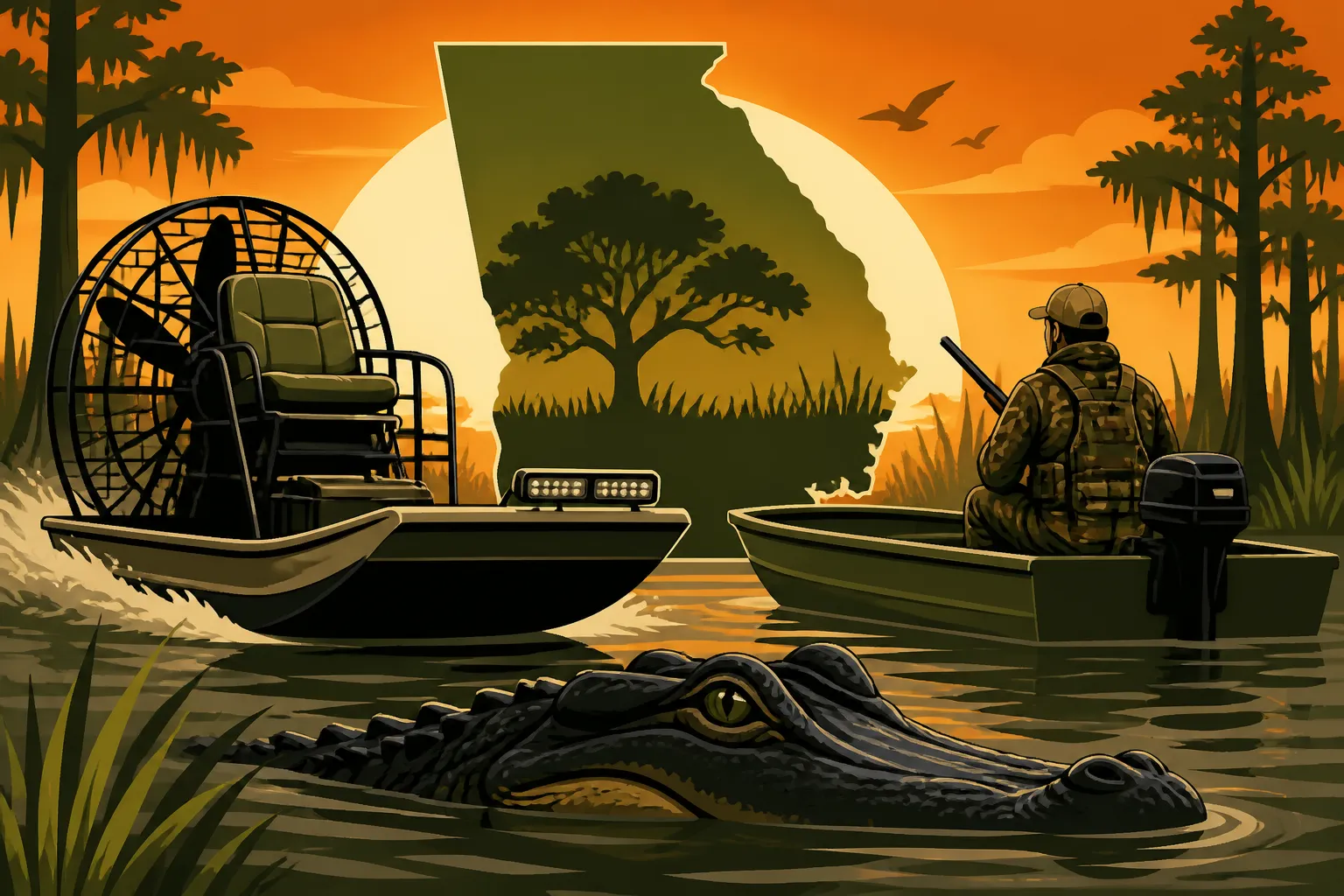
For many Georgia hunters, the humble jon boat is the backbone of their gator hunting fleet. These flat-bottomed, aluminum boats are incredibly popular for a reason: they're rugged, versatile, and relatively affordable, making them an excellent entry point for anyone looking to try their hand at Alligator Hunting in Georgia.
Advantages of Jon Boats
One of the biggest draws of a jon boat is its sheer practicality. First off, they're typically far more cost-effective than airboats. Not only is the initial purchase price significantly lower, but they're also generally cheaper to fuel, maintain, and repair. This makes gator hunting accessible to a wider range of hunters who might not have the budget for a specialized airboat.
Their versatility is another huge plus. A jon boat that you use for gator hunting can easily pull double, triple, or even quadruple duty. It's perfect for fishing the local rivers and lakes, setting out limb lines for catfish, running trotlines, or even getting to remote spots for Feral Hog Hunting Year-Round in Georgia. This means your investment serves multiple purposes throughout the year, maximizing its value.
When it comes to the hunt itself, jon boats offer excellent stability. Their flat bottom design means they don't rock nearly as much as a V-hull boat, which is crucial when you're standing on the deck, trying to sight in a gator, or wrestling a hooked one alongside the boat. This stability inspires confidence, especially during those intense moments when a gator is thrashing. They are also incredibly durable. Made from tough aluminum, they can take a beating from stumps, oyster beds, and shallow mud without major damage, which is a common occurrence in gator country. Finally, their relatively light weight and simple design make them easy to transport and store, often fitting neatly into a garage or carport and pulling easily behind most trucks and SUVs.
Limitations and Considerations
While jon boats are fantastic, they do come with their own set of limitations, especially when compared to their airboat counterparts. The most significant drawback is their draft. Even a flat-bottomed jon boat, when fully loaded with hunters, gear, and a harvested gator, still needs a certain amount of water for its outboard propeller to function efficiently. In truly extreme shallow water—think mere inches of water over thick mud flats or dense vegetation—a jon boat can get bogged down. This limits access to some of the most remote and undisturbed gator habitats.
Speed and accessibility can also be a factor. While a jon boat with a decent outboard can move along at a good clip, it can't match the sheer velocity and obstacle-skipping ability of an airboat across vast, shallow marshlands. Covering large territories quickly or navigating swiftly through extensive, weed-choked areas can be a challenge. Furthermore, propeller damage is a constant concern. Even with a good jack plate and careful navigation, hitting submerged stumps or rocks is almost inevitable in some gator territories. This can lead to costly repairs and interrupt your hunt.
Lastly, consider passenger capacity and gear space. While jon boats come in various sizes (typically 16 to 20 feet for gator hunting), they can quickly feel cramped with a full hunting party (often 2-4 people), multiple fishing rods, harpoons, ropes, lights, and ultimately, a large gator taking up precious deck space. Planning your loadout and knowing your boat's limits is essential to avoid an overcrowded, unsafe situation.
Essential Jon Boat Modifications for Gator Hunting
Turning a standard jon boat into an efficient gator-hunting machine often requires a few key modifications to enhance safety, visibility, and capability. These aren't just cosmetic changes; they are functional upgrades that can significantly improve your success rate and overall experience.
One of the most common and beneficial modifications is adding a raised platform in the bow. This platform gives the hunter a crucial elevated vantage point, which is incredibly helpful for spotting gator eyes at night or seeing their backs during the day over dense vegetation. It provides a clearer line of sight for harpooning or shooting. Just make sure any platform is sturdy, secure, and has non-slip surfacing, as things can get chaotic quickly when a gator is on the line.
Powerful bow-mounted lights are non-negotiable for night hunting, which is a popular and effective method for gators. These lights, often mounted on the raised platform or on a dedicated light bar, need to be bright enough to cut through the darkness and illuminate gator eyes at a distance. Having adjustable beams and even different light colors (some hunters prefer green lights for spotting eyes) can be a huge advantage. Alongside these, good deck lighting is also vital for safe movement and handling gear once a gator is close to the boat.
For the final, stealthy approach, a strong electric trolling motor is absolutely essential. Once you've spotted a gator from a distance with your outboard, you'll want to shut down the noisy gas engine and use a silent trolling motor to get within harpooning or shooting range. Look for models with high thrust, good battery life, and preferably GPS anchoring capabilities, which can hold your boat in place even against a current.
Finally, consider deck reinforcement if you plan to tackle very large gators. The deck of your boat will take a beating as you bring a gator alongside, and having strong, secure tie-off points for ropes and grappling equipment is critical. Secure storage for specialized tools like Harpoons and Snatch Hooks for Alligators is also important. A good way to research and compare different rigging options, from platforms to specialized lighting, is by checking out resources like GoHunt, which often feature user submitted setups and detailed product reviews.
Airboats: The Ultimate Gator Hunting Machine
If jon boats are the workhorses, airboats are the specialized, high-performance sports cars of Georgia gator hunting. These distinctive vessels are designed for one thing: supreme accessibility in the most challenging shallow water and marsh environments imaginable.
Unmatched Shallow Water Performance
This is where airboats truly shine and leave all other boats in their wake. Unlike propeller-driven boats that need water deep enough to submerge an outboard, airboats are propelled by a large aircraft-style fan pushing air, allowing them to glide effortlessly over incredibly shallow water, thick mud, submerged vegetation, and even short stretches of dry land. Imagine cruising at speed across a marsh where the water is only an inch or two deep, or effortlessly crossing a mud flat that would completely stop any other vessel.
This unique propulsion system means airboats can reach remote, undisturbed areas that are simply inaccessible to traditional boats. These are often the same areas where the largest, most elusive gators spend their lives, rarely encountering human pressure. The ability to access these pristine hunting grounds provides a significant advantage, opening up opportunities for hunters that others can only dream of. It effectively removes the barrier of water depth, transforming vast, seemingly impassable tracts of swamp and marsh into navigable hunting territory.
Key Advantages of Airboats
Beyond their unparalleled shallow water capabilities, airboats offer several other significant advantages for the dedicated gator hunter. Their most obvious benefit is sheer speed and range. Across open marsh or shallow, winding waterways, an airboat can cover vast distances in a fraction of the time it would take a jon boat. This means you can scout more territory, react quickly to opportunities, and pursue gators over a wider area, maximizing your chances of finding and catching a legal animal.
The high vantage point from an airboat is also a huge asset. Airboats typically have elevated seating for the operator and passengers, providing an excellent perspective for spotting gator eyes at night or seeing their bodies submerged during the day. This increased visibility makes detection far more efficient, especially in environments with tall grass or dense aquatic plants.
Finally, airboats offer incredible stability during the hunt itself. Their wide, flat hulls, combined with the power of their engines, make them extremely stable platforms. This is crucial when you're grappling with a powerful alligator alongside the boat. The stability minimizes rocking and allows hunters to maintain their balance and focus on the task at hand, reducing the risk of an accidental fall or equipment loss during the intense moments of retrieval.
Significant Drawbacks and Practicalities
As impressive as airboats are, they come with some serious considerations that make them a less practical choice for many hunters. The most glaring drawback is the high cost. Airboats are custom-built, specialized machines, and their purchase price is significantly higher than that of a jon boat, often running into tens of thousands of dollars. This initial investment is just the beginning; they also have higher fuel consumption, and maintenance on their aircraft or automotive engines and large propellers can be specialized and expensive.
Another major factor is the extreme noise they generate. The roaring engine and massive fan create an incredible amount of sound, so much so that hearing protection is not just recommended, it's absolutely essential for everyone on board. This noise can also be a nuisance to nearby residents or other outdoor enthusiasts, and some areas may have restrictions on airboat operation. While they are fast, their noise often means you can't approach a gator silently; instead, you often blast in quickly to surprise them before they have a chance to dive.
Operating an airboat also requires specialized skills. They handle very differently from a traditional boat, relying on air rudder control and engine throttle for steering, which takes practice to master. It's not something you can just jump in and drive without proper instruction.
Finally, trailering and storage can be challenging due to their large size and weight. You'll need a robust trailer and a vehicle capable of towing it, and finding adequate storage space can be an issue. Their highly specialized design also means they have limited versatility for other recreational activities. While a jon boat can be easily repurposed for fishing or general boating, an airboat is primarily a dedicated tool for shallow water access, making it a less flexible investment for many hunters. When considering such a significant investment, resources like GoHunt can be invaluable for finding reputable manufacturers, comparing models, and even locating specialized airboat services or guides.
Choosing the Right Power for Your Gator Rig
Whether you're running a jon boat or an airboat, the engine is the heart of your operation. Selecting the right power plant and propulsion system is crucial for performance, reliability, and adapting to Georgia's diverse gator habitats.
Outboard Motors for Jon Boats
For jon boats, the outboard motor is your primary means of propulsion. When choosing an outboard, horsepower considerations are key. For typical gator hunting jon boats (16-20 feet), common horsepower ranges from 25 HP up to around 70 HP. The exact power you need depends on the size of your boat, how much gear and how many people you typically carry, and whether you need to cover large open areas quickly. More horsepower means faster transit and better ability to push through thicker water, but also increased weight and fuel consumption.
The type of propeller you choose is also vital. In gator country, you'll be dealing with mud, weeds, and stumps. A good weedless prop can help prevent your propeller from getting tangled and losing thrust. Many experienced hunters also opt for a stainless steel prop over aluminum for its superior durability, as it can withstand minor impacts better, reducing the chance of costly damage.
Features like power trim and tilt are incredibly useful for shallow water operations. This allows you to quickly raise your engine to navigate over sandbars, stumps, or dense vegetation, then drop it back down for full thrust in deeper water. An electric start makes life easier, especially when you need to quickly get moving, and remote steering provides much better control and allows you to stand or move around the boat more freely than a tiller handle.
Electric Trolling Motors for Stealth
Regardless of your primary propulsion, an electric trolling motor is an absolutely essential piece of gear for serious gator hunting, especially when hunting at night. While your gas outboard gets you to the general vicinity, it's the trolling motor that allows for the silent, final approach. Alligators are incredibly sensitive to sound and vibration, and the quiet hum of an electric motor won't spook them like a gas engine will.
When choosing a trolling motor, consider the thrust levels (measured in pounds). You'll want enough power to move your loaded boat against currents or through thick vegetation. Longer battery life is also critical, as you'll be relying on it for extended periods of silent maneuvering. Trolling motors are generally available in bow-mount or transom-mount configurations; bow-mount offers superior control for steering and positioning from the front of the boat, which is often where the hunter needs to be. Many modern trolling motors also come with advanced features like GPS anchoring, which can automatically hold your boat in a specific spot or along a contour, freeing you up to focus on spotting and preparing for the shot. This technology is a game-changer for maintaining position in adverse conditions or simply for hands-free operation.
Airboat Engines and Propulsion
Airboats operate on a fundamentally different principle. Their propulsion comes from a large, open propeller driven by a powerful engine. These engines are typically either aircraft engines (often repurposed from helicopters or small planes) or high-performance automotive engines (like big-block V8s) that have been marinized for boat use. Both types are chosen for their high horsepower and reliability.
The propeller design is critical for an airboat's efficiency and performance. These are not like marine propellers; they are large, often multi-bladed fans made from composite materials or laminated wood. Their design is optimized to move a large volume of air, providing the thrust needed to push the boat over water and land. Different blade pitches and materials can affect performance, fuel efficiency, and noise levels.
It's no secret that these powerful engines, especially larger automotive V8s, have significant fuel consumption. Airboats are not known for their fuel economy, and you'll need to factor in substantial fuel costs for even a single day of hunting, often carrying extra fuel in onboard tanks. Maintenance on these specialized engines and propellers can also be more complex and costly than for a standard outboard, often requiring mechanics with specific expertise.
Safety and Legal Considerations
Gator hunting is inherently exciting, but it also carries serious risks. Prioritizing safety and understanding all relevant regulations is not just good practice—it's absolutely mandatory for a responsible and successful hunt. The right boat is only as safe as the hunter operating it and the gear onboard.
Essential Safety Gear for Any Gator Boat
Before you ever leave the launch, ensure your boat is equipped with all the necessary safety gear. Personal Flotation Devices (PFDs) are non-negotiable; everyone on board should have an easily accessible, properly fitting PFD. Georgia law often mandates PFDs for all occupants, and it's simply smart to wear them, especially in unpredictable situations or at night.
A fire extinguisher is another critical item, particularly given the presence of fuel and powerful engines. Make sure it's U.S. Coast Guard approved and easily reachable. A first aid kit is essential for handling minor injuries that can easily occur during an active hunt. You'll also need a whistle or horn to signal other vessels or for distress, and functional navigation lights are required, especially if you're operating before sunrise or after sunset, which is typical for gator hunting.
A robust anchoring system is crucial. You need an anchor that will hold your boat securely in mud or soft bottoms, especially when you're fighting a gator. Having a backup anchor isn't a bad idea. For communication, always have a reliable method. While cell phones might work in some areas, a VHF radio provides much better coverage in remote swamps, and a satellite messenger or personal locator beacon (PLB) offers an extra layer of security in case of a serious emergency outside of cell service. Remember, when you're trying to land an alligator from a small boat, things can get very dynamic very quickly, and proper safety gear can literally be a lifesaver.
Georgia Regulations for Gator Hunting Boats
It's your responsibility as a hunter to be intimately familiar with Georgia's specific regulations regarding boat operation during alligator season. This isn't just about hunter ethics; it's about staying legal and safe.
First, ensure your boat is properly registered with the state of Georgia and displays the correct registration numbers and decals. All vessels operating on Georgia waters must comply. Second, understand the navigation light requirements. If you're operating at night, which is standard for most gator hunting, your boat must display appropriate red/green bow lights and a white stern light. Ignorance of these rules is not an excuse, and violating them can lead to fines or worse.
For airboat operators, sound regulations can be a significant consideration. While airboats are legal for gator hunting in many areas, there might be restrictions on their use near residential zones, certain times of day, or in specific wildlife management areas. Always check local ordinances and WMA rules. The Georgia Alligator Quota Hunt Rules will provide specifics on legal hunting methods, bag limits, and other restrictions, but it’s always best to also consult the Georgia Department of Natural Resources (DNR) website or their Go Outdoors Georgia platform for the most current and detailed information on all boating and hunting regulations, including any specifics for Applying for an Alligator Quota Permit. This level of preparation ensures you don't inadvertently violate a rule due to your choice of vessel.
Navigating Alligator Zones
Georgia's alligator hunting is managed through a quota hunt system, divided into specific zones, each with its own permit allocation. Understanding these zones and any specific rules that apply to boat types within them is critical. Certain areas, particularly those with environmental sensitivities or heavy recreational use, might have restrictions on the use of airboats due to noise or impact.
You need to know where you can and cannot use certain boat types before you apply for or accept a permit. For instance, some state parks or protected wildlife refuges within an alligator zone might have specific rules for boat access or motor types. You'll also need to respect private property boundaries. Even if you're on public waterways, accessing private land without permission is trespassing. Familiarize yourself with navigation charts and property maps to avoid inadvertently entering no-go areas. Resources like GoHunt, or the official Georgia DNR website and app, can provide detailed maps and overlays showing alligator zones, public access points, and sometimes even specific boat restrictions within those zones. Planning your hunt around these geographical and regulatory considerations is as important as your boat choice itself.
Customization and Rigging Your Gator Boat
Once you've chosen your base boat, the real fun begins: customizing and rigging it specifically for the unique demands of gator hunting. Thoughtful rigging can make your hunt safer, more efficient, and ultimately more successful.
Lighting Systems for Night Hunting
Night hunting is arguably the most common and effective way to hunt alligators, and for that, you need an exceptional lighting system. The primary goal is to spot the glowing red eyes of gators at a distance. Powerful spotlights, typically mounted on a bow platform or dedicated light bar, are paramount. Many hunters opt for high-output LED or halogen spotlights, with some preferring green lights over traditional white, as they believe green light makes gator eyes "pop" more distinctly against the dark water, especially in foggy or humid conditions. Having adjustable beam patterns—from a tight pencil beam for long-range scanning to a wider floodlight for closer identification—is a huge advantage.
Beyond spotting lights, adequate deck lighting is crucial for safety and efficiency. You'll be moving around a boat with hooks, harpoons, and possibly a struggling gator in the dark. Low-profile LED strips or small floodlights illuminate the deck without blinding the operator or other hunters. Remember to consider battery considerations; these powerful lights can draw a lot of juice, so ensure you have sufficient battery capacity (and maybe a backup) to last through a long night on the water. For more in-depth tactics on utilizing lights effectively, you might find valuable insights in articles like Night Hunting Georgia Alligators From a Boat.
Storage and Deck Layout
A well-organized boat is a safe and efficient boat, especially when dealing with the chaos of an alligator hunt. Your deck layout needs to prioritize safety, accessibility, and function. Cooler space is a critical consideration; once you've harvested a gator, you'll need a place to store its meat and hide, especially in warm Georgia weather. Large, insulated coolers are essential for preserving your harvest.
Secure rod holders are vital for your snagging poles. These aren't delicate fishing rods; they're stout tools for hooking a gator. You'll want holders that keep them secure but easily accessible. Additionally, dedicated, secure gear organization for your ropes, harpoons, bang stick, and other specialized tools is a must. Loose equipment on the deck can become a tripping hazard or get lost overboard during the action. Consider adding non-slip decking materials to critical areas to enhance traction, particularly when the deck is wet. Every item should have a designated spot, easily reached but out of the way during active hunting.
Specialized Gator Hunting Equipment Integration
Beyond the basic modifications, there are specialized pieces of equipment that can be integrated into your boat to make the hunt even more streamlined. For handling larger gators, some boats are rigged with winches or davits (small cranes) to help hoist a heavy animal aboard, minimizing strain and making the process safer. If regulations allow and you plan to keep smaller gators alive for a period, a livewell might be a useful addition, though this is less common for large harvest gators.
Finally, for navigating Georgia's intricate waterways, a reliable GPS/chartplotter is indispensable. This helps you track your position, mark productive areas, and navigate safely back to the launch, especially at night or in unfamiliar marshland. Many modern units offer detailed mapping that can integrate with apps like GoHunt, providing valuable topographical and hydrological data, including access to local regulations or finding a Georgia Alligator Population Estimate for your area. The right combination of these integrations can transform your boat into a truly purpose-built gator hunting machine.
Disclaimer
This article is for general informational purposes only and does not constitute professional advice. Laws, prices and regulations vary by location and change over time. Consult a qualified professional for guidance on your specific situation.