Treestand Setups in North Georgia Mountains
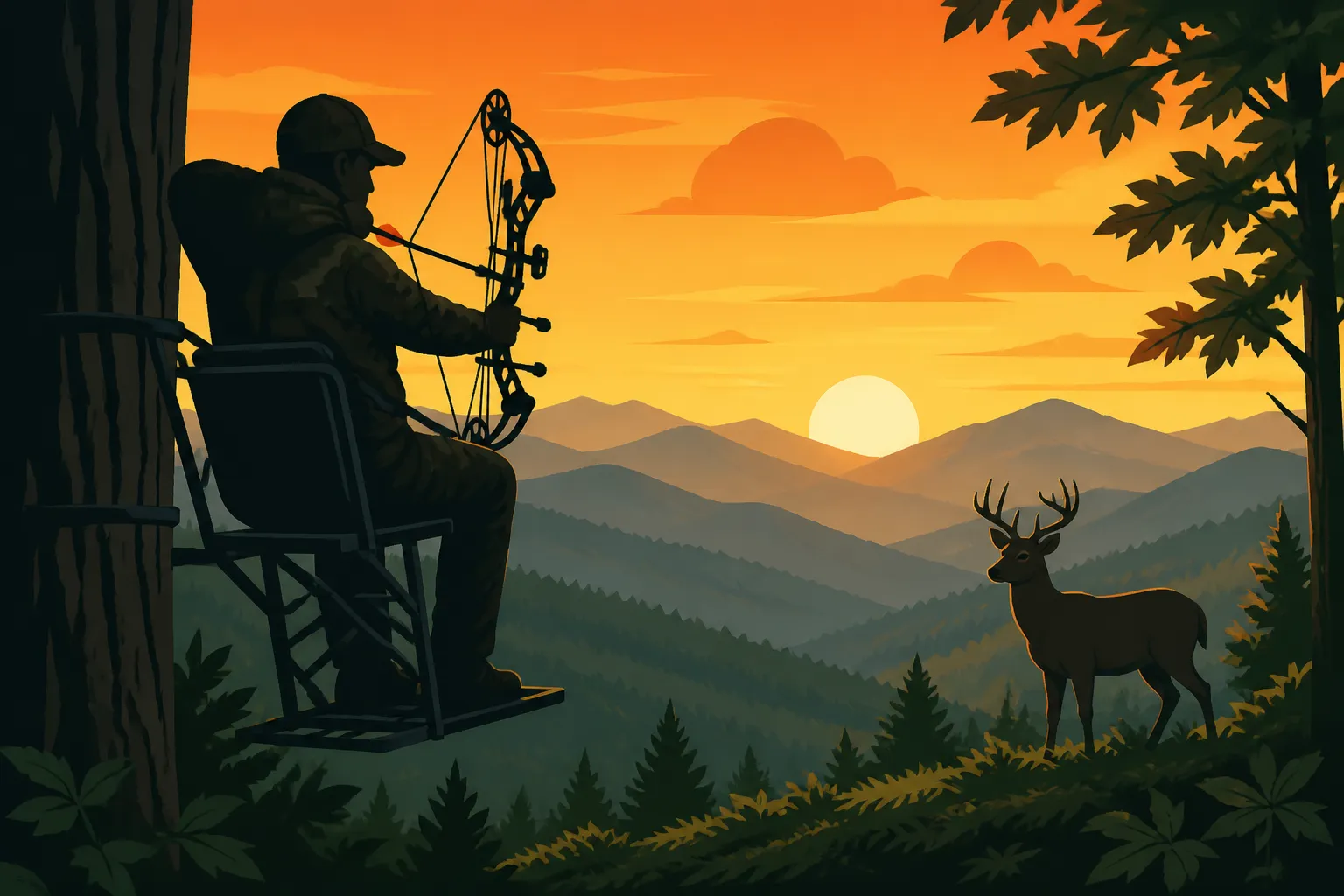
Hunting the rugged, steep terrain of North Georgia can be an incredibly rewarding experience, but let's be honest, it presents a unique set of challenges compared to the flatlands. From deciphering swirling winds to finding a suitable tree on a precarious slope, getting your treestand set up effectively and safely can feel like an impossible puzzle. This guide will walk you through everything you need to know to confidently choose, place, and hunt from a treestand in the beautiful, yet demanding, North Georgia mountains, helping you turn those frustrations into successful hunts.
Understanding North Georgia Mountain Terrain
When you're looking at a map or even just driving through the North Georgia mountains, it’s easy to be captivated by the sheer beauty, but as a hunter, you quickly realize this landscape demands respect and a different approach. The undulating hills, deep valleys, and sudden elevation changes aren't just scenic; they dictate how deer move and, crucially, how you need to approach your stand setups.
Reading Topographic Maps and Aerial Imagery
Before you ever set foot on the ground, your most powerful tool for hunting in the mountains is often a good topographic map combined with high-resolution aerial imagery. Forget simple flat-land maps that only show property lines; here, you need to see the elevation contours, the dips, the rises, and the subtle changes that might not be obvious to the naked eye. Look for areas where contour lines pinch together, indicating steep cliffs or ravines, and where they spread out, suggesting benches or gentler slopes where deer might travel or bed.
Digital mapping apps, such as GoHunt, are invaluable for this. They allow you to overlay topo lines, satellite images, and even public land boundaries, making it much easier to identify potential travel corridors, bedding areas, and feeding zones from the comfort of your home. You can mark potential stand locations, plan your entry and exit routes to minimize disturbance, and even estimate walking distances and elevation changes. This kind of detailed reconnaissance is particularly useful when scouting Georgia public land before season, as it helps you pinpoint high-potential areas without burning valuable time or leaving excessive scent in low-potential spots.
Navigating Steep Slopes and Ravines
The sheer physicality of hunting North Georgia often takes people by surprise. What looks like a manageable slope on a map can be a grueling climb in person, especially when carrying a stand and gear. Deer, however, are masters of this environment. They utilize the terrain to their advantage, often traveling along contours rather than directly up and down the steepest parts. They'll skirt the edges of ravines, use finger ridges as highways, and often bed on benches or saddles where they have an elevated view and can detect threats from multiple directions.
When navigating these areas, always think about your approach and exit. A stand site that seems perfect might be worthless if you can't get to it silently or if your exit will spook deer. Look for slightly less steep "ramps" that lead up to ridge tops or benches. These natural terrain features are often used by deer and can also serve as your access points. Consider the noise factor: scrambling over loose rocks or slipping on wet leaves on a steep slope can ruin a hunt before it even begins. Pay attention to how the canopy changes with elevation; denser undergrowth might provide cover but also obstruct views, while mature hardwoods on ridges might offer better visibility but less concealment at ground level.
Predicting Thermals and Shifting Winds
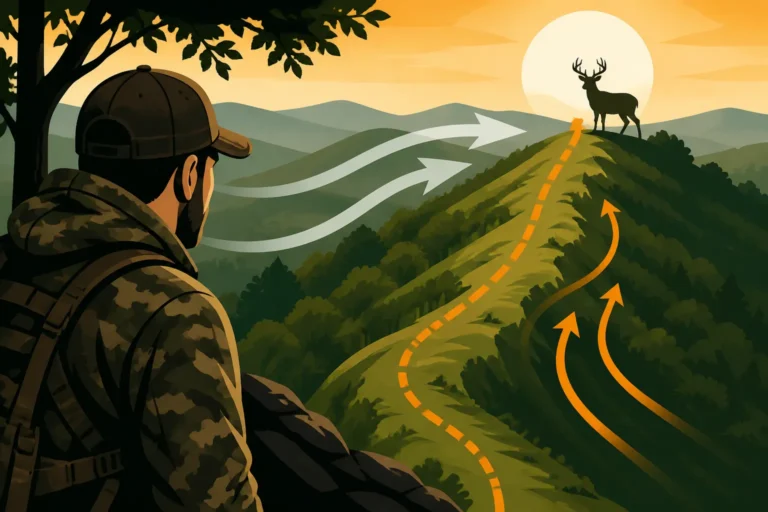
Perhaps the most challenging aspect of mountain hunting is dealing with unpredictable wind and thermals on a mountain ridge. Unlike flat terrain where wind direction might be relatively consistent, mountains create their own localized weather patterns. Thermals are essentially air currents driven by temperature changes. As the sun rises and warms the earth, air heats up and flows uphill. In the evening, as the air cools, it flows downhill. This creates a predictable daily cycle, but it's often layered over and influenced by prevailing winds, creating swirling, unpredictable currents.
Understanding this dynamic is paramount. Early morning sits, especially in valleys or draws, often mean a downhill thermal that will carry your scent into bottomland bedding areas. As the day warms, that thermal will reverse and carry your scent uphill. This dictates when and where you should hunt. For instance, a ridge-top saddle might be a fantastic evening spot as the cooling air carries your scent down both sides of the ridge, but in the morning, the rising thermal could carry your scent directly to deer coming up from lower elevations. Always carry a wind checker and observe how the air is moving, especially at your chosen stand height. A slight breeze on the ground might be a completely different story 20 feet up in a tree.
Scouting for Success Before Hanging Your Stand
You wouldn't build a house without a blueprint, and you shouldn't hang a treestand without thorough scouting. In the North Georgia mountains, scouting is even more critical because the terrain itself often funnels deer in predictable ways, but only if you know what to look for.
Locating Key Deer Sign
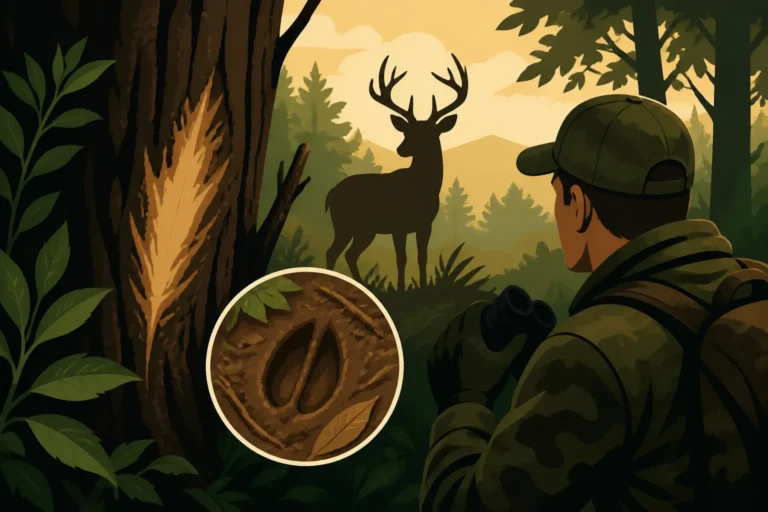
Finding fresh deer sign is the bedrock of successful stand placement. While it might seem obvious, in the vastness of the mountains, identifying consistent and recent sign is key. Look for well-worn trails that follow contours, especially those leading to or from known food sources (like acorn flats or recent clear-cuts), water sources (creeks, springs), or bedding areas (thick laurel patches, steep south-facing slopes for warmth). Pay close attention to rub lines and scrape lines. A prominent rub line along a logging road or a series of scrapes along a creek bottom often indicates consistent buck travel, particularly during the pre-rut and rut phases.
Don't just look for isolated signs; seek patterns. Are multiple trails converging? Is there a concentrated area of rubs and scrapes? Are there fresh tracks in soft earth near a water crossing? These are indicators of higher deer activity. The best stand locations are often not on the sign itself, but rather positioned to intercept deer as they approach or leave these high-activity zones, allowing for a quieter entry and exit without immediately contaminating the hotspot. Remember, the goal is to set up where deer will be, not just where they were.
Identifying Natural Funnels and Bottlenecks
The North Georgia landscape is riddled with natural funnels and bottlenecks that deer instinctively use. These are topographical features that force deer movement into narrower, more predictable corridors. Think about a narrow saddle connecting two ridges, a steep bluff that forces deer to walk a specific bench below it, or a creek crossing where the banks are manageable in only one or two spots. These are prime locations for ambush sites.
Another excellent example is a transition zone between different types of timber, like a mature hardwood ridge meeting a thick pine plantation. Deer often follow these edges, especially if the thicker cover offers bedding and the hardwoods offer food. Even small, subtle changes in terrain, like a subtle dip in a ridge or a small point jutting out, can act as mini-funnels that concentrate deer movement. Using your mapping app to identify these features and then verifying them on the ground during your scouting trips is how you pinpoint those high-percentage spots where deer movement is most concentrated and predictable. Understanding how deer use these features is also critical for hunting a ridge-top saddle for rutting bucks, as they often cruise these corridors in search of does.
Using Technology for Remote Scouting
While boots-on-the-ground scouting is irreplaceable, technology has revolutionized how we approach it. Digital mapping platforms, like the one offered by GoHunt, are incredibly powerful tools for remote scouting. You can spend hours poring over maps, identifying promising terrain features, marking potential stand sites, and planning quiet access routes without ever stepping into the woods. This is especially helpful for large tracts of public land, allowing you to narrow down vast areas to a few high-potential spots for in-person investigation.
These platforms often include features like property lines, satellite imagery, topographic maps, and even historical weather data. You can identify potential bedding areas on south-facing slopes (which get more sun for warmth), locate dense thickets offering security cover, and pinpoint food sources like oak ridges or abandoned orchards. Even better, some apps allow you to mark observations like rub lines, scrapes, or bedding signs, building a comprehensive database over time. This makes your time in the woods more efficient and reduces the amount of disturbance you create in potential hunting areas. Remember to download maps for offline use before heading into remote areas where cell service might be spotty.
Choosing the Right Treestand for Mountain Hunting
The treestand you choose can significantly impact your mobility, safety, and ultimately, your success in the steep, often unforgiving environment of the North Georgia mountains. There’s no one-size-fits-all answer, as different stand types excel in different situations.
Climbing Stands vs. Hang-Ons in Mountain Terrain
Climbing stands are fantastic for their mobility and ease of setup if you have the right trees. They allow you to go deep and quickly set up wherever you find a suitable, straight tree with minimal branches. However, mountain terrain often presents challenges for climbers. Finding a perfectly straight, limbless tree can be difficult, especially in areas with gnarled oaks, dense pine thickets, or mixed hardwoods. On very steep slopes, the angle of the tree might also make climbing awkward or unsafe.
Hang-on stands, on the other hand, offer much more versatility in tree choice. You can hang them in crooked trees, trees with lower branches, or even on multi-trunked trees, provided you have a safe and stable setup. The trade-off is that they require climbing sticks or steps to ascend, which means more gear to carry in and out, especially when considering packs built for a Chattahoochee day hunt. If you're planning to leave a stand in place for multiple hunts, a hang-on might be a better choice, but if you're a run-and-gun hunter covering a lot of ground, the extra bulk of sticks can be a deterrent. For hunters who value adaptability and stealth in varied terrain, the hang-on stand with a good set of climbing sticks, especially those designed for quick deployment, often proves more effective in the mountains.
Here’s a quick comparison of treestand types for mountain hunting:
| Feature | Climbing Stand | Hang-On Stand | Saddle Hunting System |
|---|---|---|---|
| Tree Requirements | Straight, limbless trunk, consistent diameter | More versatile, can use crooked/limbed trees | Extremely versatile, smaller diameter trees |
| Portability | Generally bulky, one-piece or two-piece | Stand + sticks/steps, can be cumbersome | Very lightweight, compact, highly portable |
| Setup Speed | Fast on ideal trees, slow on challenging trees | Slower due to stick/step setup | Quick once climbing method is established |
| Comfort | Varies by model, generally good for longer sits | Varies, often requires additional seat pad | Can take practice, less traditional "seat" |
| Stealth | Can be noisy if tree bark is rough | Quieter once installed, but sticks can be noisy | Very quiet, 360-degree shooting |
| Ideal Use | Open hardwoods with many straight trees | Varied terrain, pre-set locations, diverse trees | Mobile, run-and-gun, deep public land, steep slopes |
Saddle Hunting for Versatility
Saddle hunting has exploded in popularity, and for mountain hunters, it offers a compelling blend of mobility, concealment, and versatility. A saddle is essentially a minimalist harness that you wear, allowing you to "lean" into the tree rather than sitting on it. This system offers 360-degree shooting opportunities, as you can easily pivot around the tree.
The biggest advantage in North Georgia is the tree selection. Because you're leaning into the tree, you're not restricted to perfectly straight trunks like with a climber. You can use smaller diameter trees, crooked trees, or even trees with a few lower branches, making it much easier to find suitable cover. Combined with lightweight climbing sticks, a saddle setup is incredibly portable, allowing you to hike deeper into rugged terrain with less bulk. The setup is also remarkably quiet once you're in the tree, as you become part of the tree itself, minimizing movement. Many mountain hunters find saddle hunting in Georgia hardwoods to be the most adaptable and efficient method for hunting the varied and often difficult-to-navigate timber.
Ground Blinds as an Alternative
Sometimes, no matter how hard you look, you just can't find a suitable treestand tree in the perfect spot. Or perhaps the terrain is too steep, or you simply prefer to hunt from the ground. In these scenarios, a ground blind can be an excellent alternative, especially when hunting specific features like a funnel between two swamps or a secluded food plot edge. For more on this, you can look into using a ground blind on Georgia public land.
In the mountains, ground blinds offer several advantages. They provide full concealment, protecting you from detection and the elements. They also allow for comfortable, less physically demanding hunts, which can be a relief after a long hike up a mountain. However, you lose the elevation advantage that treestands provide, meaning your scent dispersion is less favorable, and your field of view is significantly reduced. When using a ground blind in the mountains, pay extra attention to wind direction, choose locations with natural backdrops (like thick brush or the base of a large tree) to break up the blind's outline, and ensure your shooting lanes are clear. They are most effective when positioned strategically in natural cover, allowing you to blend seamlessly into the environment.
Strategic Placement for Deer Movement and Shot Opportunities
Once you’ve got your stand chosen, the real art comes in placing it. This isn't just about finding a tree; it's about anticipating deer movement, understanding the invisible forces of the wind, and maximizing your chances for an ethical shot.
Playing the Wind and Thermals
This cannot be stressed enough: the wind and thermals are your ultimate advantage or your biggest downfall in the mountains. Deer rely heavily on their sense of smell, and a misplaced stand that allows your scent to drift into a deer's nose will ruin your hunt before it even starts. As discussed earlier, thermals in the mountains often dictate predictable air currents—uphill in the morning as the sun warms the air, downhill in the evening as it cools.
When choosing a stand site, always factor in both the prevailing wind direction and the expected thermal pull for the time of day you plan to hunt. Ideally, you want your stand positioned so your scent cone drifts away from where you expect deer to approach. This might mean setting up on the leeward side of a ridge, or perhaps slightly below a ridge line in the morning and higher up in the evening. Carry a wind checker and use it frequently, even after you've climbed into your stand. A slight shift can mean the difference between a deer walking into your setup undetected and one snorting and bounding away. Don't be afraid to adjust your plans or even abandon a spot if the wind isn't cooperating; it's better to preserve the area for a day when conditions are right. For a deeper dive, check out Wind and Thermals on a Mountain Ridge.
Setting Up on Ridge-Top Saddles and Benches
Ridge-top saddles and benches are absolute magnets for deer in mountain terrain. A saddle is a low point in a ridge, essentially a natural highway that deer use to cross from one side of a mountain to another, especially when cruising for does during the rut. A bench is a relatively flat or gently sloping area on the side of a steep mountain, acting like a natural shelf that deer will walk on rather than navigating the steeper terrain above or below it.
When placing a stand in a saddle, aim for a tree that offers a good view of both sides of the ridge, and consider potential travel corridors along the top. Deer often pause or slow down as they traverse a saddle, offering excellent shot opportunities. For benches, look for trees that overlook the bench itself, but also consider access points to the bench from steeper terrain. Deer might walk along the bench but then drop off into a ravine or climb up to a higher bedding area. Positioning your stand to intercept them as they transition on or off the bench can be incredibly effective. Remember to consider your entry and exit routes carefully, ensuring you can reach your stand without spooking deer already moving through these crucial zones. Learning how to identify and hunt these areas is key, such as by following advice on hanging a stand on a mountain saddle or even hunting Chattahoochee mountain ridgelines for optimal success.
Hunting Creek Bottom Funnels
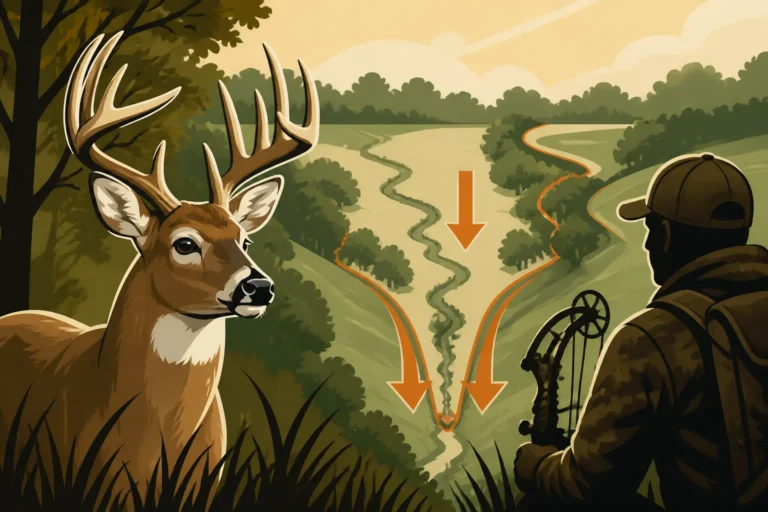
While ridge tops and saddles are crucial, don't overlook the potential of creek bottoms, especially where they create natural funnels. In North Georgia, many creeks and small rivers wind through deep valleys, often flanked by steep banks. Deer will frequently travel these creek bottoms, using the cover provided by the riparian vegetation and taking advantage of the flatter terrain. Where the creek makes a sharp bend, or where two smaller drainages converge, it can create a natural pinch point that funnels deer movement.
Setting up a stand near a creek crossing, especially if there are clear tracks or trails indicating regular use, can be highly productive. During warmer early seasons, deer will also be drawn to these areas for water. Look for mature hardwoods along these creek lines that might drop acorns, providing both food and cover. However, be acutely aware of thermals in creek bottoms. As mentioned, air tends to pool and move downhill in the mornings and reverse uphill later in the day, so plan your hunts accordingly to avoid having your scent blow directly into the creek bottom. A good understanding of hunting Piedmont creek bottom funnels can easily be adapted to mountain terrain.
Safety First: Essential Practices for Mountain Treestand Hunting
Hunting from a treestand is inherently risky, and those risks are amplified in the rugged, remote environment of the North Georgia mountains. Your personal safety should always be the absolute top priority.
Pre-Season Gear Inspection and Maintenance
Before you even think about climbing a tree, dedicate time to a thorough, pre-season inspection of all your treestand equipment. This isn't just a suggestion; it's non-negotiable. Check every strap, buckle, bolt, and weld on your treestand, climbing sticks, and safety harness. Look for signs of wear, tear, cracking, or rust. Rodents can chew through straps, weather can degrade materials, and bolts can loosen over time. If anything looks compromised, replace it immediately or get professional help.
Pay particular attention to your safety harness and lifeline. Check the stitching, webbing, and metal components. Most harnesses and lifelines have a recommended lifespan; if yours is past it, invest in a new one. Remember that carabiners and ropes can fray. Lubricate moving parts on your stand if needed and ensure all platforms and steps are free of debris or rust that could cause a slip. This meticulous inspection is a vital step in preventing accidents and ensuring your gear performs reliably when you need it most.
Harness Use and Lifeline Systems
Wearing a full-body safety harness is not optional; it's mandatory every single time you leave the ground. Far too many accidents occur because hunters "just went up for a minute" or thought they were careful enough. Once you're in a treestand, a fall can happen in an instant, whether due to a slippery step, a broken branch, or a momentary loss of balance. A full-body harness, properly worn and connected, will catch you if you fall.
Furthermore, always use a lifeline system that keeps you connected from the moment your feet leave the ground until they are safely back on it. Rope-style lifelines are excellent for this, allowing you to attach your harness to the tree before you even start climbing and remain attached throughout your ascent, descent, and while in the stand. Practice using your harness and lifeline at ground level until it becomes second nature. Understand how to properly adjust your harness for a snug fit and how to re-enter your stand or self-rescue if you do fall. Think of your harness and lifeline as your life insurance policy; never hunt from a treestand without them.
Emergency Preparedness
Hunting in the North Georgia mountains often means venturing into remote areas where cell service is unreliable, and help can be hours away. This makes emergency preparedness absolutely crucial. Always let someone know exactly where you are hunting, your planned route, and when you expect to be back. Share your GoHunt pin drop location with a trusted contact. Carry a fully charged cell phone (even if service is spotty, you might find a signal on a ridge top, or it can be used for GPS), and consider a satellite communication device like a Garmin inReach or a Zoleo for true emergency two-way communication.
Beyond communication, pack a comprehensive first-aid kit that can handle anything from minor cuts to more serious injuries. Include essentials like pain relievers, bandages, antiseptic wipes, and any personal medications. Carry extra water, high-energy snacks, a reliable headlamp with spare batteries (for unexpected late exits), a whistle, and a fire-starting kit. Dress in layers to adapt to changing mountain weather, which can shift rapidly. Knowing basic wilderness first aid and self-rescue techniques can also be invaluable. Being prepared can turn a potentially life-threatening situation into a manageable inconvenience.
Disclaimer
All hunting activities carry inherent risks. This guide provides general information and recommendations only. Hunters must always comply with all local, state, and federal hunting regulations and laws. Safety should be the paramount concern in all hunting endeavors. It is the responsibility of each individual hunter to ensure their own safety, operate equipment properly, and be prepared for potential emergencies. Consult official Georgia Department of Natural Resources (DNR) resources for the most up-to-date regulations and safety guidelines.