Georgia Red Wolf Recovery Program History
For many of us who cherish Georgia's wild places, there's a certain fascination with the creatures that once roamed these lands but are now gone. It's a somber thought, realizing that some incredible species that shaped our ecosystems for millennia have vanished, leaving a void. If you've ever heard whispers of red wolves in Georgia's past, or wondered what happened to them, you're not alone. This guide aims to pull back the curtain on the intriguing, and somewhat heartbreaking, history of the red wolf in Georgia, from its original presence to its eventual extirpation and the faint echoes of recovery efforts.
The Ghost of Georgia's Wilderness: Red Wolves in Historical Context
Imagine walking through Georgia's vast pine forests or sprawling river bottoms a few centuries ago. The sounds would be different, the creatures you encountered far more varied than today. Among the apex predators, alongside black bears and mountain lions, was the elusive red wolf. These magnificent canids were an integral part of the Southern landscape, playing a crucial role in maintaining ecological balance long before human settlement pushed them to the brink. Their story in Georgia is one of a silent disappearance, a testament to how quickly things can change when wild spaces shrink and human perceptions shift.
Tracing the Native Range and Ecological Role
Historically, the red wolf, Canis rufus, ranged across much of the southeastern United States, from the Atlantic and Gulf Coasts inland to the Ohio River Valley, and as far west as central Texas and southeastern Missouri. Georgia was firmly within this native territory. These wolves weren't just passing through; they were firmly established, particularly in the low-lying coastal plains, river floodplains, and swampy areas that characterized much of the state. They were perfectly adapted to these habitats, blending into the dense undergrowth and navigating the intricate waterways with ease. Their diet was varied, consisting mainly of white-tailed deer, rabbits, raccoons, and other small to medium-sized mammals, helping to keep prey populations healthy and robust. Think of them as nature's original game managers, ensuring that herds remained strong by culling the weak or sick.
Their presence would have influenced everything from deer movement patterns to the health of riparian ecosystems. Without these top predators, certain prey species could become overabundant, leading to overgrazing and habitat degradation. The red wolf was a keystone species, meaning its impact on the environment was disproportionately large compared to its numbers. Understanding their original role helps us appreciate the complexity of the ecosystems we now manage, often with very different species compositions. While modern tools like GoHunt can help today's hunters understand current game populations and ranges, historical data on animals like the red wolf is much harder to piece together, relying on old accounts and bone fragments.
The Vanishing Act: Factors Leading to Extirpation
The decline and eventual extirpation of the red wolf from Georgia, and indeed from most of its historical range, was a multi-faceted tragedy. The primary driver was habitat loss and fragmentation. As European settlers pushed west and south, forests were cleared for agriculture, towns, and roads. The vast, unbroken wilderness that red wolves needed to thrive began to shrink into isolated pockets. This reduction in habitat directly impacted their ability to find food, establish territories, and avoid human contact. Imagine trying to live a wild life when your forest home is constantly being carved up into smaller, less sustainable pieces.
Compounding habitat loss was intense persecution. Wolves were, unfortunately, viewed as vermin and a direct threat to livestock and even perceived as a danger to humans, though attacks were exceedingly rare. Bounties were common, incentivizing hunters and trappers to eliminate them. It was a relentless campaign, fueled by fear and economic concerns, that gave the wolves little chance to recover. Furthermore, as coyote populations began to expand eastward, red wolves started to hybridize with them. This genetic mixing, often occurring as red wolf numbers dwindled and finding a purebred mate became harder, further diluted the species, pushing it closer to extinction. By the early 1900s, red wolves were considered functionally extinct in Georgia, their unique genetic signature absorbed or wiped out. The state's narrative closely mirrors the larger national story of this once-widespread predator, much like the Georgia Elk History and Extirpation or Georgia Bison Before European Settlement.
Early Conservation Attempts and the Road to Recovery (or Lack Thereof in Georgia)
By the mid-20th century, the red wolf was one of the most endangered mammals on Earth, clinging to existence only in a small, remote area of coastal Texas and Louisiana. This stark reality finally prompted serious conservation action, but unfortunately for Georgia, these efforts came too late to save the native population directly within its borders. The focus shifted from local preservation to a monumental national recovery program, attempting to save the species from the brink.
Nationwide Efforts and Georgia's Absence from Reintroduction Sites
The desperate situation of the red wolf led to a groundbreaking conservation effort in the 1970s. The U.S. Fish and Wildlife Service began a captive breeding program, capturing the last remaining genetically pure red wolves from their dwindling Gulf Coast strongholds. The goal was audacious: breed them in captivity and then reintroduce them into suitable wild habitats. This program was a beacon of hope for a species that seemed doomed. However, when it came to choosing reintroduction sites, Georgia was not among the initial selections. The chosen sites, such as the Alligator River National Wildlife Refuge in North Carolina, offered large, relatively undisturbed areas with minimal human population density and good prey bases, critical factors for success.
The decision to not reintroduce red wolves to Georgia was likely due to several factors. Firstly, suitable, large-scale federal lands with low human impact and the necessary political and public support were prioritized. While Georgia has extensive public lands like the Chattahoochee-Oconee National Forest and numerous Wildlife Management Areas, many of the prime red wolf habitats in the coastal plain had already undergone significant alteration, or were fragmented by private land ownership. Secondly, the presence and growing population of coyotes in Georgia presented a major hurdle, as hybridization was a known threat to pure red wolf genetics. Reintroduction efforts needed to be in areas where coyote interaction could be minimized. This meant Georgia, despite being part of their historic range, wasn't deemed the most viable initial option for a successful, pure red wolf reintroduction. Learning about the fate of the red wolf offers a stark contrast to understanding current populations, like the Georgia Deer Population Estimate or How Many Black Bears Georgia Has, which are actively managed and studied with modern resources.
Why Georgia's Landscape Changed for Red Wolves
Even if there had been a push for red wolf reintroduction in Georgia, the landscape itself presented formidable challenges. The very things that made Georgia appealing for human development were detrimental to the red wolf. Extensive timber harvesting, particularly the conversion of vast longleaf pine forests to industrial loblolly plantations, dramatically altered the habitat structure. While certain game species like deer can adapt to these changes, a wide-ranging predator like the red wolf struggled. Furthermore, the expansion of agriculture, especially large-scale farming in the Coastal Plain, meant more land was cleared, more human activity, and inevitably, more conflicts between wolves and livestock.
The increasing human population density, even in rural areas, also made large-scale reintroduction difficult. Red wolves need space and relative isolation from human disturbance to establish stable territories and reproduce successfully. The historical factors that led to their decline – habitat loss, human persecution, and hybridization – remained significant barriers to any potential recovery within the state. It's a sobering thought that while many of us enjoy outdoor recreation today, perhaps using apps like GoHunt to explore different hunting grounds, the sheer scale of habitat transformation over time meant places that once sustained a thriving red wolf population could no longer do so without massive ecological restoration.
The Modern Understanding and Future Outlook for Georgia's Wild Canids
While the red wolf's recovery program has had its ups and downs in other states, the lessons learned are invaluable. In Georgia, the conversation around wild canids often revolves around coyotes, which now fill a similar ecological niche to the one red wolves once occupied. Understanding the differences, and the past, helps us appreciate the present dynamics of our wildlife.
Distinguishing Red Wolves from Coyotes and Hybrids
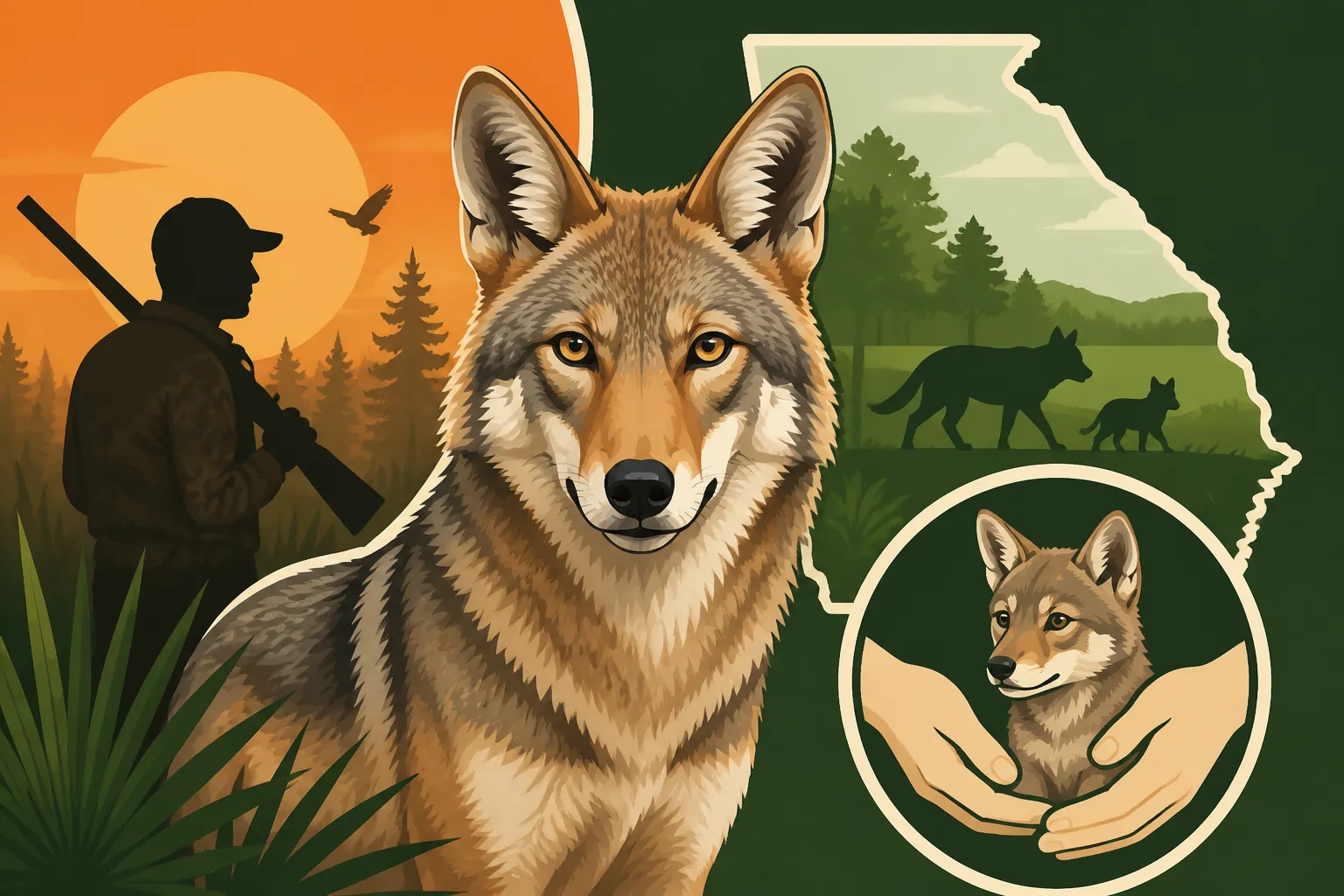
One of the biggest challenges in any discussion of wild canids in the Southeast is the persistent confusion between coyotes, red wolves, and their hybrids. True red wolves are genetically distinct from coyotes and gray wolves, although they share some physical characteristics. Generally, red wolves are larger than coyotes but smaller and more slender than gray wolves. They typically have a reddish tint to their fur, especially on their ears, muzzle, and legs, though coloration can vary. Their skull structure also has unique characteristics. Coyotes, which arrived in Georgia much later than red wolves (establishing a strong presence in the mid-to-late 20th century), are generally smaller, often grayer or tawny, and have a more pointed muzzle and larger ears relative to their head size. The problem, of course, is that with extensive historical hybridization, identifying a "pure" red wolf in the wild became incredibly difficult, contributing to their genetic demise.
Here's a quick comparison of some general characteristics:
| Feature | Red Wolf (Historical Georgia) | Coyote (Present-day Georgia) |
|---|---|---|
| Size | Medium-large (45-80 lbs) | Small-medium (20-45 lbs) |
| Build | Slender, long legs, relatively large feet | Lean, athletic, often "leggy" |
| Coloration | Tawny, reddish-brown, often reddish on ears/legs | Grayish-brown, sometimes yellowish, darker dorsal stripe |
| Tail | Bushy, usually held down, black tip | Bushy, often held between legs, black tip |
| Muzzle | Broad, less pointed | Narrow, distinctly pointed |
| Ears | Moderately sized relative to head | Relatively large, triangular, erect |
| Ecological Niche | Apex/mesopredator, deer/small game | Mesopredator, small game/carrion |
It's vital for hunters and wildlife enthusiasts to understand these distinctions, particularly if discussions of future recovery efforts ever arise. While we currently have robust populations of Coyotes and Predators in Georgia, they are not the same as the red wolves that once roamed our state.
Lessons Learned from Other Red Wolf Recovery Programs
The red wolf recovery program, particularly in North Carolina, has provided immense learning opportunities for wildlife conservationists worldwide. One of the most significant takeaways is the immense challenge of managing hybridization with coyotes. Intensive management, including sterilization of coyotes in reintroduction zones and active monitoring of wild canid populations, has been necessary to protect the genetic integrity of the red wolf. This proactive approach to managing Georgia Wildlife Disease Monitoring and genetic purity is incredibly costly and labor-intensive, highlighting the difficulties of undoing past damage.
Another key lesson is the importance of public perception and community engagement. Successful reintroduction requires local communities to understand and support the presence of predators. Education campaigns and addressing local concerns about livestock depredation are critical. While red wolves primarily hunt wild game, conflicts can arise, and effective mitigation strategies are essential. The experience has also shown that even with dedicated effort, recovering a species that has been pushed to the brink is an uphill battle. For Georgia, the history of the red wolf serves as a poignant reminder of what we've lost and the continuous need for thoughtful wildlife management, whether it's setting Georgia Wildlife Violation Penalties to protect game or carefully considering habitat needs for all species. Modern hunters can leverage tools like Reading a Georgia Harvest Report to understand current game populations, a level of data that would have been invaluable centuries ago for a species like the red wolf.
Disclaimer
This article is for general informational purposes only and does not constitute professional advice. Laws, prices and regulations vary by location and change over time. Consult a qualified professional for guidance on your specific situation.