Georgia Federal Duck Stamp Requirement
Hunting waterfowl in Georgia can be an incredibly rewarding experience, from the flooded timber of the Piedmont to the coastal marshes. However, navigating the myriad of licenses, stamps, and certifications can feel like trying to untangle a stubborn fishing line in the dark. Many new and even seasoned hunters get frustrated trying to figure out which pieces of paper they actually need just to legally chase ducks or geese. This guide is here to clarify one of the most important, yet often misunderstood, requirements: the Federal Duck Stamp, and how it fits into your Georgia waterfowl hunting plans.
Understanding the Federal Migratory Bird Hunting and Conservation Stamp
Let's cut right to the chase: if you're 16 years old or older and plan to hunt migratory waterfowl in Georgia, or anywhere in the United States, you absolutely need a Federal Duck Stamp. It's not just another fee; it's a vital piece of the conservation puzzle that has been protecting and restoring wetland habitats across the country for nearly a century. This isn't a Georgia-specific requirement in its origin, but a national one that applies to every duck and goose hunter.
The Federal Duck Stamp came into being with the Migratory Bird Hunting and Conservation Stamp Act of 1934. Imagine the dustbowl era, dwindling wetlands, and bird populations facing serious threats. Hunters, being the original conservationists, understood that funding was crucial. So, this stamp was created as a user-pay, user-benefit system. Essentially, every time a waterfowl hunter buys a Federal Duck Stamp, 98% of the purchase price goes directly to the Migratory Bird Conservation Fund. This fund is then used to acquire and protect wetland habitats and grasslands for the National Wildlife Refuge System. It's a direct investment in the future of the birds we love to pursue.
The Crucial Role of Conservation Funding
It's easy to see a stamp as just another cost, another hurdle before you can hit the water, but the Federal Duck Stamp is far more than that. It's the backbone of wetland conservation in America, having protected over 6 million acres of wetland habitat. Think about the incredible diversity of life that depends on these wetlands—not just ducks and geese, but countless other bird species, mammals, amphibians, and vital plant communities. In Georgia, these funds directly contribute to the health of crucial wintering and breeding grounds for various waterfowl. For example, portions of the Okefenokee National Wildlife Refuge, Savannah National Wildlife Refuge, and Harris Neck National Wildlife Refuge have all benefited from funds derived from Federal Duck Stamp sales.
When you purchase a Federal Duck Stamp, you're not just buying a right to hunt; you're actively participating in habitat preservation that benefits not only migratory birds but also supports a healthy ecosystem for a host of other wildlife. It ensures that those vibrant green-winged teal and graceful pintails have places to rest, feed, and breed along the entire Atlantic Flyway, making their journey to and from Georgia possible year after year. It's a profound legacy that hunters continue to uphold, making an undeniable positive impact on wildlife diversity and abundance. This commitment to conservation is something every hunter can be proud of, knowing their dollar directly translates into tangible habitat on the ground.
Who Exactly Needs This Stamp
The rule is quite clear: any person 16 years of age or older must possess a valid Federal Duck Stamp to hunt migratory waterfowl. This includes ducks, geese, and brant. If you're 15 or younger, you're exempt from this particular federal requirement, though you still need to comply with Georgia's state hunting license and supervision requirements. It's a federal law, so it applies whether you're hunting on a private farm pond outside Statesboro or deep within a public waterfowl management area like the Altamaha River Wildlife Management Area. There's no exception based on the type of land.
It’s crucial to remember that this is distinct from your regular state hunting license or the specific Georgia Migratory Bird Certification required by Georgia. You need both your valid Georgia hunting license (which might be bundled as part of your Georgia Resident Hunting License Options or a Georgia Nonresident Hunting License Options), your state migratory bird stamp, and this federal stamp. Don't fall into the trap of thinking one covers the other. They serve different purposes and fund different levels of conservation. Even if you're just planning a quick morning hunt for Pass-Shooting Georgia Wood Ducks in a beaver pond, if you're 16 or older, that Federal Duck Stamp needs to be in your possession.
How to Purchase and Carry Your Duck Stamp in Georgia
Buying your Federal Duck Stamp is typically a straightforward process, designed to be accessible to hunters across the country. You have several convenient options, from traditional post offices to online portals. It's important to understand the difference between a temporary electronic stamp and the physical stamp you'll eventually receive, as well as the rules for carrying it while afield.
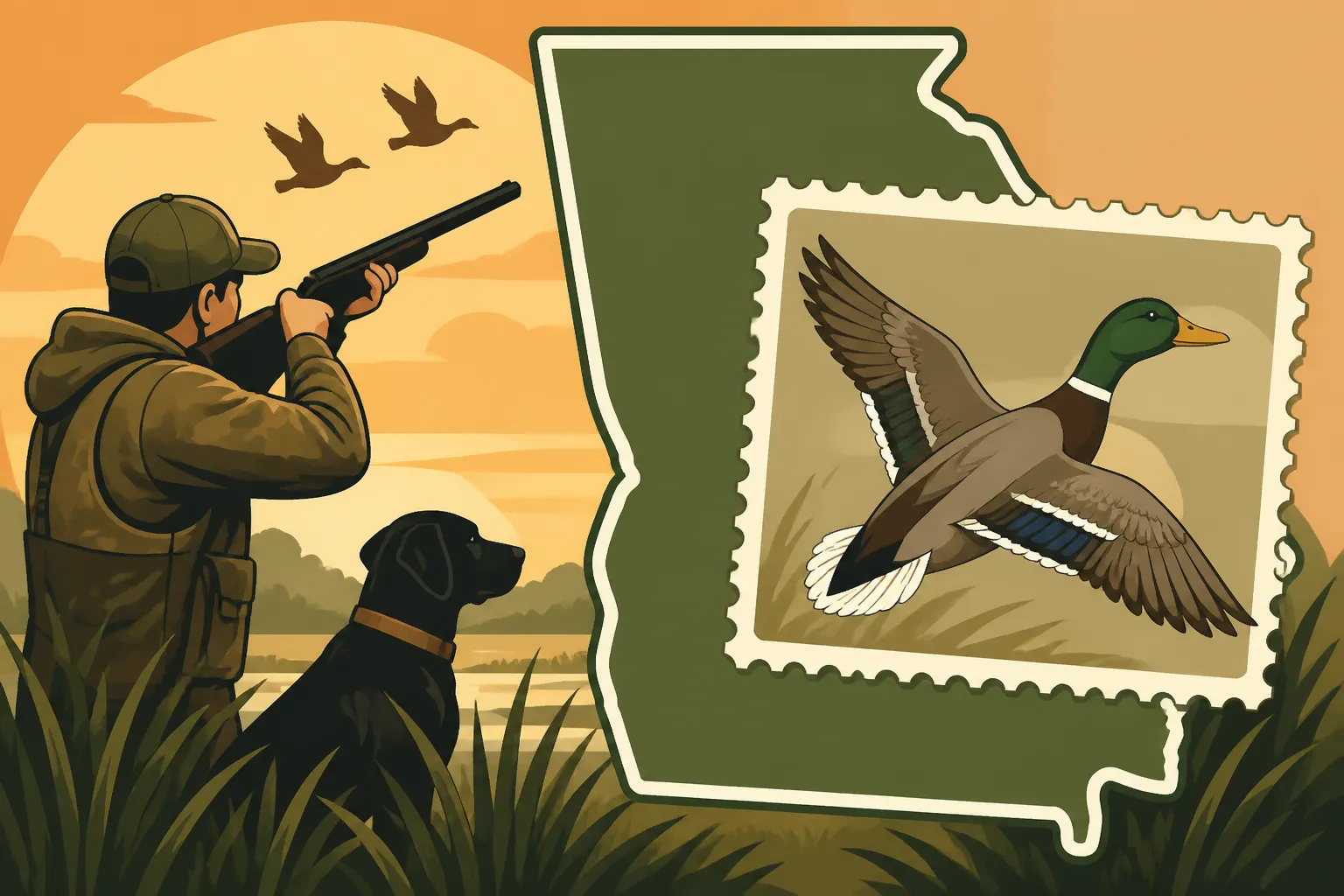
When you purchase a Federal Duck Stamp, whether online or in person, you're essentially buying a piece of art that serves as your hunting permit. The physical stamp itself is a collectible item, featuring stunning wildlife artwork by different artists each year. Many hunters enjoy collecting them and appreciating the beautiful designs. However, its primary purpose in the field is to serve as proof of your contribution and compliance.
Navigating Online Purchase Options
For most modern hunters, purchasing the Federal Duck Stamp online is the easiest and quickest route. You can do this through several official channels, including the U.S. Fish and Wildlife Service's website or many state wildlife agency portals, which often integrate the federal stamp purchase. For instance, the Georgia Department of Natural Resources (DNR) system, Go Outdoors Georgia, usually provides a link or integration to purchase the Federal Duck Stamp when you're buying your state licenses.
When you buy online, you'll typically receive an immediate electronic proof of purchase. This temporary e-stamp is usually valid for 45 days from the date of purchase. It's absolutely crucial that you print this temporary e-stamp and carry it with you while hunting until your physical stamp arrives in the mail. Do not rely solely on an email confirmation on your phone, especially in areas with spotty cell service, which is common in many of Georgia's prime Georgia Waterfowl Hunting on Coast and Swamp locations. Game wardens need to see a physical representation of your valid stamp. Many hunters also find platforms like GoHunt useful for checking state regulations and often for navigating to the correct federal purchasing sites, streamlining the overall preparation process. Always ensure the site you're using is official or linked directly from a government agency.
Physical Stamp and Carrying Requirements
Once your physical Federal Duck Stamp arrives in the mail, usually within those 45 days, the first thing you must do is sign it across the face with a permanent marker. This is a mandatory step that validates the stamp and makes it legally binding for your use. An unsigned stamp is not a valid stamp in the eyes of the law. After signing, it must be carried on your person whenever you are hunting migratory waterfowl. This could be in your wallet, in a license holder, or even pinned to your hunting vest.
Think of it this way: a game warden checking licenses in a marsh near Brunswick or on a Hunting Coastal Georgia Marsh Waterfowl scenario needs to visually confirm you have both your state and federal migratory bird hunting authority. Not having a signed, valid Federal Duck Stamp in your possession while hunting migratory waterfowl can result in a federal violation, which typically carries significant fines. These aren't just minor infractions; they are serious offenses under federal law. So, double-check your gear before you head out, making sure that signed stamp is exactly where it needs to be.
The Georgia Migratory Bird Stamp: Don't Forget the State Requirement
This is where things can get a little confusing for hunters, especially those new to waterfowl. While the Federal Duck Stamp is a national requirement for waterfowl, Georgia has its own state-specific migratory bird stamp. This is often referred to as the Georgia Migratory Bird License, State Migratory Bird Stamp, or sometimes simply the HIP (Harvest Information Program) permit, though HIP is technically just a certification within the state license. It's another essential component for hunting migratory birds in Georgia.
The Georgia Migratory Bird Stamp is required for hunting any migratory birds within the state, not just waterfowl. This includes doves (which are incredibly popular during Dove Hunting Georgia Opening Weekend), woodcock, snipe, rails, and yes, ducks and geese. The funds generated from this state stamp also contribute to habitat management and research, specifically within Georgia. It's usually purchased alongside your other Georgia hunting licenses (like your Big Game license) through the Go Outdoors Georgia platform or a licensed vendor. The cost is typically nominal, but the requirement is absolute for anyone hunting these species, regardless of age for HIP, and 16 and older for the stamp itself.
Differentiating Federal vs. State Stamps
Let’s lay it out clearly, because this is where many hunters trip up. The Federal Duck Stamp is a national requirement, exclusively for hunting waterfowl (ducks, geese, brant), and primarily funds the National Wildlife Refuge System. The Georgia Migratory Bird Stamp, on the other hand, is a state-level requirement for hunting all migratory birds (doves, woodcock, snipe, rails, ducks, geese, etc.) within Georgia's borders, and funds state-specific conservation efforts.
You can't have one without the other if you're a Georgia waterfowl hunter aged 16 or older. Both are distinct, mandatory requirements. It's a common oversight to purchase the federal stamp and forget the state one, or vice versa, leading to potential legal issues. Always remember that the federal stamp is like your passport to hunt ducks and geese across the U.S., while the state stamp is your Georgia-specific visa for any migratory bird. GoHunt, a valuable resource for hunting information, often helps clarify these distinctions by providing direct links and explanations for both federal and state requirements, ensuring hunters have all their ducks in a row, so to speak.
Here's a quick comparison to help keep things straight:
| Requirement | Applies To | Age Requirement (Hunter) | Purpose | Where to Purchase |
|---|---|---|---|---|
| Federal Duck Stamp | Waterfowl (ducks, geese, brant) | 16 and older | National wetland conservation (NWR System) | USPS, online (USFWS, state portals) |
| Georgia Migratory Bird Stamp | All Migratory Birds (ducks, geese, doves, woodcock, etc.) | 16 and older | State migratory bird management & habitat | Go Outdoors Georgia, licensed vendors |
| HIP Certification | All Migratory Birds | All hunters (no age limit) | Data collection for population management | Integrated with state license purchase |
Ensuring HIP Certification
In addition to the state migratory bird stamp, every migratory bird hunter in Georgia, regardless of age, must also be "HIP certified." HIP stands for the Harvest Information Program. It's not another stamp or a fee; it's a simple, free certification process that involves answering a few quick questions about your migratory bird hunting success from the previous season when you purchase your state hunting license.
The purpose of HIP is to gather crucial data for managing migratory bird populations. This information helps state and federal wildlife agencies like the Georgia DNR and the U.S. Fish and Wildlife Service estimate hunter participation and harvest levels for various species. This data is absolutely vital for setting season dates and bag limits for migratory birds, including those in Georgia's various Georgia Duck Zone Boundaries. It ensures that conservation efforts are informed by real-world data, contributing to sustainable hunting opportunities for years to come. You can usually get HIP certified online when you buy your state license through the Go Outdoors Georgia portal, or in person at a licensed vendor. It's literally a checkbox and a few questions, so there's no excuse to skip it! Missing your Georgia Migratory Bird Certification will render your hunt illegal, even if you have all your stamps.
Final Preparations for Your Georgia Waterfowl Hunt
Before you head out to those decoys, take a moment for one last check. You've got your shotgun, your waders, your calls, and probably your favorite thermos of coffee. Now, physically confirm you have these crucial documents:
- Your Georgia hunting license: This is your base license, required for all hunting in Georgia.
- Your Georgia Migratory Bird Stamp: This covers all migratory birds within Georgia.
- Your signed Federal Duck Stamp: This is your national pass for waterfowl.
- Your HIP Certification: Confirmed during your state license purchase.
Remember, if you're hunting on public land, like one of Georgia's excellent Georgia Wildlife Management Areas that offer waterfowl opportunities, you might also need a WMA license or permit. Always consult the Georgia DNR regulations for specific areas. Being prepared means understanding all the rules, not just the ones for your target species. It keeps you legal, supports conservation, and ensures you can enjoy your time afield without worry. If you’re a newer hunter, consider reviewing the Georgia Hunter Education Requirements to ensure you’re fully up to speed on all state regulations.
No one wants to be caught off guard by a game warden because of a missing stamp. It's not just about avoiding a fine; it's about being a responsible hunter and contributing to the conservation legacy that makes our hunting traditions possible. The Federal Duck Stamp is a small price to pay for the incredible privilege of Hunting Coastal Georgia Marsh Waterfowl or a morning spent Pass-Shooting Georgia Wood Ducks in a cypress swamp.
Disclaimer
Please remember that hunting regulations can change. While this guide provides comprehensive information based on current knowledge, it is always your responsibility to consult the official Georgia Department of Natural Resources (DNR) and U.S. Fish and Wildlife Service regulations before heading afield. This content is for informational purposes only and should not be considered legal advice.