Moving a Deer Carcass Out of the CMA
It’s a uniquely deflating feeling: you’ve put in the scouting, spent the hours in the stand, and finally connected with a beautiful Georgia deer. But then it hits you – you’re hunting inside a Chronic Wasting Disease (CWD) Management Area (CMA), and suddenly, transporting your harvest becomes a whole lot more complicated. The rules around moving deer carcasses from these zones can be confusing and frankly, a bit of a headache, but understanding them is absolutely vital for every hunter to help prevent the spread of this devastating disease. This guide will clarify those regulations, helping you navigate the process responsibly and legally.
Understanding Georgia's CWD Management Area
The discovery of Chronic Wasting Disease in Georgia was a wake-up call for hunters and wildlife managers alike. This isn't just another disease; CWD is a fatal neurological disease that affects deer, elk, and moose, and it’s always fatal. Unlike many diseases, it's caused by abnormal proteins called prions, not bacteria or viruses, which means it can persist in the environment for years, making eradication incredibly difficult once established.
The Recent Arrival of CWD in Georgia
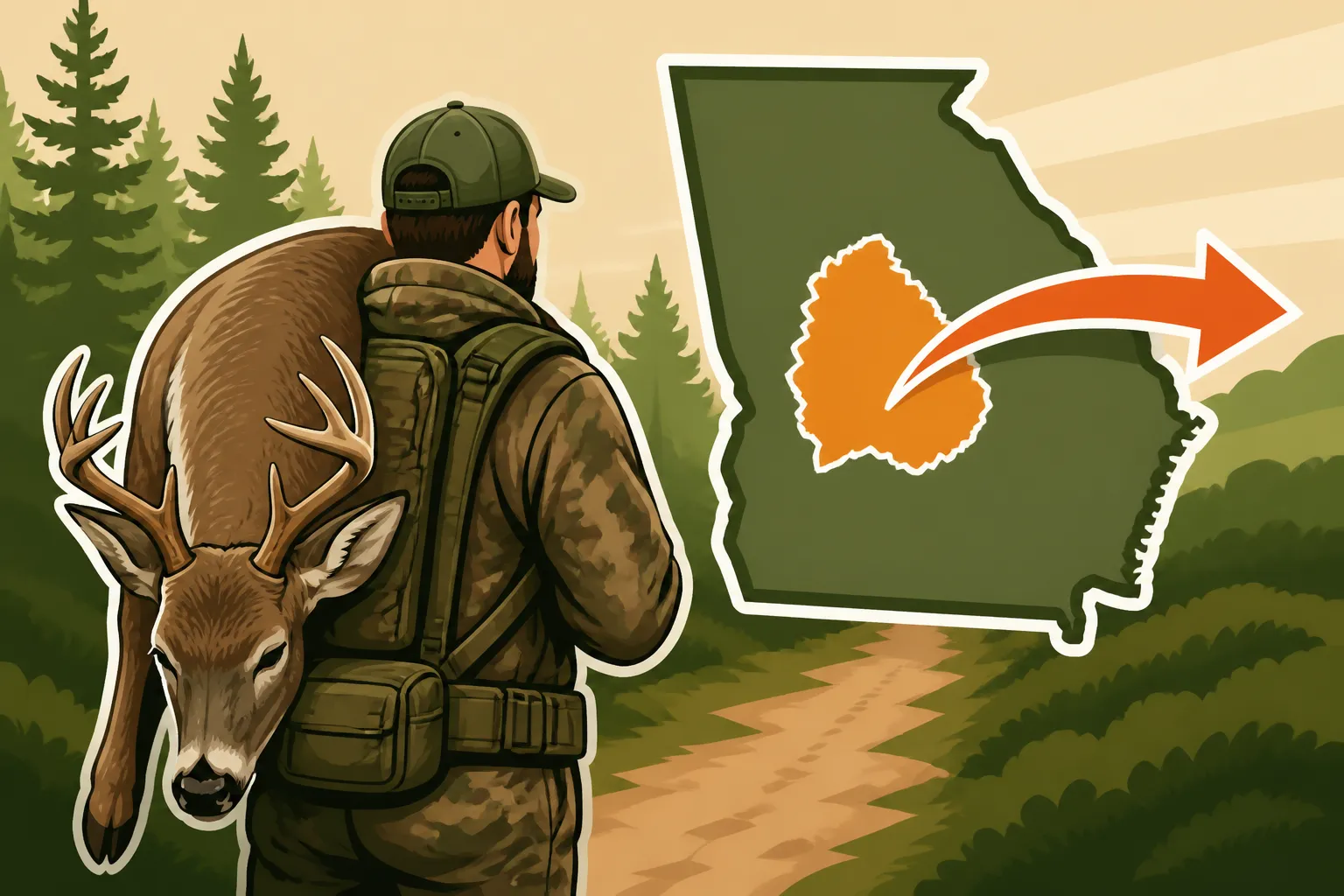
For years, Georgia was fortunate to be one of the few states in the Southeast without a confirmed case of CWD. That changed in late 2023 when the Georgia Department of Natural Resources (DNR) confirmed its first positive case. This discovery immediately led to the establishment of the Chronic Wasting Disease Management Area (CMA) in northwest Georgia. Currently, the counties included within this initial CMA are Floyd, Chattooga, Walker, and Polk. Hunters who frequently pursue deer in the region, particularly those around Rome or near the Alabama and Tennessee borders, are now directly impacted by these new regulations. It’s a somber development for our state's rich hunting heritage, but proactive measures are essential. If you’re curious about the timeline, learning about when CWD was first found in Georgia can provide valuable context to these new rules.
Why Carcass Movement Restrictions Exist
The primary reason for these strict carcass movement rules is simple: to contain the disease and prevent its further spread. CWD prions concentrate in specific tissues of infected deer, most notably the brain, spinal cord, lymph nodes, and spleen. If an infected carcass, or parts of it, is moved from a CWD-positive area to a clean area, those prions can be introduced into the soil or water, where they can then be picked up by other deer, perpetuating the disease cycle. Imagine harvesting a deer that appears healthy but is carrying CWD, then transporting its head and spinal column across the state. You could unknowingly be planting the seeds of CWD in a completely new county, threatening that local deer population for generations. This is why the Georgia DNR, and wildlife agencies nationwide, implement these stringent rules, aiming to protect the vast majority of our healthy deer herd from this insidious threat. It’s a necessary, albeit inconvenient, step in a larger effort to safeguard our wildlife resources, particularly when considering the potential for Georgia's Chronic Wasting Disease Management Area (CMA) to expand if the disease isn't contained.
Navigating the Rules for Carcass Movement
Understanding what you can and cannot take out of Georgia's CWD Management Area is paramount. These aren't suggestions; they are legally enforced regulations designed to protect the health of our deer population.
Permitted Parts to Transport Out of the CMA
The good news is you can absolutely still harvest deer in the CMA and enjoy the venison. The key is how you process the animal before leaving the designated zone. Here’s what is permitted to leave the CWD Management Area:
- Boned-out meat: This means any skeletal muscle meat that has been completely separated from the bone. This is the safest and most common way to transport venison from a CMA. So, if you're taking your harvest to a processor outside the zone, ensure they only receive boneless cuts.
- Quarters: If you prefer to handle processing at home, quarters (the four main sections of the deer) are allowed, provided no spinal column or head material is attached. This means you've field dressed the animal and essentially butchered it down to the muscle groups of the legs and shoulders, leaving the spine and head behind.
- Hides: You can take the hide, but it must be removed entirely from the head and carcass. Ensure there’s no brain or spinal tissue clinging to it.
- Cleaned skull plates: If you want to keep the antlers, a cleaned skull plate is acceptable. This means the skull plate must be free of all brain and spinal cord tissue, and any other soft tissue. Often, boiling or pressure washing the skull plate to bleach it white is the best way to ensure it's completely clean.
- Finished taxidermy products: Once a taxidermy mount is fully processed and free of all brain and spinal tissue, it can be transported. This applies to shoulder mounts or full mounts; the risk of prion transmission is eliminated once the relevant tissues are removed and the skull is properly prepared.
- Teeth: If you plan to have a deer aged by its teeth, or just want to keep them as a memento, they are permitted.
When handling these parts, cleanliness is your best friend. Always use separate knives and cutting boards for deer taken in a CMA versus those outside of it if possible, and thoroughly disinfect all tools afterward.
Prohibited Parts and What to Do With Them
This is where many hunters get tripped up, and it's where strict adherence to the rules is non-negotiable. The following parts cannot be transported out of Georgia's CWD Management Area:
- Whole carcasses: You cannot take an entire deer, field-dressed or not, out of the CMA. This is the most crucial rule.
- Heads: Deer heads, with or without antlers, are strictly prohibited due to the concentration of prions in brain and lymphatic tissues.
- Spinal columns: The entire vertebral column and spinal cord are high-risk parts and cannot leave the CMA. This also applies to any parts of the pelvis or ribs with spinal material attached.
- Brains, eyes, spleen, and lymph nodes: These specific organs are known to harbor high concentrations of CWD prions and must remain within the CMA.
So, what do you do with these prohibited parts? Proper disposal within the CMA is critical. You have a few main options:
- Bury them deeply: If you are on private land within the CMA and have permission, you can bury these parts at least three feet deep. This helps contain the prions.
- Leave them on site: If it's legal and safe to do so on the property where you harvested the deer, you can leave the prohibited parts where the deer was taken. However, check local ordinances and WMA rules; some areas may have specific requirements.
- Use designated disposal sites: The Georgia DNR may establish specific collection or disposal sites within or near the CMA. Always check the latest regulations for these options.
- Utilize a licensed processor within the CMA: The best and easiest option for many hunters is to take their deer to a licensed processor located within the CMA. These businesses are equipped to handle the carcass appropriately, removing and disposing of prohibited parts according to state regulations, and returning only the legal, processed meat. This helps streamline the process for hunters.
Understanding which four counties sit in the CWD zone is crucial before you even hit the woods, as your planning needs to change if you're in one of these areas.
Mandatory CWD Testing Within the CMA
Beyond carcass movement restrictions, hunters harvesting deer within the CMA face another critical requirement: mandatory CWD testing. Every deer taken in the specified CMA counties must be submitted for testing. This is not optional and is a vital component of the state's CWD surveillance program.
Here's what that means for you:
- Sample Submission: You'll need to locate a CWD sampling station within or near the CMA. These stations are typically walk-up coolers or drop-off points where you can leave the deer's head, or specific tissue samples as directed by the DNR. Instructions will be provided at the station, usually requiring you to fill out a tag with your contact information, harvest date, and location.
- Timing: Samples should be submitted as soon as possible after harvest. Waiting too long can degrade the sample, making it unsuitable for testing.
- Results: The DNR will notify you of the test results. If your deer tests positive, you will be contacted directly with further instructions.
- Impact on processing: This mandatory testing influences your processing plans. You’ll need to make sure you submit the required parts for testing before you bone out the animal or take it to a processor. Many hunters will drop off the head for testing and then take the legal parts (boned-out meat) to their preferred processor.
To find a Georgia CWD sampling location, you can check the Georgia DNR website, which provides an interactive map and a list of current stations. Additionally, many modern hunting apps like GoHunt integrate this critical information, making it easier for you to find the nearest drop-off point while you’re still in the field. This required testing is a direct consequence of the disease's presence and is essential for monitoring its spread and managing the deer herd.
Practical Tips for Hunters in the CMA
Hunting within a CWD Management Area requires a shift in mindset and preparation. It's not just about the hunt anymore; it's about responsible management of your harvest from the moment it hits the ground.
Field Dressing and Processing On-Site
For many seasoned hunters, taking a deer to a local processor might be standard practice. However, when hunting in a CMA, processing your deer before leaving the area becomes an incredibly practical, and often necessary, skill. The goal is to separate the legal parts (boned-out meat, cleaned skull plates, etc.) from the prohibited parts (head, spinal column) while still within the CMA.
Here’s a practical approach:
- Bring the right tools: Before you even leave home, ensure your hunting pack includes a good quality field dressing kit, sturdy knives, a bone saw, and game bags. If you’re planning on boning out a deer, having a sharp knife and a sharpening steel or ceramic stick is crucial. Consider bringing a portable saw like an Outdoor Edge or a Havalon with replaceable blades.
- Learn the "gutless method": This technique allows you to quarter a deer in the field without gutting it, leaving the internal organs and spinal column intact and largely undisturbed. You simply skin one side, remove the two quarters, backstraps, and tenderloins, then flip the deer and repeat. This method is excellent for minimizing prion spread and for hunters who want to avoid the mess of traditional gutting. There are numerous online tutorials available to master this technique.
- Use game bags: Once you've boned out the meat, immediately place it into breathable game bags. This protects the meat from flies, dirt, and debris, and allows it to cool. Quality game bags, like those from Allen Company or Tag Bags, are a worthwhile investment, especially if you plan to pack out meat over a distance.
- Cooling is critical: Even boned-out meat needs to cool down quickly, especially in Georgia's often warm hunting seasons. Consider bringing large coolers filled with ice, ready for your boneless cuts. You can read more about field dressing a deer in warm weather to ensure your meat quality doesn't suffer.
By performing this level of processing in the field, you ensure that only the permissible parts leave the CMA, significantly reducing your hassle and ensuring compliance. This might even lead you to refine your approach to tasks like butchering a deer at camp, making you a more self-sufficient hunter.
Utilizing Local Processors and Taxidermists
While field processing is a great skill, not everyone has the time, space, or inclination to bone out an entire deer in the woods. This is where relying on businesses within the CMA can be a lifesaver.
- Find a reputable processor: Look for deer processors located within Floyd, Chattooga, Walker, or Polk counties. These businesses will be intimately familiar with the CWD regulations. They are equipped to properly handle the entire carcass, ensuring that all prohibited parts are separated and disposed of according to Georgia DNR guidelines. They will return only the boned-out, packaged meat that is legal to transport out of the CMA. Call ahead to confirm they accept deer from the CMA and understand the specific requirements.
- Work with a local taxidermist: If you want a shoulder mount, choose a taxidermist who operates within the CMA. They can properly remove the head and skull plate, clean it thoroughly to eliminate all soft tissues (brain, lymph nodes), and prepare it so it can be legally transported once completed. Again, communicate clearly with your taxidermist about your harvest location within the CMA to ensure they follow all protocols. Many taxidermists are also well-versed in preparing a cleaned skull plate for testing purposes.
Choosing to use local businesses not only supports the community but also offloads the regulatory burden from your shoulders, allowing you to focus on the hunt itself, even under the new regulations.
Planning Your Hunt to Minimize Risk and Hassle
Hunting in or near a CWD Management Area requires more than just knowing the rules; it demands thoughtful planning to reduce stress and ensure a smooth experience.
- Know the boundaries: Before you ever step foot in the woods, clearly identify the exact boundaries of the CMA. Use resources like the Georgia Outdoors App or detailed hunting maps provided by the Georgia DNR. Mapping tools like GoHunt are also invaluable for visualizing property lines and CMA borders, even without cell service in some cases, which is crucial for areas like the Chattahoochee National Forest.
- Scout strategically: When scouting Georgia public land before season, pay extra attention to whether your chosen spot falls within the CMA. If you're hunting private land, verify the county. This upfront knowledge allows you to make an informed decision about where to hunt and what preparations you’ll need.
- Consider your processing plan in advance: Don't wait until you have a deer down to figure out your processing. If you plan to field process, practice the boning-out technique at home on an old deer or even a hog. If you plan to use a local processor, have their contact information and hours readily available.
- Be prepared for mandatory testing: Know where the CWD sampling stations are located and what parts of the deer they require. Having a cooler ready for the head, or the specific samples, is a good idea. Remember, taking your deer to a sampling station is part of the hunting experience in these areas now.
- Understand the bigger picture: The regulations, while sometimes inconvenient, are put in place to protect the deer herd. Understanding why Georgia's Chronic Wasting Disease Management Area exists and the potential impact of ignoring these rules can help you embrace responsible hunting practices. It’s also important to be aware of other regulations, such as Georgia’s twelve-deer bag limit, to ensure overall compliance.
| Carcass Part | Permitted to Transport Out of CMA | Prohibited to Transport Out of CMA | Notes |
|---|---|---|---|
| Whole Carcass | No | Yes | Must be processed within CMA. |
| Boned-out Meat | Yes | No | Skeletal muscle only, completely removed from bone. |
| Quarters | Yes | No | Must be free of spinal column and head material. |
| Hides | Yes | No | Must be removed from head and carcass, free of all soft tissue. |
| Cleaned Skull Plate | Yes | No | Free of all brain and soft tissue. Often requires boiling/bleaching. |
| Antlers (shed or attached to cleaned skull plate) | Yes | No | Antlers themselves are low risk, but must be removed from brain matter if attached to skull. |
| Finished Taxidermy | Yes | No | Once fully processed and clean of all brain/spinal tissue. |
| Heads (unprocessed) | No | Yes | High-risk part due to brain and lymph nodes. Must be left in CMA or submitted for testing/disposal. |
| Spinal Column | No | Yes | High-risk part. |
| Internal Organs | No | Yes | Except boned-out meat. |
| Brain, Eyes, Spleen | No | Yes | High-risk parts. |
Disclaimer
The information provided in this article is for general guidance only and is based on current Georgia hunting regulations as understood at the time of writing. Hunting regulations, especially those related to Chronic Wasting Disease, can change rapidly. It is the hunter's responsibility to consult the most up-to-date regulations directly from the Georgia Department of Natural Resources (DNR) or other official sources before hunting. Failure to comply with regulations can result in fines or penalties.