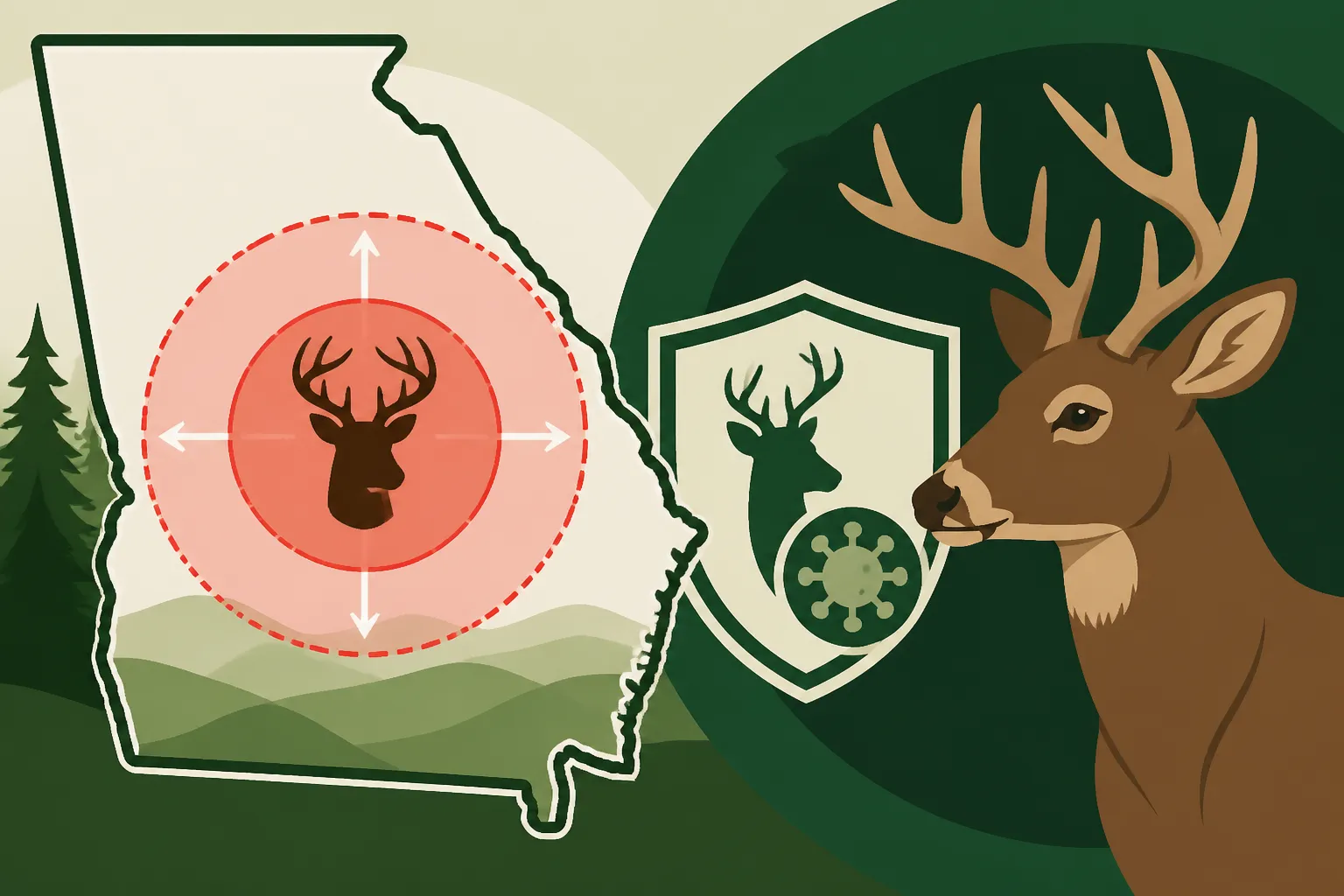
Why Georgia Used a Five-Mile CWD Radius
The news that Chronic Wasting Disease (CWD) had finally reached Georgia sent a ripple of concern, if not outright panic, through our hunting community. Many of us remember the feeling of dread, knowing this wasn't just another disease, but a slow, always-fatal neurological condition threatening our deer herd. One of the immediate questions that popped up, once the initial shock wore off, was about the "five-mile radius" around the detection site. Why five miles? Why not two, or ten, or the entire county? This guide will dive deep into the reasoning behind Georgia's decision to implement a five-mile CWD radius, explaining the science, the challenges, and what it means for every Georgia hunter.
Understanding Chronic Wasting Disease CWD in Georgia
When CWD was confirmed in Georgia, it wasn't just a scientific anomaly; it was a deeply unsettling development for everyone who loves hunting our white-tailed deer. This wasn't some minor inconvenience; it was a game-changer that required immediate, decisive action, which is where the five-mile radius came into play.
What CWD Is and Why It Matters
Let's start with the basics. CWD is a devastating neurological disease that affects cervids – deer, elk, moose, and reindeer. It's caused by abnormal proteins called prions, which slowly and inevitably destroy the brain and nervous system of infected animals. Think of it as a zombie-like disease for deer. Animals infected with CWD become emaciated, exhibit abnormal behaviors, lose coordination, and eventually die. The scariest part? It's always fatal, and there's currently no vaccine or cure.
For hunters, CWD isn't just a threat to the deer themselves; it's a threat to the tradition, the herd health, and potentially, though research is ongoing, even to human health (though there's no confirmed case of CWD jumping to humans, health agencies advise against consuming meat from CWD-positive animals). The long incubation period means a deer can be infected for years before showing symptoms, making early detection incredibly difficult. This is precisely why swift and strategic management, like the implementation of specific zones, becomes absolutely critical to protect our beloved White-Tailed Deer Across Georgia.
Georgia's First Confirmed CWD Case
The collective sigh of "here we go" happened in October 2023. That's when Georgia Department of Natural Resources (DNR) announced the first confirmed case of CWD in a hunter-harvested white-tailed deer. The unfortunate discovery was made in Irwin County, a rural area known for its excellent deer hunting in south-central Georgia. This wasn't just a random deer; it was a stark reminder that what had been a distant threat was now right in our backyard.
The moment that positive test came back, wildlife officials knew they had to act fast. They had been preparing for this possibility for years, meticulously monitoring our deer populations and developing a response plan. The initial step was to establish a Georgia's Chronic Wasting Disease Management Area (CMA) around the detection site. This is where the five-mile radius became the immediate, tangible boundary that hunters and landowners had to understand. The initial CMA encompassed portions of four counties: Irwin, Coffee, Tift, and Ben Hill, all centered around that initial positive detection. This wasn't just about drawing a line on a map; it was about setting in motion a series of regulations designed to slow, or even stop, the spread of this insidious disease.
The Rationale Behind the Five-Mile CWD Radius
You might be thinking, "Five miles? Is that just a random number, or is there something scientific behind it?" It’s a completely fair question, and one many hunters, including myself, have pondered. The truth is, the five-mile radius, while perhaps seemingly arbitrary at first glance, is a carefully considered decision based on established wildlife biology and disease management principles.
Scientific Basis for the Buffer Zone
Wildlife biologists and disease experts don't just pull numbers out of a hat. The five-mile radius for a CWD Management Area (CMA) is often derived from extensive research into deer movement patterns, habitat use, and the observed spread of the disease in other affected states. Here's the gist of it:
- Typical Deer Home Ranges: Most white-tailed deer, especially does and their fawns, have a relatively small home range, often within a mile or two. However, young bucks, particularly during the dispersal phase (when they leave their mothers to find new territories), and mature bucks during the rut, can travel significantly farther. A five-mile buffer aims to capture the vast majority of these typical movements, ensuring that deer that might have come into contact with the infected animal, or its environment, are included in the surveillance zone. It's a calculated attempt to encompass the "neighborhood" of an infected deer, so to speak.
- Disease Spread Dynamics: CWD prions can be shed by infected deer through saliva, urine, and feces, and they can persist in the environment for years, even decades. A deer doesn't need direct contact with an infected animal to contract the disease; they can pick up prions from contaminated soil, plants, or even water. The five-mile radius serves as a geographic safety net to account for environmental contamination and potential indirect transmission pathways. It's an educated guess at how far these environmental prions might travel through deer activity.
- Precautionary Principle: When dealing with a disease as serious and persistent as CWD, wildlife agencies often lean on the "precautionary principle." This means taking proactive measures, even when all the data isn't perfectly conclusive, to minimize risk. A five-mile radius is seen as a prudent, somewhat conservative approach to create a buffer that stands a reasonable chance of containing the initial outbreak, rather than waiting for it to spread further. This strategy aligns with how many other states have initially managed new CWD detections, learning from collective experiences.
Balancing Containment and Hunter Cooperation
Implementing a CWD Management Area isn't just about science; it's also about people. Specifically, it's about hunters, landowners, and rural communities. Wildlife agencies face a delicate balancing act: they need to establish a zone large enough to be effective for disease containment but not so large that it becomes logistically unmanageable or alienates the very people they need cooperation from.
Imagine if the initial zone was fifty miles. The sheer scale of mandatory testing, carcass restrictions, and public outreach would be monumental, potentially overwhelming resources and leading to widespread frustration among hunters. A five-mile radius is a compromise that attempts to:
- Concentrate Resources: By focusing efforts on a more defined area, the Georgia DNR can deploy personnel, set up Georgia CWD Testing for Hunters stations more effectively, and conduct targeted surveillance. This includes mandatory testing of all deer harvested within the CMA, a critical step in understanding the prevalence and exact boundaries of the disease.
- Facilitate Hunter Engagement: While no hunter wants to be in a CWD zone, a more contained area makes it easier for hunters to understand the specific rules and participate in the solution. They know exactly where the boundaries are, often using mapping tools like those available through GoHunt to confirm if their hunting spot falls within the designated zone. This clarity encourages compliance with regulations like Mandatory Testing Inside Georgia's CMA and Georgia Carcass Movement Restrictions.
- Manage Practicalities: Things like establishing adequate CWD sampling locations, ensuring proper carcass disposal sites, and coordinating with local landowners become much more feasible within a five-mile buffer. It’s about creating a plan that is both scientifically sound and practically executable in the real world of Georgia’s farmlands and woods.
This five-mile decision reflects a blend of scientific expertise and practical wildlife management, aimed at giving Georgia the best chance to prevent CWD from taking a deeper hold in our state.
Regulations and Hunter Responsibilities Within the CMA
The establishment of the five-mile CWD radius wasn't just a declaration; it came with a suite of new rules and responsibilities for hunters, and frankly, it changed the game for those of us hunting in or near that zone. It’s crucial to understand these changes, not just to stay legal, but to actively participate in protecting our deer herd.
Specific Rules for Hunters in the Five-Mile Zone
When the Georgia's Chronic Wasting Disease Management Area was established, centered around the initial detection in Irwin County and touching parts of Coffee, Tift, and Ben Hill counties, a set of specific regulations immediately went into effect. These aren't suggestions; they are mandatory rules designed to prevent the further spread of CWD.
- Mandatory CWD Testing: This is perhaps the most significant change. Any deer harvested within the designated five-mile radius of the CMA must be submitted for CWD testing. This isn't voluntary; it's a requirement. The DNR sets up convenient drop-off locations or uses participating taxidermists and meat processors to collect samples. This data is vital for wildlife managers to track the disease, understand its prevalence, and determine if the boundaries of the CMA need adjustment. Imagine harvesting a buck you've been chasing all season, and instead of just heading home, you're now responsible for ensuring its head is taken to a sampling station. It adds an extra step, but it's a small price to pay for the health of the herd. You can often use tools like GoHunt to locate the nearest sampling station in real-time.
- Carcass Movement Restrictions: This is another major one. You cannot, under any circumstances, remove whole deer carcasses from the CMA. This is because CWD prions can be found throughout the animal, especially in the brain, spinal cord, and lymph nodes. Moving a whole carcass risks transporting these prions to new, unaffected areas. The rules generally allow hunters to remove deboned meat, clean antlers (with no brain matter or soft tissue attached), hides (without the head), and finished taxidermy mounts. This means a lot more field dressing and butchering must happen at or near the harvest site, which can be a real challenge, especially on warm Georgia days. Understanding these rules is critical, as violating them carries significant penalties. For more detail, check out information on Georgia Carcass Movement Restrictions.
- No Feeding or Baiting: While much of Georgia allows deer feeding and baiting, these activities are generally prohibited within CWD Management Areas. Concentrating deer at a bait site increases nose-to-nose contact, which is a prime pathway for CWD transmission. Removing these attractants helps disperse deer and reduces the likelihood of disease spread.
These regulations are a direct response to the threat of CWD. They might feel restrictive, but they're based on the best available science and the experiences of other states that have been battling CWD for far longer.
How Hunters Can Help Mitigate CWD Spread
Even if you're hunting outside of the five-mile radius or the initial CMA, every Georgia hunter has a role to play in the fight against CWD. Our collective actions can make a huge difference in the long-term health of our deer populations.
- Report Sick Deer: If you see a deer that looks emaciated, is acting strangely, or shows signs of neurological issues (like head droop, repetitive walking, or excessive drooling), do not harvest it. Instead, contact the Georgia DNR immediately. These observations are crucial for early detection and Georgia Wildlife Disease Monitoring. Reporting a sick animal can provide vital information that could lead to new testing or adjustments to management zones.
- Voluntary Testing: Even if you're not in a mandatory testing zone, consider voluntarily submitting samples from your harvested deer, especially if you hunt near the CMA or in an area with high deer densities. The more data the DNR has, the better they can understand the overall health of
Georgia's Deer Population Estimate. - Proper Carcass Disposal: If you harvest a deer, regardless of where you are, dispose of the carcass remains properly. Avoid simply dumping remains in areas where other deer might congregate. Ideally, bury them deep or dispose of them in a landfill where they won't be accessible to wildlife. This prevents any potential prions from contaminating the local environment.
- Clean Equipment: Always clean your boots, vehicles, and hunting equipment (knives, saws, treestands) after hunting, especially if you've been in areas where CWD has been detected or is suspected. Prions are incredibly resilient and can stick to surfaces. A good bleach solution or thorough scrubbing can help mitigate any risk of unknowingly transporting prions.
- Stay Informed: The CWD situation is dynamic. Keep up-to-date with the latest information from the Georgia DNR. Regulations might change, and new detection sites could emerge. Websites like GoHunt or the DNR’s official channels are excellent resources for current information. Understanding changes to How Georgia's Deer Season Runs Archery to January in response to CWD, or how Scouting Georgia Public Land Before Season might need to adapt to new regulations, is crucial.
Here's a quick summary of key CWD regulations in Georgia:
| Regulation Aspect | Within CWD Management Area (CMA) | Outside CMA (Statewide) |
|---|---|---|
| Deer Testing | Mandatory for all harvested deer | Voluntary, but encouraged (contact DNR for participating processors/drop-offs) |
| Carcass Movement | Only deboned meat, clean skull plates, clean antlers, hides (without head), and finished taxidermy mounts may leave the CMA. Whole carcasses prohibited. | No restrictions on whole carcass movement, but proper disposal is always recommended. |
| Feeding/Baiting Deer | Prohibited | Allowed in most counties (check local ordinances and specific WMA rules), but discouraged due to disease risk. |
| Reporting Sick Deer | Mandatory | Highly encouraged |
| Disposal of Carcass Parts | Must be left within the CMA or disposed of in an approved landfill or processing facility within the CMA. | Bury deep or dispose of in a landfill. Avoid dumping in woods. |
This fight against CWD isn't just up to the wildlife managers; it's a shared responsibility for all of us who cherish Georgia's hunting heritage and our incredible wildlife. By understanding the rationale behind the five-mile radius and adhering to these critical guidelines, we can collectively work to protect our deer for generations to come.
Disclaimer
The information provided in this article is for general guidance and informational purposes only. Hunting regulations, CWD management areas, and specific rules are subject to change. Always consult the official Georgia Department of Natural Resources (DNR) publications, website, or contact them directly for the most current and accurate regulations before engaging in any hunting activities.