Spot-and-Stalk Tactics for Ocmulgee Bears
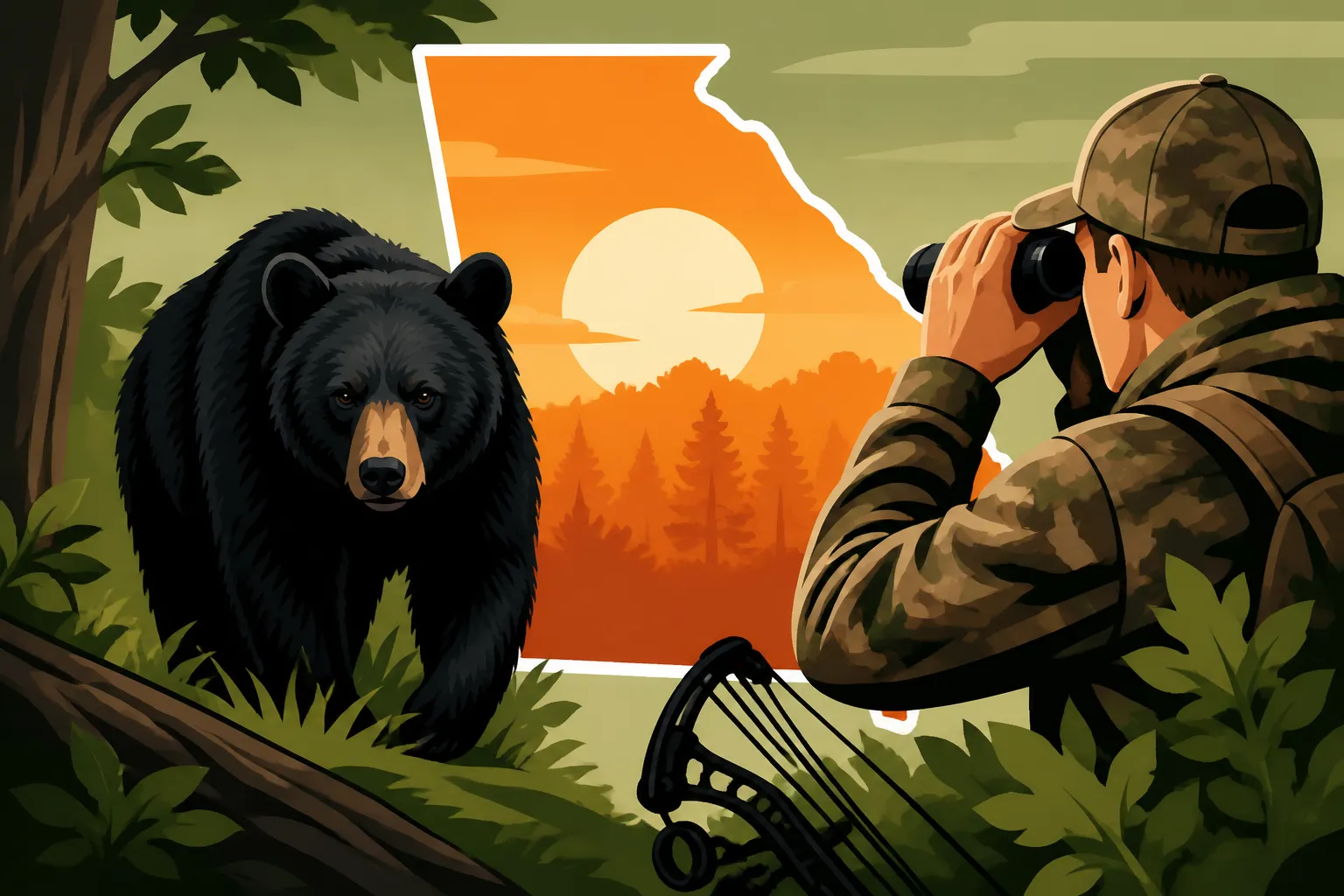
Hunting black bears in Georgia's Ocmulgee zone can feel like trying to find a ghost in a dense, humid maze. These aren't the mountain bears that might forage openly on a clear-cut slope; Ocmulgee bears are masters of stealth, hugging thick river bottoms and swamp fringes, making traditional stand hunting a real challenge. This guide is all about equipping you with the specialized knowledge and tactics needed to successfully spot-and-stalk these elusive creatures in their central Georgia domain, turning frustration into fulfillment.
Understanding the Ocmulgee Bear Zone's Unique Challenges
The Ocmulgee bear zone, centered around the Ocmulgee River basin, presents a vastly different hunting scenario than the more widely known North Georgia mountains. Here, the landscape is a patchwork of bottomland hardwoods, cypress-tupelo swamps, mixed pine-hardwood forests, and agricultural fields. This diverse, often thick, environment forces bears to be incredibly adaptable and notoriously reclusive, making a direct approach much harder than it sounds.
Habitat and Bear Behavior in Central Georgia
Ocmulgee bears thrive in a blend of deep cover and readily available food sources. You'll often find them utilizing the dense cover of river bottoms and adjacent swamps for bedding during the day, where they can retreat largely undisturbed. These areas provide natural corridors for movement, as well as crucial water sources during hotter periods. Bears here are opportunistic omnivores, much like their mountain cousins, but their diet adapts to what's available in this region. This means they'll heavily rely on early season berries, muscadines, and acorns when they drop, but they are also known to frequent agricultural fields, especially corn, peanuts, and soybeans, which provide a high-calorie feast.
Understanding their movement patterns is paramount. Bears in this zone tend to move most actively during the twilight hours – early morning and late evening – often transitioning between their bedding areas in the thick cover and their feeding grounds. During the day, they might be found deep within the swamps or heavy timber, but they can occasionally be caught moving through shaded areas or open woods if disturbed or if a prime food source is present. The key is recognizing these subtle behaviors and knowing that their natural inclination is to avoid detection, which is why a thoughtful spot-and-stalk can be so effective. If you're looking to dive deeper into the specific area, you might want to read our dedicated guide on Hunting the Ocmulgee Bear Zone.
Navigating Regulations and Seasons
Hunting the Ocmulgee bear zone isn't like hunting deer statewide; it's a specific, often short, and tightly regulated season. The Georgia Department of Natural Resources (DNR) manages bear populations in three distinct zones, and the Ocmulgee falls within the central zone. This zone typically has very limited hunting opportunities, often just a few days in late October or early November, making every moment you're afield critically important.
Before you even think about stepping into the woods, you absolutely must be current on the specific regulations for the Georgia Central Bear Zone Season Rules. These can change year to year, so always check the latest Georgia Hunting Regulations guide. Permits are often required, and there are specific check-in procedures for harvested bears that are mandatory. Unlike deer season where you might have months, the Ocmulgee bear season is a blink-and-you-miss-it affair, emphasizing the need for meticulous pre-season planning and swift, decisive action when an opportunity arises. The limited timeframe also means that traditional baiting, while legal in some parts of Georgia for hogs, is generally not a viable or allowed tactic for bears in this zone due to the short window and public land implications.
Pre-Season Scouting for Spot-and-Stalk Success
Spot-and-stalk isn't just about showing up on opening day and wandering around; it's a strategy built on extensive, intelligent pre-season scouting. For the Ocmulgee zone, this preparation is arguably more important than the actual hunt itself, laying the groundwork for those fleeting opportunities.
Identifying Key Bear Sign and Travel Corridors
When scouting for Ocmulgee bears, you're looking for classic bear sign, but with a regional twist. Focus your efforts where thick cover meets potential food sources. Scat is a tell-tale sign, and its contents can tell you what bears are currently feeding on, helping you narrow down food plot preferences. Tracks, especially along muddy trails, creek beds, or field edges, indicate recent activity. Look for rub trees, where bears will scratch and rub, often leaving hair behind. Claw marks on trees, particularly those with soft bark like pine, can indicate a bear has been climbing for nuts or berries.
However, the real gold lies in identifying travel corridors. Bears, despite their size, are incredibly efficient movers, often taking the path of least resistance through thick vegetation. These could be subtle trails through a swamp, the edge of a standing cornfield, or a narrow strip of timber connecting two larger woodlots. Imagine yourself as a bear: where would you move to stay hidden but get to food or water efficiently? Utilizing mapping tools like those from GoHunt or the Georgia Outdoors App can be incredibly beneficial here. These platforms allow you to pore over aerial imagery, identify potential funnels, field edges, and water sources, and mark specific spots to check on foot. Learning to interpret these digital maps helps immensely in Scouting Georgia Public Land Before Season.
Leveraging Topography and Vantage Points
While North Georgia hunters might rely on towering mountain peaks for glassing, the Ocmulgee zone requires a more subtle approach to finding vantage points. "High ground" here might mean nothing more than a slight rise in elevation, an old logging road grade, or the top of a subtle ridge that overlooks a river bottom or a distant agricultural field. These seemingly insignificant rises can offer just enough elevation to get a good look over the dense undergrowth, allowing you to spot movement that would otherwise be completely obscured.
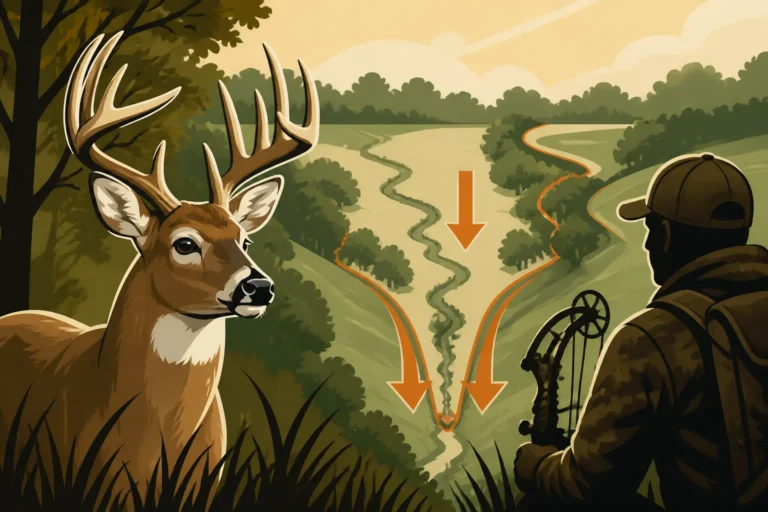
Understanding wind and thermals is also absolutely critical, especially in river bottoms where air currents can be unpredictable. Early mornings often see thermals pulling air downhill into the bottoms, while evenings cause them to rise. Planning your approach and glassing locations based on these subtle air movements is paramount to avoid scenting a bear and ruining your stalk before it even begins. Pay attention to how these micro-thermals interact with the overall wind direction. Aerial imagery can also help you identify hidden sloughs, ditches, or changes in elevation that might influence thermal currents, guiding your placement for observation.
Here's a quick comparison of some differences between hunting the Ocmulgee bear zone and the more mountainous regions:
| Feature | Ocmulgee Bear Zone | North Georgia Mountain Bear Zone |
|---|---|---|
| Primary Habitat | River bottoms, cypress swamps, mixed pine/hardwood, agriculture | Steep hardwood ridges, deep hollers, thick mountain laurel thickets |
| Preferred Food Sources | Muscadines, swamp berries, acorns, corn, peanuts, soybeans | Acorns, wild berries, persimmons, occasional orchards |
| Terrain Difficulty | Moderate, often wet, dense undergrowth, flat | High, steep climbs, rocky, dense rhododendron thickets |
| Visibility for Glassing | Limited, relies on subtle rises and field edges | Better, longer-range glassing from ridgelines and clear-cuts |
| Season Length | Very short, often a few days (central zone) | Longer, split seasons (archery and firearms) |
| Stalking Challenge | Silent movement through thick, wet ground; scent control | Stealth on leaves, managing steep terrain; scent control |
| Population Density | Lower density, often more elusive | Higher density, but still challenging to locate |
Executing the Spot-and-Stalk Hunt
Once you've done your homework and found a promising area, the real chess match begins. Successfully executing a spot-and-stalk for an Ocmulgee bear requires patience, sharp eyes, and an incredibly disciplined approach.
Effective Glassing Techniques for Elusive Bears
Glassing in the Ocmulgee zone is a lesson in patience and detail. You're not looking for a whole bear walking in the open; often, it's a patch of black fur, a movement in the shadows, or a glint of sunlight on an ear. Find your chosen vantage point – whether it's the edge of a field, a subtle rise overlooking a slough, or even just a treestand set up to allow wide viewing – and settle in. Use high-quality binoculars, perhaps an 8×42 or 10×42, to systematically grid search the likely areas. Don't just scan; pick small sections and methodically dissect them, looking for anything that seems out of place.
Bears often blend incredibly well into their surroundings. They can appear as a stump, a shadow, or a pile of brush. Train your eyes to look for unnatural shapes, the tell-tale curve of a bear's back, or the way light catches their fur. Early mornings and late evenings are prime times, as bears are most active and the low light can sometimes make their dark forms stand out against a lighter background, or vice versa. If you’ve got a good pair, even Binocular Choice for Georgia Whitetails can apply here, as the principles of identifying elusive game remain the same. Be prepared to sit for extended periods, glassing the same areas over and over.
The Stalk: Wind, Cover, and Foot Placement
Once you've spotted a bear, the real work of the stalk begins. This is where most spot-and-stalk attempts fall apart.
First and foremost: the wind is your absolute master. If the wind isn't right for your approach, you either need to wait for it to change, find an entirely new approach, or abandon the stalk. A bear's nose is its primary defense, and if it catches your scent, your hunt is over. Always keep the wind in your face or quartering into you as you approach. Use a wind checker frequently.
Next, utilize every scrap of cover. The Ocmulgee zone often provides excellent cover, but it can also be incredibly noisy. Think about moving from one piece of concealment to the next. That means using the contours of the land, thick brush, drainage ditches, and tree lines to break up your silhouette. Move slowly, deliberately, and with purpose. Every step should be calculated. Look at the ground ahead for crunchy leaves, fallen limbs, or patches of pine straw that will betray your presence. Take one slow, quiet step, then pause, listen, and observe. This is where patience truly pays off. You might only be able to move a few feet every minute, especially in heavy cover.
As you close the distance, constantly re-evaluate the bear's position, its behavior, and your approach. Are there new obstacles? Is the wind still steady? If you lose sight of the bear, freeze, and try to relocate it before moving again. Rangefinders in Thick Coastal Plain Cover are vital for knowing your exact distance, helping you decide when to set up for a shot. Remember, a bear's hearing is excellent, so avoid snapping twigs or rustling loudly. This method is grueling, mentally and physically, but incredibly rewarding when it comes together.
Essential Gear and Safety Considerations
Success in the Ocmulgee bear zone, especially with spot-and-stalk tactics, also hinges on bringing the right gear and being prepared for the unexpected.
Optics, Clothing, and Navigation Tools
For optics, good binoculars are non-negotiable for spotting bears in dense cover. A quality spotting scope can also be a game-changer if you have longer sightlines, allowing you to confirm if that distant dark blob is indeed a bear. A rangefinder is absolutely essential for ethical shot placement once you get within range. You need to know the exact distance to your target.
Clothing needs to be quiet, breathable, and suitable for warm, humid conditions, even in late fall. Lightweight Layering for Warm-Weather Sits is key, as you might start the morning cool but quickly heat up during a strenuous stalk. Given the swampy nature of the Ocmulgee, a pair of reliable Snake Boots for Georgia Swamp Ground isn't just a recommendation, it's a necessity. They offer protection from both venomous snakes and the constant dampness.
For navigation, a GPS unit or a reliable mapping app on your phone (like GoHunt's mobile application) is crucial. Ocmulgee's bottomlands can be disorienting, with thick cover and indistinct trails. Always carry a compass and a physical map as a backup. Make sure your phone is fully charged, and consider a portable power bank. Planning your route and having key waypoints marked will prevent you from getting lost, especially when you're focused on a stalk. Consider a good day pack, similar to those built for a Chattahoochee Day Hunt, to carry all your essentials.
Bear Encounter Preparedness and Shot Ethics
While black bears are generally not aggressive, being prepared for an unexpected close encounter is wise. Carrying bear spray is a personal choice, but if you do, know how to use it and keep it readily accessible. More importantly, understanding bear behavior is your best defense. If you encounter a bear that seems unaware of you, give it space. If it detects you and shows signs of aggression (huffing, jaw popping, false charges), slowly back away while making yourself appear as large as possible.
When it comes to the shot, ethical placement is paramount. A bear's vitals are positioned differently than a deer's, primarily because of their dense fur, thick muscle, and bone structure around the shoulder. Aim for the crease behind the shoulder, slightly lower than you might for a deer, to ensure a vital hit that targets the lungs and heart. If you're using a firearm, ensure you're using a caliber appropriate for black bears. For archers, a sharp, reliable broadhead is essential. Familiarize yourself with Shot Placement on a Georgia Black Bear before you even enter the woods.
After the shot, give the bear time. Bears are incredibly tough, and a well-placed shot can still result in a significant tracking job. Wait at least 30 minutes to an hour, if not longer, especially if you suspect a marginal hit, before beginning to track. The thick cover of the Ocmulgee makes tracking challenging, so look for blood, broken branches, and displaced leaves. If you need to return later, mark the last blood trail carefully. Knowing how to handle a bear after the shot, including proper field dressing and reporting, is the final step in a successful hunt.
Disclaimer
Hunting is an inherently dangerous activity. Always prioritize safety, follow all local and state regulations, and respect wildlife. The information provided here is for educational purposes and should not replace proper training, experience, or professional guidance. Be aware of your surroundings and hunt responsibly.