Burke County Public Land Access
It can be incredibly frustrating trying to pinpoint reliable public hunting access, especially when you're focusing on a specific county like Burke in Georgia. You pore over maps, hear whispers of potential spots, but getting solid, actionable information often feels like hunting for a needle in a haystack of private land. This guide is here to cut through that confusion, helping you understand the public land opportunities in and around Burke County, Georgia, and how to effectively plan your next hunting adventure.
Understanding Public Land Opportunities in Burke County
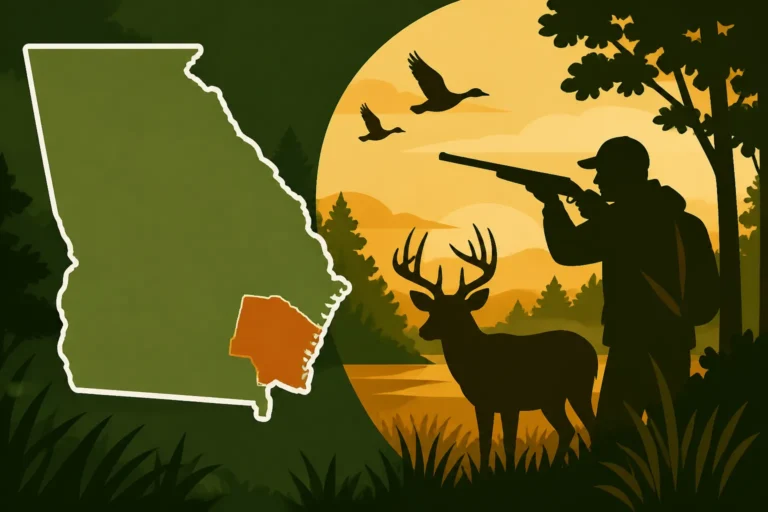
Burke County, nestled in Georgia's rich agricultural belt and bordering the Savannah River, presents a unique landscape for hunters. While much of the land is privately owned, there are still avenues for public access if you know where to look and how to prepare. It's not always as straightforward as finding a massive National Forest block, but opportunities do exist, often requiring a bit more planning and knowledge of specific state programs.
The Challenge of Finding Public Access
Let's be honest, finding public land in many parts of Georgia, particularly in agricultural counties like Burke, can feel like a real uphill battle. You're constantly driving past "No Trespassing" signs, seeing prime habitat locked behind gates, and it’s easy to get disheartened. The sheer volume of private property in areas known for agriculture means that contiguous blocks of public land are often smaller or more fragmented than what you might find in the mountains or vast national forests. This can make scouting and planning a hunt more complex, as you might be looking at smaller parcels managed by the state rather than sprawling wilderness. The key is to shift your mindset from expecting vast, untouched wilderness to appreciating and maximizing the specific, often well-managed, public areas available.
WMAs and Other State-Managed Lands
While Burke County itself doesn't host a sprawling National Forest, it's critically important to focus on the Georgia Wildlife Management Areas (WMAs) and other state-managed lands that might be within or bordering its vicinity. These areas are specifically acquired and managed by the Georgia Department of Natural Resources (DNR) for public recreation, including hunting. They are often smaller in acreage compared to national forests but are intensively managed for wildlife, frequently offering excellent hunting opportunities for deer, turkey, and hogs.
The state's WMA system is a phenomenal resource, and while a particular county might not have one smack in the middle, adjacent counties often do, making them viable options for Burke County residents or those looking to hunt in the area. These WMAs operate under specific regulations and seasons, which can differ significantly from statewide private land regulations. You'll need to check the current Georgia DNR hunting regulations for specific WMA dates, bag limits, and any special permits required. Always verify the rules for the exact WMA you plan to visit, as they are often site-specific. This might mean looking into options in neighboring counties along the Savannah River or deeper into the Coastal Plain, which often have river-bottom WMAs that can offer fantastic opportunities.
National Forest Presence or Lack Thereof
It's important to set realistic expectations when looking for public land in a county like Burke. Unlike the northern part of Georgia with the vast Chattahoochee National Forest, Burke County, situated in the eastern part of the state, does not have any National Forest land within its borders. This means you won't find those expansive tracts of federal land for hunting. The public land opportunities here are almost exclusively state-managed, primarily through the WMA system or other smaller, leased tracts. Understanding this distinction is crucial, as federal lands often have different rules, camping options, and access points compared to state WMAs. Don't waste time searching for something that isn't there; instead, direct your efforts towards understanding the state's offerings.
Navigating Public Land Regulations and Specifics
Hunting on public land, especially WMAs, comes with its own set of rules and nuances that are different from hunting on private property. It's not just about having your license; it's about understanding WMA-specific seasons, check-in procedures, and often more stringent safety requirements. Ignoring these details can quickly turn a hopeful hunting trip into a frustrating encounter with a game warden.
Permit and License Requirements
Before you even think about stepping foot on public land in Georgia, you need to ensure all your licenses and permits are in order. It's a foundational requirement, and thankfully, the process is streamlined, but it does require attention to detail. Every hunter, regardless of whether they are a resident or non-resident, must possess a valid Georgia hunting license. This is your basic entry ticket.
Beyond the general hunting license, most WMAs require an additional Georgia WMA Access Stamp Requirement. This stamp is a small fee that goes directly back into the management and maintenance of these valuable public hunting areas. Think of it as your contribution to keeping these lands healthy and accessible. Sometimes, for certain high-demand hunts, like specific deer or turkey seasons on a WMA, you might also need to apply for a quota hunt permit. These are often awarded through a lottery system due to limited availability and high demand. Always check the specific WMA regulations for any quota requirements well in advance of the season, as application deadlines can be months before the actual hunt. You can find comprehensive details on all requirements in a guide like Georgia Hunting Licenses and What They Cost.
Understanding WMA Rules and Seasons
This is where public land hunting can get a bit more complex, but it's vital for a successful and legal hunt. WMA seasons often diverge from the statewide private land hunting dates. For instance, while Georgia's statewide firearms deer season might open in late October, a particular WMA might have an archery-only period in September, followed by a limited firearms season, and then close entirely for certain species when private lands are still open. It's not uncommon for WMAs to have specific archery, primitive weapons, or firearms-only periods that are much shorter or at different times than the general season.
You'll often find mandatory check-in/check-out procedures for WMAs, sometimes requiring you to sign in at a kiosk or use the Georgia Outdoors app to report your presence and harvest. These systems are in place to monitor hunter pressure and game harvest, and compliance is mandatory. Failure to check in or out can result in fines. Additionally, some WMAs might have different bag limits or antler restrictions than the statewide rules, especially for deer. For example, a WMA might only allow one antlered buck or specific antler criteria. Always consult the current Georgia hunting regulations specific to the W WMA you plan to hunt. Guides like Georgia Deer Season Structure Explained and Georgia Spring Turkey Season Rules can give you a broader understanding, but always drill down to the specific WMA details.
Here's a simplified look at common WMA rule variations:
| Category | Statewide Private Land Rule (General Example) | WMA Rule (Potential Variation) |
|---|---|---|
| Hunting Dates | Typically longer, continuous seasons | Shorter, specific periods (e.g., archery only, limited firearms) |
| Bag Limits | Up to 12 deer, 2 antlered bucks | Often reduced (e.g., 1 antlered buck per WMA) |
| Hunter Access | Open any legal day/hour | Specific entry/exit points, sometimes gated, designated hours |
| Check-In/Out | Not typically required | Mandatory physical or electronic check-in/out |
| Methods of Take | Wide range of legal firearms, bows | May have archery-only zones, primitive weapons requirements |
| Vehicle Access | Generally unrestricted on private roads | Restricted to designated roads, no ATVs/UTVs often |
| Blaze Orange | Required during firearms season | May be required during archery on some WMAs |
Safety and Respect on Public Ground
When you're sharing the woods with other hunters, hikers, and sometimes even equestrians, safety and respect become paramount. Public land means communal responsibility. First and foremost, Georgia Blaze Orange Requirements are critical. During any firearms deer season, and often during primitive weapons season, you are required to wear a minimum amount of blaze orange (or blaze pink, which is also legal). This isn't just a rule; it's a safety measure that can save lives by making you highly visible to other hunters. Even during archery season, especially if it overlaps with small game seasons, consider wearing some orange while walking in and out.
Beyond visibility, respect for fellow users means understanding quiet hours, avoiding excessive noise, and always knowing what's beyond your target. Littering is a definite no-go; pack out everything you pack in, and then some. When it comes to treestands and ground blinds, most WMAs have specific regulations. You generally can't leave stands up year-round, and often they must be removed daily or within a specific timeframe. Treestand Rules on Georgia Public Land are crucial to know, as violating them can lead to fines and loss of equipment. Camping rules also vary; some WMAs allow primitive camping, while others strictly prohibit it. Always verify before you pitch a tent. Remember, we all share these spaces, and responsible behavior ensures they remain open and enjoyable for everyone.
Tools and Strategies for Finding and Utilizing Access
The days of relying solely on paper maps and word-of-mouth are largely behind us. Modern technology, combined with a willingness to put in some legwork, can dramatically improve your chances of finding and successfully hunting public land in areas like Burke County.
Leveraging Mapping Applications
In today's hunting world, mapping applications are not just convenient; they are essential, especially when you're trying to dissect the patchwork of public and private land in a specific region. Services like onX Hunt and GoHunt have revolutionized how hunters approach scouting and navigation. These apps use GPS technology to show you property boundaries, land ownership, and often, specific WMA boundaries right on your phone or tablet.
Imagine this: You're looking at an aerial map, and you can instantly see a small finger of WMA land that borders a large private timber tract. Without these apps, you might never even know that public access existed there. They allow you to drop waypoints, mark potential entry routes, identify pinch points, and even download maps for offline use, which is critical in areas with spotty cell service. When you're trying to figure out if that sliver of woods alongside a creek is fair game or private, having onX Layers for Georgia Land Status at your fingertips is invaluable. You can zoom in, see the landowner name (if available), and determine legal access points. This takes away a huge amount of guesswork and helps you stay on the right side of trespass laws.
Researching the Georgia Outdoors App and Website
While third-party apps are excellent, the official resources from the Georgia Department of Natural Resources (DNR) are your absolute first stop for official rules and WMA maps. The Georgia DNR website (typically the Wildlife Resources Division section) is a treasure trove of information. You can download PDF maps for individual WMAs, read detailed regulations, and find contact information for area managers.
Even better, the Georgia Outdoors app, often used for license purchasing and harvest reporting, also provides mapping capabilities for public lands. It's often updated with the most current WMA boundaries and regulations, making it an indispensable tool for public land hunters. Before heading out, always cross-reference information from third-party apps with the official DNR resources to ensure you have the most accurate and up-to-date information. Understanding how to use Scouting With the Georgia Outdoors App will give you a significant advantage in planning your hunts. This combination of official and commercial mapping tools creates a powerful toolkit for navigating Georgia's public hunting areas.
Scouting and Boots-on-the-Ground Recon
No amount of digital mapping can replace good old-fashioned boots-on-the-ground scouting. While apps get you in the ballpark, physically walking the land before the season opens is crucial for understanding deer movement, identifying turkey roosts, and finding those hidden pockets that other hunters overlook. Burke County's terrain, with its mix of agricultural fields, pine plantations, and hardwood bottoms, means that game animals will use the landscape in specific ways.
Walk potential entry and exit routes, noting challenging terrain or noisy areas. Look for fresh sign: rubs, scrapes, tracks, and droppings for deer, or turkey scratching and dusting bowls. Pay attention to food sources, water, and bedding areas. The more time you spend in the woods, the more intimately you'll understand how animals move through that particular piece of public ground. This pre-season effort is often the difference between a frustrating season and a successful one. A detailed approach, like that described in Scouting Georgia Public Land Before Season, will highlight the subtle cues that the land offers. Often, the best spots are a little further off the beaten path, where most casual hunters won't venture. Learning to identify these less-pressured areas is key to Finding Ground Others Walk Past.
Maximizing Your Hunt on Burke County Public Lands
Once you've done your homework, secured your permits, and scouted your chosen WMA, the next step is to strategize your actual hunt. Public land hunting demands adaptability and often different tactics than private land, mainly due to potential hunting pressure and the specific landscape features.
Targeting Game Species
Burke County, and the WMAs in its general vicinity, typically offer excellent hunting for several key game species. White-tailed deer are, of course, a primary draw. The agricultural nature of the region provides abundant food sources, leading to healthy deer populations. Deer on public land, however, tend to be warier due to pressure, so understanding their habits and travel corridors is essential. White-Tailed Deer Across Georgia provides a broader context for the species throughout the state.
Wild turkeys are also prevalent in many of the forested and mixed-habitat WMAs. Spring turkey hunting is a cherished tradition, and public lands can offer fantastic opportunities if you're willing to put in the miles and adapt your calling. Wild Turkeys in Georgia delves into the state's turkey populations and behaviors. Finally, feral hogs are a year-round menace and, consequently, a year-round hunting opportunity in Georgia. Many WMAs allow hog hunting during open deer or small game seasons, and sometimes even have dedicated hog hunts. These intelligent animals can be challenging but offer a great chance to fill the freezer and help local ecosystems. For more on the problem and opportunities, check out Feral Hogs Across Georgia.
Adapting Tactics to Public Land Pressure
This is where public land hunting truly tests your skills. Unlike private land where deer might be accustomed to human presence, public land animals, especially mature ones, are often highly pressured and wary. They quickly learn to associate human scent, noise, and vehicle traffic with danger.
To succeed, you often need to adjust your tactics:
- Walk Further: Most hunters won't venture more than a mile from a road or parking area. The deeper you go, the less pressure you'll encounter, and the more likely you are to find undisturbed animals.
- Hunt Mid-Week: If your schedule allows, hunting on Tuesday, Wednesday, or Thursday can make a huge difference. Weekends, especially opening weekends, can see significant crowds.
- Hunt the Edges: Animals on pressured public land often stick to thick cover, dense swamps, or inaccessible areas during daylight hours, only venturing out to feed at dawn or dusk. Focus your efforts on the fringes of these impenetrable areas.
- Utilize Natural Funnels: Look for terrain features that naturally funnel deer movement, such as narrow strips of woods between clear-cuts, creek bottoms, or saddles on ridges. These can be productive ambush points.
- Adjust Your Calling: Deer and turkey calls can be effective, but sometimes less is more on pressured land. Overcalling can spook wary animals.
- Scent Control is Crucial: Pay extra attention to scent elimination, as pressured animals are much more sensitive to human odor.
Understanding Hunting Pressure on Georgia Public Land is paramount to developing successful strategies that counteract the presence of other hunters.
What to Expect: Challenges and Rewards
Hunting public land in Burke County or its surrounding WMAs comes with its unique set of challenges. You might encounter other hunters, especially on popular opening days. Access roads might be rough, and walking distances can be significant. Game animals can be highly educated, making success harder-earned. You may not see as many animals as you would on well-managed private land.
However, the rewards are equally unique and incredibly satisfying. The sense of accomplishment when you successfully tag an animal on public land, knowing you outsmarted a wary animal in a shared resource, is unparalleled. It teaches you resilience, resourcefulness, and a deeper understanding of wildlife behavior. It connects you to the land in a way that sometimes feels lost in the private land world. Plus, it's an affordable way to enjoy your passion, offering countless hours of outdoor recreation for the cost of a few licenses and stamps. Embracing these challenges is part of the adventure, and with the right preparation and mindset, public land hunting in areas like Burke County can be incredibly fulfilling.
Disclaimer
This article is for general informational purposes only and does not constitute professional advice. Laws, prices and regulations vary by location and change over time. Consult a qualified professional for guidance on your specific situation.