Georgia Trespass and Permission Law
There's nothing quite like the knot in your stomach when you're out hunting a new area and suddenly wonder if you've crossed a line you shouldn't have. The fear of inadvertently trespassing, or simply not knowing the local laws, can cast a shadow over an otherwise perfect hunting trip. This guide is here to untangle the complexities of Georgia's trespass and permission laws, offering clear, actionable advice so you can hunt with confidence and respect for both the law and private property.
Understanding Georgia's Basic Trespass Laws for Hunters
Georgia, like any state, has specific laws governing trespassing, and these laws apply directly to hunters. It's not just about a "No Trespassing" sign; there are nuances you absolutely need to understand before you step foot on any land, public or private. Ignorance of the law is never an excuse, and a simple mistake can lead to significant headaches, from fines to losing your hunting privileges.
Legal Definition of Trespass for Hunters
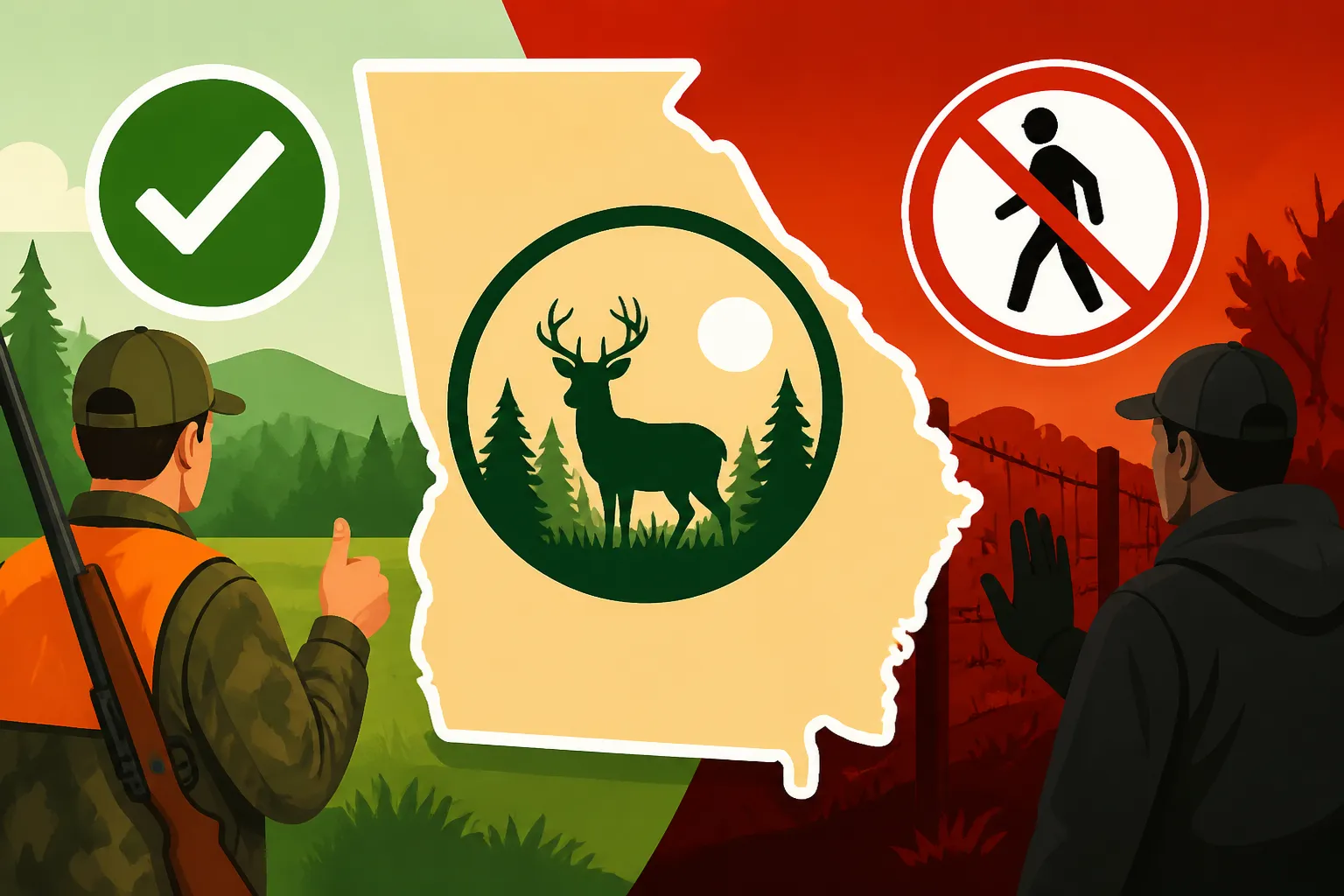
In Georgia, criminal trespass often involves entering another person's land or premises without authorization and for an unlawful purpose, or remaining on the property after receiving notice to leave. For hunters, this typically means entering or remaining on private land without the express permission of the landowner or their agent. It's not always about causing damage; simply being there without permission can be enough. This includes fields, woods, swamps, or even a hidden corner of a property you might assume is abandoned. The law focuses on the act of unauthorized entry.
Think about it this way: even if there isn't a fence or a clearly visible sign, if the land is privately owned, you need permission. It’s not like public roads where access is implied. Every acre of private land in Georgia is, by default, off-limits to hunters without explicit consent. This might seem strict, but it protects landowners' rights and helps manage wildlife effectively.
Consequences for Unauthorized Hunting
The repercussions for trespassing while hunting in Georgia can range from a minor citation to more severe legal issues. Typically, criminal trespass is a misdemeanor, but repeated offenses or aggravating circumstances (like property damage or poaching) can escalate the charges. You could be facing significant fines, court costs, and potentially even jail time, depending on the severity and local jurisdiction.
Beyond the legal penalties, you could also face administrative actions from the Georgia Department of Natural Resources (DNR). This might include the suspension or revocation of your hunting license, which is a hunter's worst nightmare. Furthermore, any game harvested while trespassing could be confiscated, and your hunting equipment—like firearms or bows—might also be seized. It's a heavy price to pay for not securing permission or verifying boundaries, making it crucial to prioritize property rights and proper access.
The Ins and Outs of Obtaining Permission for Private Land
Securing permission to hunt private land is often the golden ticket to some of Georgia's best hunting opportunities. However, it's not always as simple as knocking on a door and asking. There's an art to it, and understanding the nuances can make all the difference in gaining access. This process is about building trust and respect, which can lead to long-term hunting relationships.
Asking for Access Effectively
Approaching a landowner for hunting permission can feel intimidating, but a respectful and thoughtful approach goes a long way. Start by being polite and clear about your intentions. Introduce yourself, explain why you're interested in hunting their property (e.g., you've noticed good deer sign, or you're looking for a safe place to take your child hunting), and assure them you will respect their land and their rules. Offer to provide references if they request them, or even a copy of your hunting license and insurance.
Consider the timing of your request; showing up on opening morning with a loaded rifle is probably not the best first impression. Try to approach them well before the season, perhaps when they're working in the yard or during a less busy time of day. Offer to help with chores around the property, such as clearing brush, mending fences, or assisting with other tasks, which can demonstrate your commitment and build goodwill. Many landowners appreciate a proactive approach and knowing who is on their land. For more insights on this, you might find Knocking on Doors in South Georgia Farm Country helpful.
Written Versus Verbal Agreements
While a verbal agreement might feel sufficient, a written permission agreement is always the safer and more recommended option for both you and the landowner. A written document clarifies the terms of access, specifying dates, permitted areas, species you can hunt, and any other rules the landowner might have (e.g., no ATV use, specific parking areas, what gates to close). This protects both parties in case of misunderstandings or unforeseen incidents.
A simple written note signed by the landowner, stating "I, [Landowner Name], give permission to [Your Name] to hunt deer on my property located at [Address/Description] from [Start Date] to [End Date], under the following conditions: [List conditions]," can suffice. Keep a copy on your person while hunting. This level of clarity helps prevent any disputes and ensures everyone is on the same page, reinforcing a respectful and professional relationship. In Georgia, while verbal permission can be legally valid, it's much harder to prove if a dispute arises. Do You Need Written Permission in Georgia? delves deeper into this.
Navigating Public Land Boundaries and Regulations
Public land hunting in Georgia offers fantastic opportunities, but it comes with its own set of rules and complexities. Unlike private land, access is generally granted, but you still need to be acutely aware of designated boundaries, specific area regulations, and how those can change. Misunderstanding public land rules can still lead to legal trouble, even if it's not "trespassing" in the traditional sense.
Identifying Public Land Boundaries
Knowing where public land ends and private land begins is paramount when hunting Georgia's vast public areas, such as the Chattahoochee-Oconee National Forest or various Wildlife Management Areas (WMAs). Often, these boundaries are marked with painted trees, signs, or boundary lines on maps. However, these markers can be old, faded, or sometimes nonexistent in remote areas. This is where modern technology becomes an indispensable tool.
Mapping applications like onX Hunt are invaluable for accurately identifying property lines and showing you precisely where you stand in relation to public and private parcels. These apps use GPS and overlaid property data, so you can see land ownership in real-time on your phone or GPS device. Always download offline maps before heading out, as cell service can be spotty in many of Georgia's prime hunting spots. Using these tools helps prevent accidental encroachment onto private property and ensures you stay within legal hunting zones. Understanding how to use onX Layers for Georgia Land Status can be a game changer.
WMA Specific Rules and Managed Hunts
Georgia's Wildlife Management Areas (WMAs) are incredible resources for public land hunters, but each WMA can have its own specific regulations that differ from statewide hunting laws or National Forest rules. These variations often include different season dates, bag limits, weapon restrictions, or even mandatory check-in/check-out procedures. It's crucial to consult the Georgia DNR hunting regulations specific to the WMA you plan to hunt before you go.
For instance, some WMAs might be archery-only for certain periods, or have quota hunts that require advance application and selection. You might also find special rules regarding camping, vehicle access, or the use of specific types of stands. Always double-check the Georgia DNR website or the printed regulations booklet for the specific WMA. Ignorance of WMA rules is no defense, and violations can lead to citations and loss of hunting privileges on that WMA or statewide. For deeper dives into WMA hunting, consider Hunting Georgia Wildlife Management Areas or Scouting Georgia Public Land Before Season.
Dealing with Posted Land and Property Line Markings
Encountering "No Trespassing" signs or property boundary markers is a common experience for hunters. These signs are not just suggestions; they are legal declarations of a landowner's intent to restrict access. Understanding what these markings mean in Georgia, and how to use modern tools to clarify confusing situations, is essential for every responsible hunter.
Interpreting "Posted" and No Trespassing Signs
In Georgia, "No Trespassing" signs or "Posted" signs serve as a clear legal notice that entry onto the property is forbidden without permission. These signs must be conspicuous and visible at reasonable intervals along the boundary. However, a fence or other natural barrier can also imply restricted access, even without explicit signage. It's always best to err on the side of caution: if there's any doubt, assume it's private and seek permission or stay away.
The key takeaway here is that these signs are a direct communication from the landowner. Ignoring them isn't just rude; it's illegal. Even if you don't see a sign but suspect the land is private, it's your responsibility to verify. Never rely on the absence of a sign as an invitation to enter. The Georgia Posted Land Rules article provides more detail on this often-misunderstood aspect of hunting law.
Using Technology for Property Line Clarity
In today's hunting world, digital mapping tools are a game-changer for navigating property lines. Gone are the days of relying solely on paper maps and compasses, which could often lead to ambiguity in thick woods or areas with unclear markers. Modern GPS-enabled apps like onX Hunt have revolutionized how hunters understand and respect property boundaries.
These applications allow you to see detailed property lines, landowner names, and public land boundaries overlaid on satellite imagery or topographic maps, all on your smartphone. They show your exact location relative to these lines in real-time, giving you incredible confidence that you're hunting legally. Before you head into the field, take the time to study your intended hunting area on one of these apps. Mark potential access points, identify adjacent landowners, and note any tricky boundary sections. This preparation is a small investment that can save you a huge amount of trouble and ensure you never accidentally step foot where you shouldn't.
| Key Aspect | Description for Hunters |
|---|---|
| Why Seek Permission? | Legal Requirement: It's illegal to hunt private land without landowner consent. Ethical Practice: Shows respect for property rights and builds trust. Access to Quality Hunting: Often leads to less pressured game and better opportunities. |
| How to Approach | Be Polite & Respectful: Introduce yourself, explain your intentions clearly. Timing Matters: Approach well before the season, not opening day. Offer to Help: Small gestures like offering to mend a fence can build goodwill. |
| What to Discuss | Specific Dates & Areas: Clarify where and when you can hunt. Species & Weapons: Confirm what you're allowed to pursue and with what gear. Rules of the Land: Ask about gate closures, parking, vehicle use, and sensitive areas. |
| Verbal vs. Written | Verbal: Can be legally binding but difficult to prove if disputes arise. Written: Highly recommended; clarifies terms, protects both parties, and provides solid proof of permission. Keep a copy on you. |
| Building Trust | Follow All Rules: Adhere strictly to the landowner's conditions. Leave No Trace: Pack out everything you pack in, and leave the property better than you found it. Communicate: Update the landowner on your hunts, offer game meat if appropriate. |
What to Do When Game Crosses Property Lines
One of the most frustrating and ethically challenging situations a hunter can face is when a wounded animal crosses onto adjacent private property where they do not have permission to enter. It's a situation that requires careful thought, adherence to the law, and often, quick communication. Your actions in these moments reflect not only on you but on the entire hunting community.
Retrieving Harvested Game
In Georgia, the general rule is clear: you cannot trespass on private property to retrieve downed game without the express permission of the landowner. This can be incredibly difficult to accept when you've made a good shot and are confident the animal is just on the other side of a fence. However, property rights take precedence. Even if you can see your trophy, crossing that line without permission is still illegal trespass.
Your best course of action is to immediately contact the landowner. Explain the situation calmly and respectfully, and ask for permission to enter their property solely for the purpose of retrieving your animal. If you don't know who owns the land, mapping apps (like onX Hunt) can often provide landowner contact information. If you cannot reach the landowner or they deny permission, you may need to contact local law enforcement or the Georgia DNR. They may be able to assist in mediating the situation or provide advice, though they cannot force a landowner to grant access. For more in-depth advice, check out Retrieving Game From Private Land in Georgia.
Communicating with Neighbors and Landowners
This specific scenario highlights why fostering good relationships with adjoining landowners, even on properties you don't hunt, can be invaluable. If you have already built a rapport with neighbors, securing permission for game retrieval is often much easier and less stressful. Many landowners are understanding if you approach them respectfully and explain the situation clearly.
Prior to hunting an area, especially near a boundary, consider introducing yourself to the neighbors. Let them know you'll be hunting nearby and that, in the unlikely event a wounded animal crosses onto their land, you would be grateful for the opportunity to retrieve it. This proactive communication can prevent a tense situation from escalating. It's all about mutual respect and showing you're a responsible hunter who values their property.
Common Mistakes and How to Avoid Them
Even the most seasoned hunters can sometimes fall victim to common pitfalls regarding trespass and permission. These mistakes are often born out of assumptions, a lack of thorough preparation, or simply forgetting a crucial step. Avoiding them will not only keep you out of trouble but also enhance your hunting experience and reputation.
Assuming Public Access or Implied Permission
One of the most frequent mistakes hunters make is assuming that land is public or that they have implied permission to hunt simply because they've seen other people there, or because the land appears unused or unposted. This is a dangerous assumption, especially in Georgia where much of the state's rural land is privately owned. Just because a property isn't fenced or prominently signed doesn't mean it's open to public access.
Always verify land ownership before you hunt. Utilize resources like the Georgia DNR's online mapping tools, county tax assessor websites, or reliable hunting apps. If there's any doubt about whether a piece of property is public or private, err on the side of caution and either find an alternative spot or seek explicit permission. Finding Georgia Property Lines goes into more detail about how to research land ownership. Never let convenience or a hunch override due diligence.
Neglecting Pre-Hunt Scouting and Boundary Verification
Another common mistake is failing to conduct thorough pre-hunt scouting, which includes verifying all property boundaries. Many hunters focus solely on finding game sign or ideal stand locations, but overlook the critical step of confirming exactly where the property lines lie. This can lead to accidental trespass, especially when you're caught up in the excitement of the hunt or pursuing a game animal.
Before your hunt, spend time on the ground (if possible and with permission) or extensively use digital mapping tools to pinpoint exact boundaries. Identify natural features like creeks, ridges, or old fences that might serve as property lines. Mark these boundaries on your GPS or mapping app. During your hunt, periodically check your location. This meticulous preparation ensures you stay on the right side of the law and avoid any uncomfortable encounters with landowners or law enforcement. Being prepared means you can focus on the hunt, not on whether you're where you're supposed to be.
Disclaimer
This article is for general informational purposes only and does not constitute professional advice. Laws, prices and regulations vary by location and change over time. Consult a qualified professional for guidance on your specific situation.